

BHUMIM INDIA PRIVATE LIMITED
Double Bed Price in India: Size, Wood and Storage Cost
Double bed price in India explained: indicative bands for queen and king beds, wood, storage and mattress, plus a checklist for your quote.
November 11, 2026
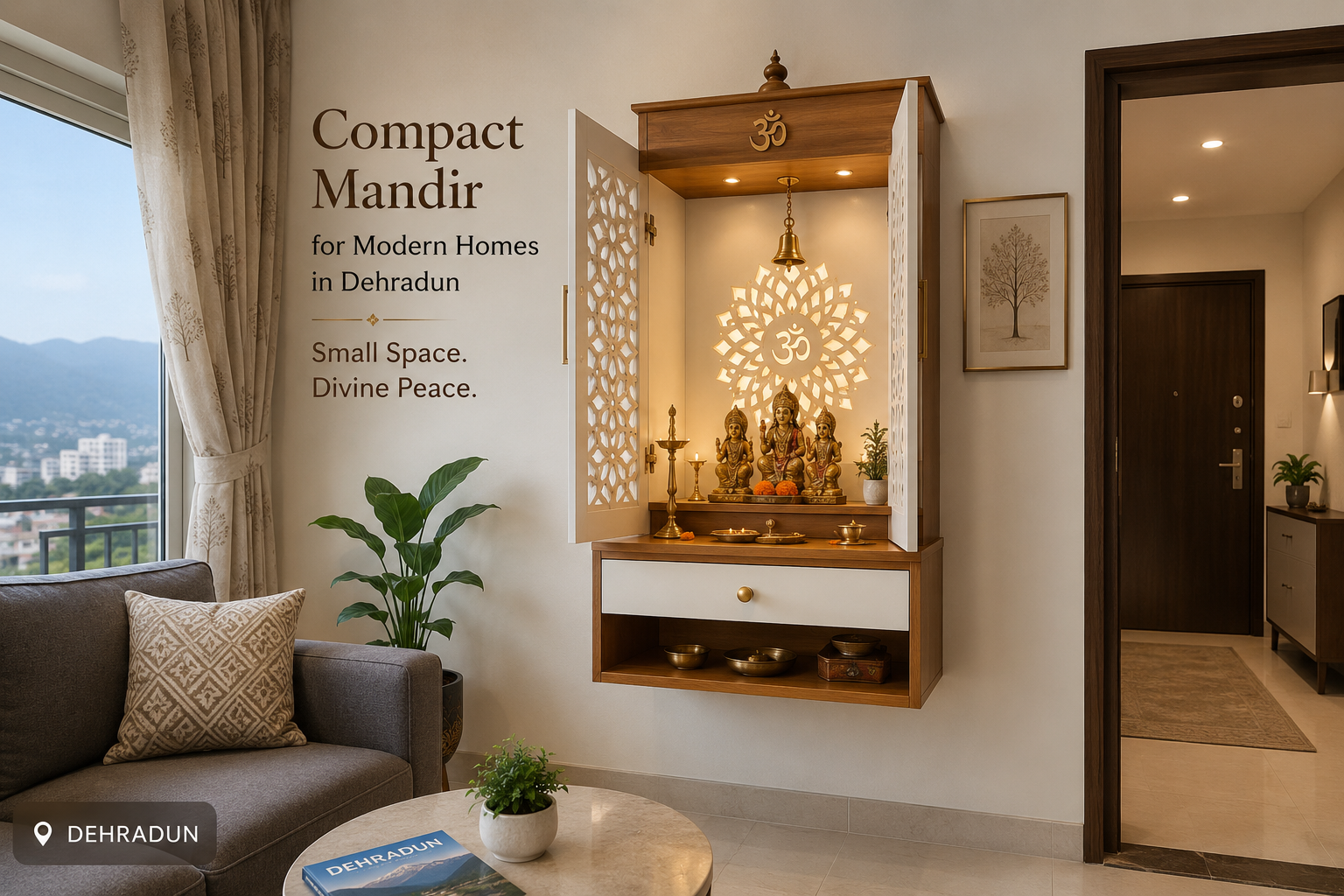
Small pooja room design apartment solutions are compact, space-saving mandir units built specifically for flats where a dedicated prayer room isn’t possible. These wall-mounted or cabinet-style mandir units fit into corners, niches, or living room walls – giving you a proper, beautiful prayer space without taking up more than 2–3 sq. ft. of floor area.
Picture this: you’ve just moved into a 2BHK apartment in Dehradun. The rooms feel just right – but there’s no dedicated pooja room. You want a space where you can light a diya every morning, keep your idols properly, and feel that calm before the day starts. But every square foot is already spoken for.
This is one of the most common things we hear from families across Dehradun, Haridwar, Rishikesh, and beyond. The desire for a proper prayer space is deep-rooted in Indian homes. The challenge is simply the floor plan.
That’s exactly the problem Bhumim was built to solve.
At Bhumim, we don’t just design furniture – we manufacture and install complete modular furniture solutions, including custom mandir units tailored to your exact flat layout. From a tiny 1.5-ft wall niche in a Vasant Vihar apartment to a full corner mandir unit in a villa on Rajpur Road, we’ve built prayer spaces for every kind of home.
This guide walks you through the best small pooja room design ideas for apartments in India – what works, what doesn’t, and how to plan yours the right way.
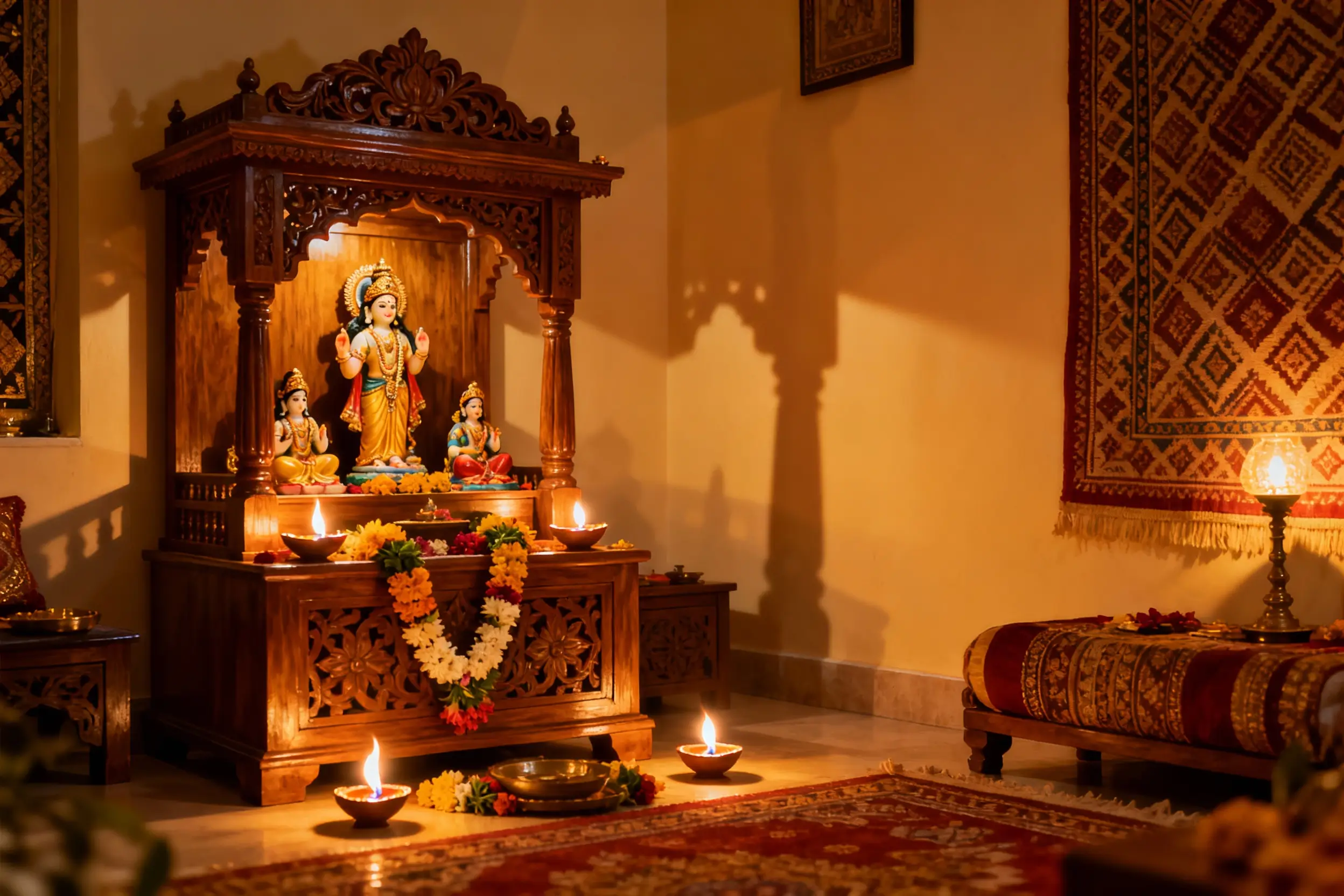
Not every mandir unit suits a small apartment. A good compact pooja room design for a flat must balance three things: spiritual function, space efficiency, and visual harmony with the rest of the home.
Here’s what that looks like in practice:
Proper height placement. Idols and deities should be at eye level or above when seated – traditionally between 2.5 to 4 feet from the floor. A good mandir unit respects this without forcing awkward positioning.
Storage for essentials. Agarbatti holders, diya stands, small puja thalis, books, and extra items all need a place. Without thoughtful storage, your prayer area quickly looks cluttered.
Material that handles heat and moisture. Candles, diyas, and agarbattis generate heat. In places like Dehradun where humidity can be high in monsoons, MDF or cheap plywood can warp. At Bhumim, we use moisture-resistant materials like BWP plywood and pre-laminated boards specifically for mandir units.
A design that blends with the home. A jarring, out-of-place mandir unit breaks the visual flow of your living room or bedroom. A well-designed compact mandir should feel like it belongs.
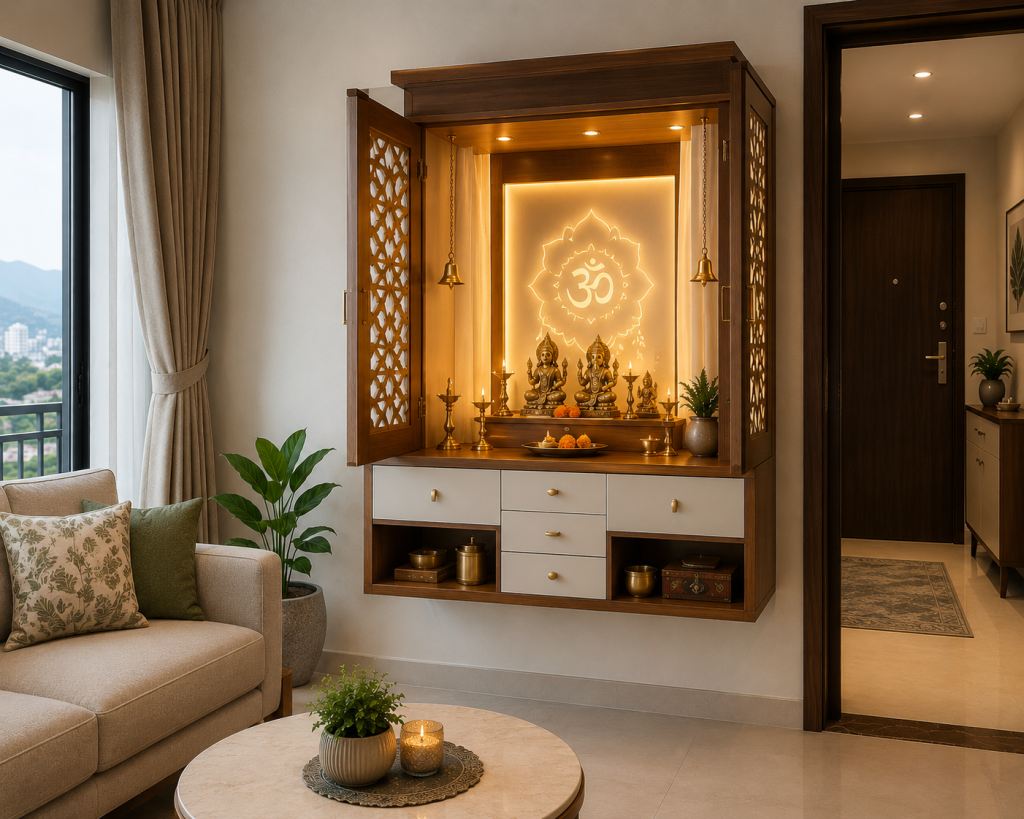
This is the most popular small pooja room design for apartments today – and for good reason. A wall-mounted mandir unit uses zero floor space. It mounts directly onto the wall, usually at a height of 4–5 feet, and can include enclosed upper cabinets for storage and open lower shelves for the idols.
For a 2BHK or 3BHK flat in Dehradun, this style works beautifully in the living room or bedroom corner.
Typical size needed: 2 ft wide × 3.5 ft tall.
Got a corner that’s going to waste? A corner mandir unit fits snugly into 90-degree wall corners and feels purposeful rather than forced. It adds a quiet anchor point to the room – the kind that family members naturally gather around in the evenings.
This design is especially popular in compact 1BHK and 2BHK apartments across Dehradun’s newer housing societies like Pacific Hills and Indrapuram.
One of the smartest small flat mandir unit ideas we’ve seen is integrating the pooja space into a full living room wall panel. One section of the wall unit becomes the mandir – framed with jaali work, LED lighting, or wooden carved panels – while the rest holds the TV, books, and storage.
This is a true multipurpose solution. You save space, maintain flow, and create a living room that feels both modern and rooted.
You can see examples of how Bhumim combines mandir units with living room furniture designs in Dehradun for exactly this kind of integrated approach.
Some families prefer a mandir that can be “closed” when not in use – a discreet cabinet that opens up to reveal the prayer space inside. This works beautifully in studio apartments or homes where the living area doubles as a workspace.
The cabinet-style pooja unit typically features carved wooden or CNC-cut doors, internal LED strip lighting, and pull-out shelf trays. When closed, it looks like any other cabinet. When open, it transforms the corner of the room.
In older Dehradun apartments, high ceilings are common. One clever use of this space is creating a niche mandir above a door frame or in a passage wall. It’s small, it’s elevated (which is traditionally appropriate), and it doesn’t consume any usable floor or wall space.
For expert design consultation, send us your details and we’ll schedule a call
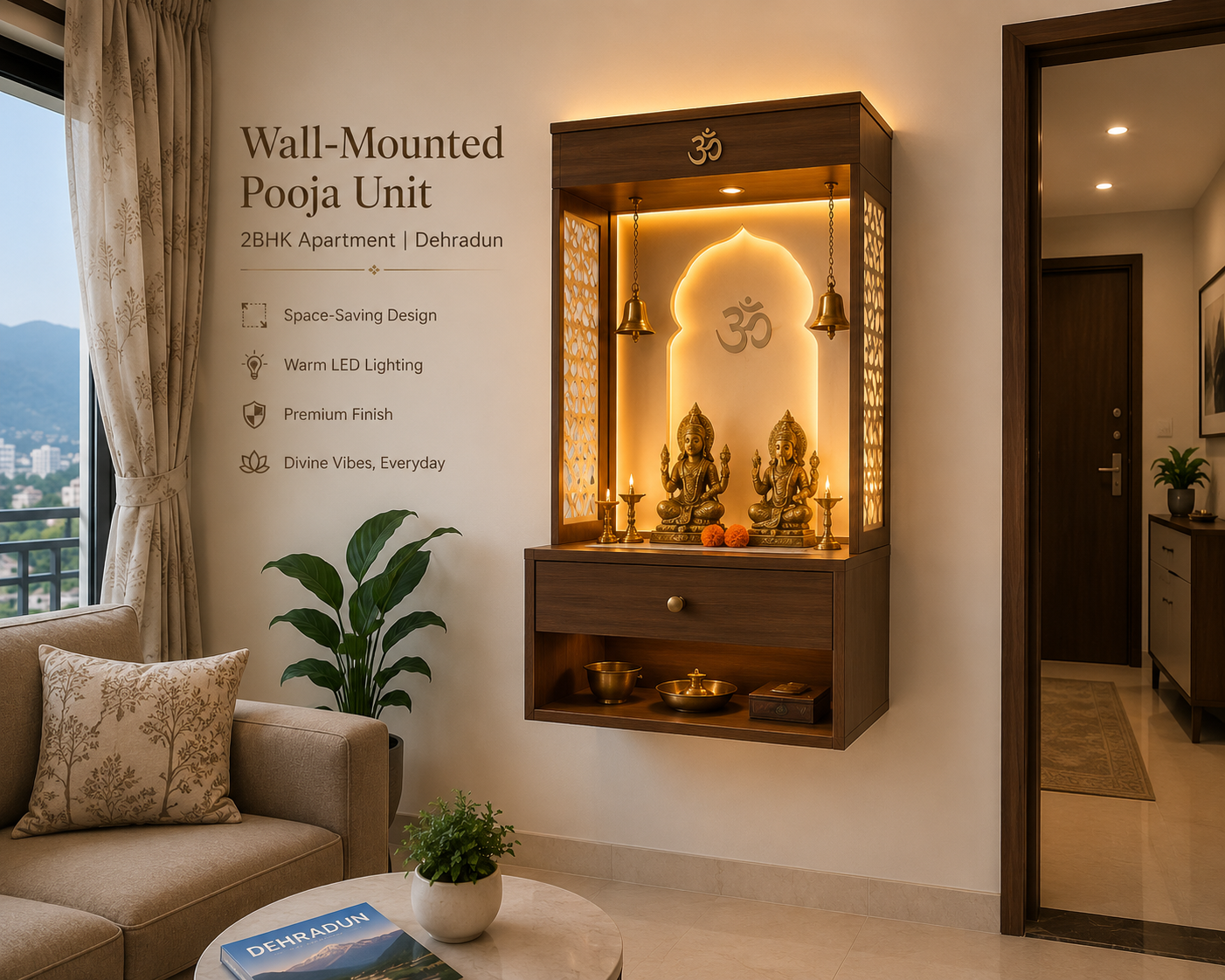
A pooja unit wall-mounted design is the number one recommendation for any flat under 1,200 sq. ft. Here’s why:
No floor footprint. Floor space is the most valuable real estate in a small flat. A wall-mounted unit keeps the floor completely clear – which also makes cleaning easier.
Flexible placement. Unlike a freestanding unit, a wall-mounted mandir can be placed in otherwise unusable spaces: above a sofa, between two windows, at the end of a corridor.
Appears larger than it is. A wall-mounted unit, especially one with a backlit panel, draws the eye upward and makes the room feel taller and more open.
Safer around children. Fixed to the wall, a mounted mandir unit won’t tip or shift. This matters a lot for families with young kids.
At Bhumim, our wall-mounted mandir units come with concealed mounting hardware, load-tested for the weight of idols and décor items. We also provide complete 3D visualisation before manufacturing, so you can see exactly how the unit will look in your space before a single screw is drilled.
Different flat layouts call for different approaches. Here’s a quick guide:
Go for a wall-mounted or above-door niche mandir. Keep it minimal – two shelves, clean lines, warm lighting. Even 18 inches of wall width is enough.
A corner unit or a wall-mounted cabinet-style mandir works well here. You can include modest storage for puja items without overcrowding the room.
This is where you have the most flexibility. A wall panel integration (mandir + TV unit or mandir + bookshelf) creates a rich, layered look that feels intentional and premium.
You might have a small room or alcove that can be converted into a dedicated pooja niche – with full-height panels, a sitting area, and overhead storage.
At Bhumim, we handle mandir units as part of our complete home furniture packages – from 3D design and material selection to manufacturing at our facility and on-site installation. We serve Dehradun, Haridwar, Rishikesh, Roorkee, Noida, and Ghaziabad.
If you’re thinking about your full home setup, you can also explore our complete home furniture solutions to see how a mandir unit can fit into a larger design plan.
Most new apartment complexes in Dehradun – whether in Dalanwala, ISBT Road, or Sahastradhara Road – are designed as compact 2BHK or 3BHK units. Floor plates are efficient, meaning every piece of furniture needs to earn its space.
A wall-mounted or integrated mandir unit is almost always the right call for these homes. Something between 2–3 feet wide, with closed upper storage and open idol shelves in the centre.
Homes on Rajpur Road tend to be larger and more traditional in layout. Families here often want a grander mandir – a dedicated niche with full-height carved panels, marble flooring underneath, and a proper seating area.
Bhumim designs and manufactures these as full modular installations – with precision-cut jaali panels, premium laminates, and custom-fit sizing.
This area sees a mix of new builds and older residential homes. Many clients here ask for mandir units that incorporate both modern materials (like high-gloss laminates) and traditional elements (like wooden carved trim). A hybrid style – modern cabinet structure with traditional detailing – tends to work very well here.
Dehradun’s climate is pleasant but can turn humid during the monsoon months (July to September). This matters when choosing materials for your mandir unit. Regular MDF absorbs moisture and can swell over time.
At Bhumim, we use moisture-resistant core materials for all our mandir units serving Dehradun homes – including MR-grade boards, BWP plywood, and WPC where applicable. Our laminates are selected specifically for high-humidity resistance.
This is not something every carpenter or generic furniture shop guarantees. It’s the reason our installed mandir units still look and function perfectly years after installation.
Indian families accumulate a lot of puja-related items – multiple idols, seasonal décor, religious books, agarbatti stocks, flower holders, and festive items. Most clients initially ask for “just a small shelf,” then realise within six months they need three times the storage.
Our recommendation at Bhumim: always build in more closed storage than you think you need. Use the open shelf exclusively for daily-use items and idols. Keep everything else behind doors.
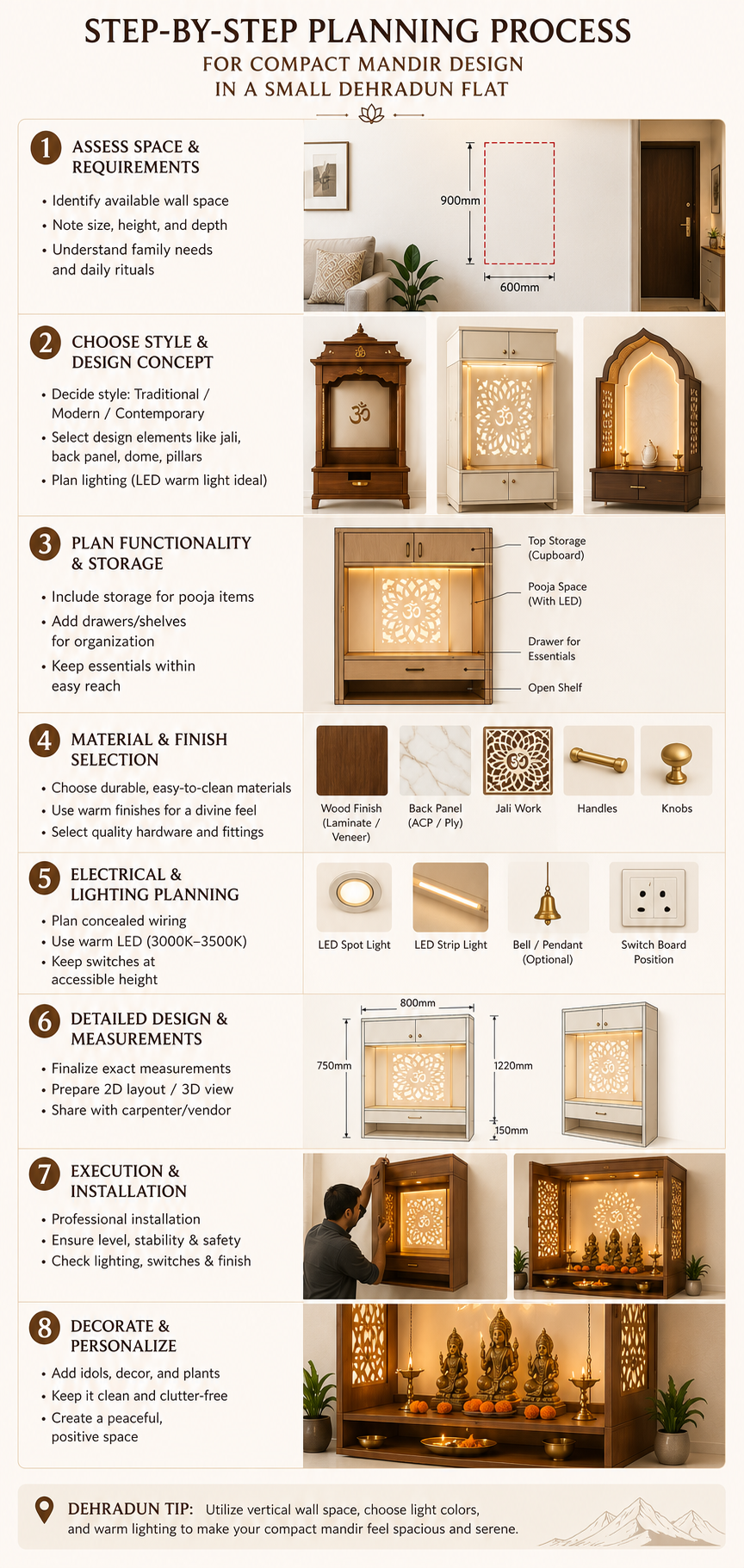
Walk through your flat and note every wall section that’s currently unused. Look for: blank walls above sofas, corridor end walls, bedroom side walls, or corners that hold nothing. Even 18–24 inches of width is enough for a basic mandir unit.
Based on your flat size and family preference, decide between: wall-mounted floating unit, corner unit, integrated panel, or cabinet with shutters. If unsure, our design team at Bhumim can help you decide during a free consultation.
Idols should sit at a height where you can comfortably look at them while seated (typically 3.5 to 4.5 feet from floor). Plan the shelf height accordingly and ensure adequate overhead clearance for standing lamps or diyas.
Write down everything you want to store – idols, puja thali, books, agarbattis, candles, flowers. Group them into “daily use” and “occasional use.” Daily use items go on open shelves. Everything else goes behind closed cabinet doors.
For a modern look: high-gloss white or off-white laminate with gold-toned hardware. For a traditional feel: wood-grain laminate with carved panel inserts or jaali work. For humid climates (like Dehradun): always use MR or BWP core boards.
A warm LED strip (2700K–3000K colour temperature) inside the mandir creates a beautiful, devotional glow. This is one of the most impactful upgrades you can make – and it costs very little.
Before ordering anything, get a 3D render of your mandir unit in your actual room. Bhumim provides this as part of our design process – so you approve the look before we manufacture.
Once approved, we manufacture the unit at our facility and install it at your home. The whole process, from consultation to installation, typically takes 3–4 weeks.
Choosing a unit that’s too wide. A mandir unit wider than 3 feet in a small room will dominate the space and look out of proportion. Keep it modest and let the design quality do the talking.
Ignoring lighting. A mandir unit without internal lighting looks flat and forgettable. Lighting is what gives it warmth and makes it feel like a sacred space.
Skipping ventilation for incense. Agarbattis and candles generate smoke. A closed-cabinet mandir unit with no ventilation gap can discolour the interior surfaces over time. Plan a small ventilation gap at the top or use a unit with open-top design.
Using low-quality materials to save cost. A mandir unit sees heat, incense smoke, water from flower offerings, and general use every single day. Cheap particleboard will degrade quickly. Invest in quality core materials from the start.
Placing the mandir facing south. Traditional Vastu guidelines suggest the mandir should face east or north. Most families know this in theory but forget to account for it when choosing which wall to use. Check your flat’s orientation before finalising the location.
Over-cluttering the shelves. A clean, well-maintained mandir always looks more devotional than a cluttered one. Plan your shelf spacing so each idol has breathing room around it.
Use a jaali panel as a backdrop. A CNC-cut jaali (lattice) panel behind the idols adds a traditional, temple-like feel without taking any extra space. It creates depth and visual interest even in the smallest units.
Incorporate a pull-out drawer underneath. A shallow pull-out drawer below the idol shelf is perfect for storing agarbattis, matchboxes, and small puja items. It stays hidden but is always within reach.
Choose a recessed installation if your wall allows. If you have a non-load-bearing wall, we can create a recessed niche – where the mandir sits slightly into the wall. This adds architectural depth and makes the unit feel built-in rather than added on.
Match the mandir’s colour palette to your room. A mandir unit that shares the same colour family as your sofa wall or TV unit creates a cohesive look. It feels like it was planned – because it was.
Keep the area around the mandir clutter-free. The one or two feet of floor space directly below the mandir should stay clear. It reinforces the sense of a dedicated, respectful space.
For more ideas on making living spaces feel cohesive, you might also find our guide on TV unit design ideas for living rooms in Dehradun helpful – many clients combine their TV panel and mandir unit into one seamless wall design.
Dedicated prayer space in any flat size. You don’t need a full room – you need the right unit. Even a 2-foot wall-mounted mandir creates a genuine, purposeful prayer space.
Adds meaning to your home. Families consistently say their home feels more complete once the mandir is in place. It becomes the emotional centre of the house.
Increases property appeal. A beautifully designed mandir unit is one of those upgrades that visiting guests always notice and compliment. It adds perceived value to your home.
Multipurpose integration. When combined with a TV panel or bookshelf unit, a mandir becomes part of a larger storage and display solution – making it a genuinely practical addition, not just a decorative one.
Finding the right wall space. In very compact flats, every wall is already doing something. Sometimes creative planning is needed to find the right spot.
Material selection takes expertise. Not all laminates and boards handle heat and incense well. Choosing the wrong material can mean a unit that looks great on day one but deteriorates within a year.
Vastu compliance can conflict with modern layouts. The ideal Vastu placement (east or north-facing) isn’t always easy in a flat where walls are fixed. Working around this requires some creative thinking – which is where a knowledgeable team like Bhumim helps.
For most 1BHK and 2BHK flats, a wall-mounted mandir unit between 18 inches and 36 inches wide and 3 to 4 feet tall works well. This gives enough space for 2–4 idols, a diya stand, and modest storage, without dominating the room.
According to Vastu Shastra, the mandir should ideally face east or north. The deity should face west or south so the worshiper faces east or north while praying. If neither direction is possible due to your flat’s layout, east is given the most importance.
Yes, many compact mandir unit designs are specifically made for bedrooms. However, Vastu guidelines suggest it should not face the bed directly. A corner placement or a cabinet-style mandir with shutters (so it can be closed at night) is the most common bedroom solution.
For Dehradun’s climate, moisture-resistant (MR) grade boards or BWP plywood are the best core materials. For the finish, PU-coated laminates or membrane-press finishes handle humidity and heat better than standard laminates.
A basic wall-mounted mandir unit in Dehradun typically starts around ₹15,000–₹25,000. A mid-range unit with storage, jaali work, and LED lighting falls between ₹30,000–₹60,000. A premium, fully integrated mandir panel can go higher depending on size and materials. Bhumim provides detailed quotes after a free consultation.
Absolutely. This is one of Bhumim’s most popular solutions – a full living room wall panel where one section is dedicated to the mandir. It creates a seamless, designed look and maximises every inch of your wall space. You can learn more about Bhumim’s mandir unit designs here.
From your first consultation to final installation, the process at Bhumim typically takes 3–4 weeks. This includes design approval, 3D visualisation, manufacturing, and installation at your home.
A modular mandir unit (like those from Bhumim) is precision-manufactured in a factory setting using calibrated machinery. This means tighter tolerances, consistent quality, better material options, and a longer life compared to site-made carpentry work. It also typically results in a cleaner, more polished final look.
Living in an apartment doesn’t mean giving up the things that matter most. A dedicated prayer space is one of them – and with the right small pooja room design, even a 1BHK flat in Dehradun can have a mandir that feels genuinely meaningful.
The key is smart planning: choosing a wall-mounted or integrated design that fits your space, using materials that handle the climate well, and thinking through storage from the start.
At Bhumim, we’ve helped hundreds of families across Uttarakhand and beyond find the right mandir unit for their home – whether it’s a simple floating shelf or a full wall panel with carved jaali work and warm LED lighting. We don’t just sell furniture. We manufacture it to your exact specification, visualise it in 3D before you commit, and install it with precision.
If you’re ready to create a prayer space that fits your flat perfectly, get in touch with the Bhumim team for a free design consultation. And if you’d like to see the full range of what we offer for your home – from mandir units to modular kitchens and wardrobes – explore our home furniture catalogue.
Your home deserves spaces that work hard and feel right. Let us help you build one.
Bhumim specialises in designing, manufacturing, and installing complete modular furniture solutions for homes across Dehradun, Haridwar, Rishikesh, Roorkee, and Noida. From modular kitchens and wardrobes to mandir units, TV panels, and custom storage – we deliver furniture that fits your space and your life.
For real customer reviews and ratings, you can also see what Bhumim customers are saying on Google.
Published by: Bhumim India Private Limited-Modular Kitchen Manufacturer & Installer, Dehradun
GST: 05AAOCB1784F1ZM | ISO 9001:2015 Certified
Service Areas: Dehradun · Haridwar · Rishikesh · Roorkee · Noida · Ghaziabad
Contact: 08044630777 | hello@bhumim.com
Note: This article is written from Bhumim’s on-ground manufacturing and installation experience. All material recommendations are based on what we use in real kitchens across our service areas.
Double bed price in India explained: indicative bands for queen and king beds, wood, storage and mattress, plus a checklist for your quote.
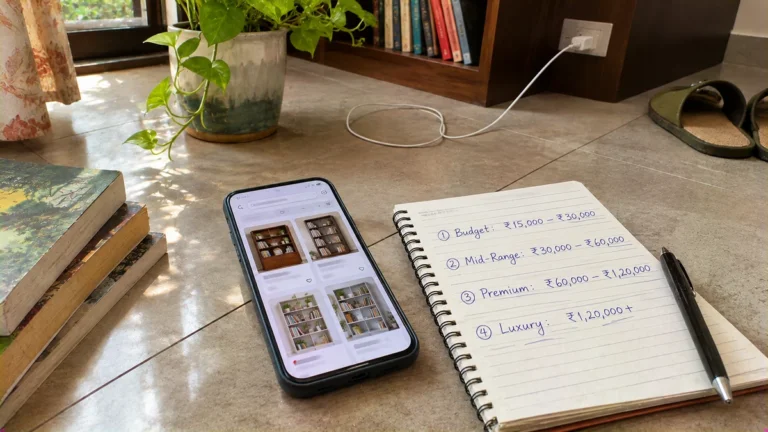
Book shelf design ideas for a study and living room, with ready-made price bands, shelf sizes and board choices, plus a quote checklist.
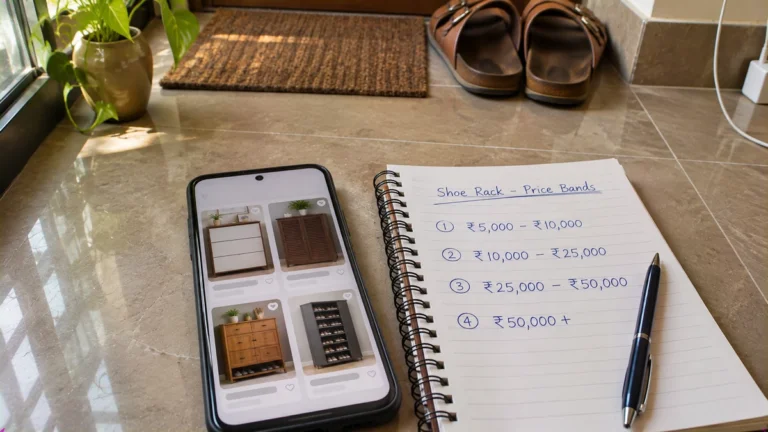
Shoe rack price in India by type, from plastic to solid wood, plus the sizes and designs that fit a flat entrance, and a…