

Kids Wardrobe Design Ideas: Safe, Fun & Functional
Kids wardrobe design needs to balance three things a normal wardrobe does not. Genuine safety features for small hands. A layout the child can use on their own. And enough flexibility to grow with them, instead of being outgrown in one year.
A wardrobe bought for a five-year-old rarely fits a ten-year-old’s clothes, height or habits. The ones that last plan for that change from day one.
Why a Kids Wardrobe Needs Different Planning
An adult wardrobe gets judged on finish and storage capacity. A kids wardrobe gets judged on whether a child can reach their own clothes without help.
It also gets judged on whether a corner or a handle becomes a problem during active play.
This guide covers the safety, growth and design side of planning one, and it connects into our wider wardrobe design guide.
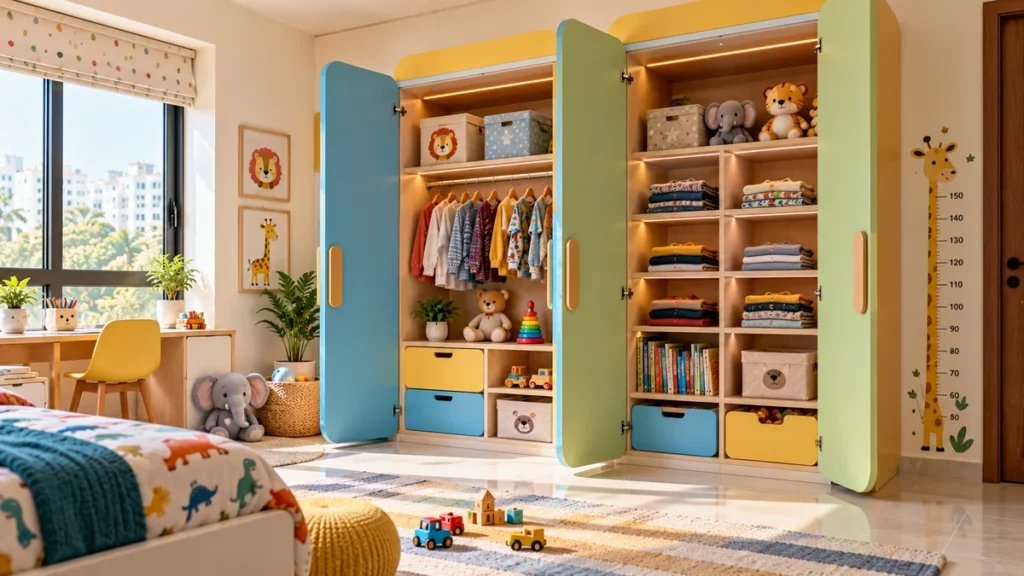
What Makes a Kids Wardrobe Design Actually Safe?
A safe kids wardrobe design starts with rounded corners and edges, since sharp corners are the most common source of bumps during active play.
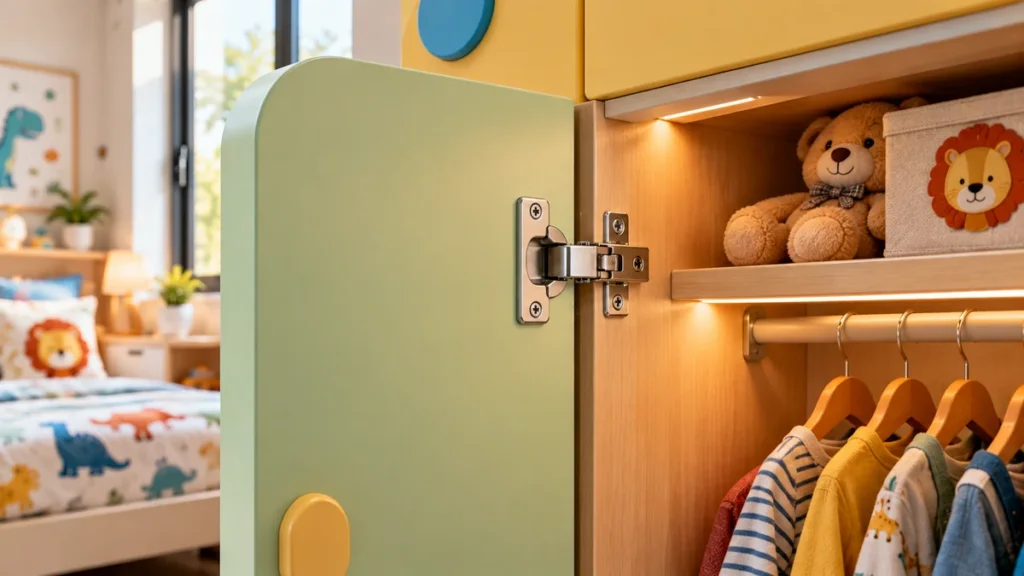
Soft-close hinges and smooth sliding tracks protect small fingers. A stable, anti-tip base stops the whole unit from tipping if a child climbs or pulls on a drawer.
Locks and fittings should be sturdy and fixed, not press-fit. Loose knobs, castor caps and decorative studs are a genuine choking hazard for a young child.
Checking that these are properly secured is worth doing at handover, not assumed.
Get started with Beautiful Homes
For expert design consultation, send us your details and we’ll schedule a call
Choosing a Non-Toxic Finish for a Kids Wardrobe
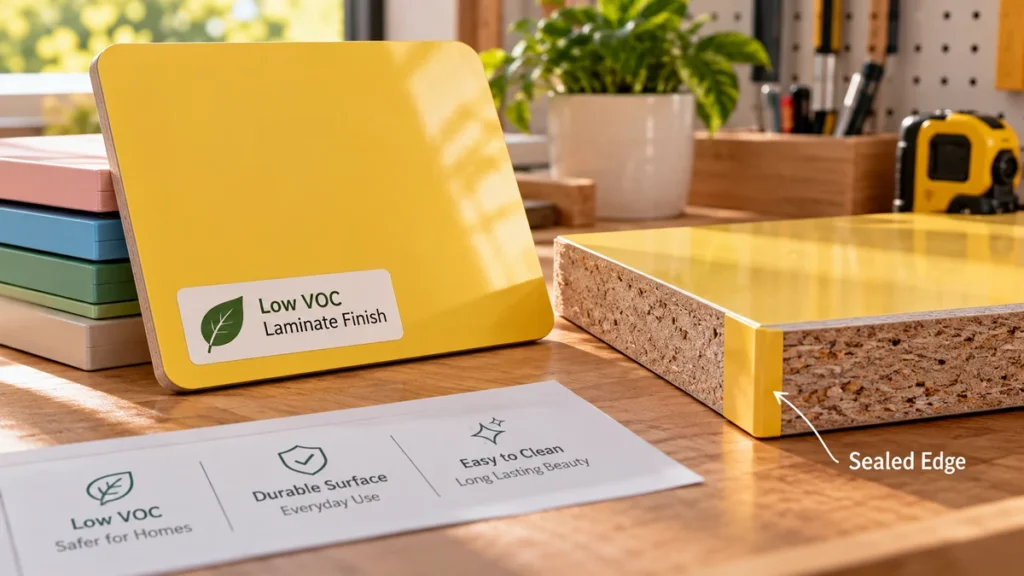
A low-VOC, water-based finish is the safer choice for a kids wardrobe. It does not off-gas the way strong-smelling chemical finishes can in a small, enclosed bedroom.
The ISI mark from the Bureau of Indian Standards on board materials is a useful general trust signal for the board itself.
It is still worth confirming separately that the specific finish and paint used are also low-VOC and child-safe.
HDHMR or BWP-grade plywood, finished with a sealed, low-VOC laminate, is a reasonable combination for a kids wardrobe carcass. A sealed edge also reduces the chance of a child picking at exposed board material.
Want a kids wardrobe built around safety and your child’s actual height? See our wardrobe design guide. Call or WhatsApp 08044630777 or fill in your details at bhumim.com.
Designing a Wardrobe That Grows With Your Child
A fixed shelf layout suits a toddler for a year or two, then stops fitting as the child grows.
Adjustable shelf heights and hanging rods let the same wardrobe reconfigure as the child grows, instead of needing a full replacement.
We think the growth question is worth asking before the design stage, not after. Planning for adjustability from the start costs little extra, while retrofitting it into a fixed wardrobe later usually means replacing sections entirely.
Colourful and Fun Design Ideas Kids Actually Like
- Soft, bright colours on shutters, rather than an all-white or all-wood finish, make the wardrobe feel like it belongs to the child.
- A themed handle or a name plaque personalises the piece without adding real cost.
- Open cubbies at a child’s eye level, for toys or favourite items, give them a space that is genuinely theirs to organise.
On the other hand, a design leaning too heavily into a specific cartoon or trend can feel dated within a year or two. A neutral base with colourful, swappable accents ages better than a fully themed exterior.
Height and Layout: Making the Wardrobe Usable for a Child
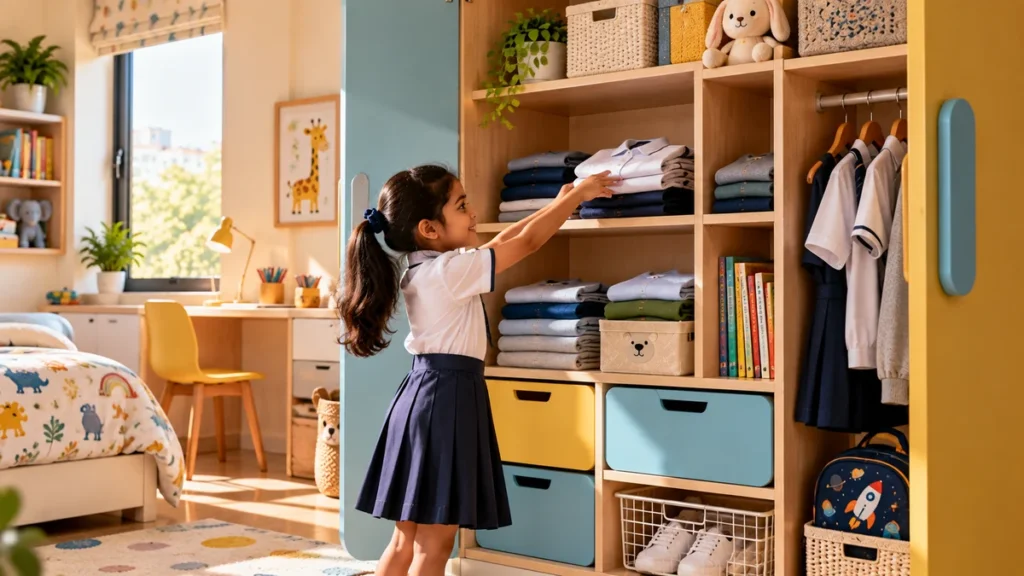
Placing daily essentials, school uniforms, everyday clothes, at a child’s own height, rather than an adult’s, is what actually builds independence. An “active zone” in the middle section, within a child’s easy reach, works better than a wardrobe designed top-down for an adult’s convenience. Our bedroom wardrobe storage guide covers general layout planning that applies here too.
Transparent bins or picture-labelled baskets help a child who cannot read yet find socks, hair accessories or stationery on their own. This matters more for daily usability than any style choice.
Common Mistakes in Kids Wardrobe Design
- Choosing sharp-cornered exterior styling for a young, active child instead of rounded edges.
- Skipping soft-close hardware, which leaves fingers exposed to a fast-closing door or drawer.
- Fixed shelf heights that fit today but not in two years, forcing a full redesign later.
- Loose or press-fit knobs and studs, which are a genuine choking hazard for a young child.
- Placing daily-use items at adult height instead of a child’s reach, which undermines the independence the wardrobe was meant to build.
Frequently Asked Questions
A safe kids wardrobe design has rounded corners and edges, soft-close hinges and sliding tracks, a stable anti-tip base, and fixed, sturdy fittings rather than loose or press-fit knobs. These reduce the most common risks during active play: bumps, pinched fingers, tipping and choking hazards.
A low-VOC, water-based finish is the safer choice, since it does not off-gas the way stronger chemical finishes can in a small, enclosed bedroom. While not every finish is a health emergency, choosing one that does not carry a strong chemical smell is a reasonable, low-cost precaution.
Based on Quora discussions on kid-safe finishes, non-toxic options include mineral oil, butcher block conditioners, and some Danish oils, along with water-based paints specifically labelled non-toxic. For a full wardrobe carcass, a sealed, low-VOC laminate is the more practical, durable choice than an oil finish.
Adjustable shelf heights and hanging rods let the same wardrobe reconfigure as a child grows, instead of needing full replacement every few years. Planning for this adjustability at the design stage costs little extra, while retrofitting it into a fixed wardrobe later usually means replacing sections entirely.
A themed design can be fun but tends to feel dated within a year or two. A neutral base wardrobe with colourful, swappable accents, a handle, a name plaque, cubby labels, usually ages better than a fully themed exterior while still feeling personal to the child.
Daily essentials like school uniforms and everyday clothes work best placed at a child’s own reach height, in a middle “active zone,” rather than at adult height. This lets the child dress and put things away independently, without needing help every morning.
Check that all knobs, castor caps and decorative studs are fixed rather than press-fit, since loose ones are a genuine choking hazard. Combine this with rounded edges, soft-close hardware and an anti-tip base for the most complete practical safety setup.
Call or WhatsApp Bhumim at 08044630777, or fill in your details at bhumim.com/contact. Share your child’s age and room size, and a team member will suggest a wardrobe design that balances safety, growth and a layout your child can actually use.
Key Takeaways
- Rounded edges, soft-close hardware and an anti-tip base are the core safety features to check for.
- A low-VOC, water-based finish avoids off-gassing in a small, enclosed bedroom.
- Adjustable shelves and rods let one wardrobe grow with your child instead of needing replacement.
- A middle “active zone” placed at a child’s reach height builds real independence.
- A neutral base with swappable colourful accents ages better than a fully themed design.
Conclusion
A kids wardrobe earns its cost by staying safe, usable and relevant for years, not just by looking colourful on day one. Get the safety features, adjustability and height right, and the fun design choices become the easy part.
If you are planning a kids wardrobe for your child’s bedroom, call or WhatsApp Bhumim at 08044630777 or reach out through bhumim.com/contact and we will design one around your child’s age and room.
About This Article
Published by: Bhumim India Private Limited-Modular Kitchen Manufacturer & Installer, Dehradun
GST: 05AAOCB1784F1ZM | ISO 9001:2015 Certified
Service Areas: Dehradun · Haridwar · Rishikesh · Roorkee · Noida · Ghaziabad
Contact: 08044630777 | hello@bhumim.com
Note: This article is written from Bhumim’s on-ground manufacturing and installation experience. All material recommendations are based on what we use in real kitchens across our service areas.