

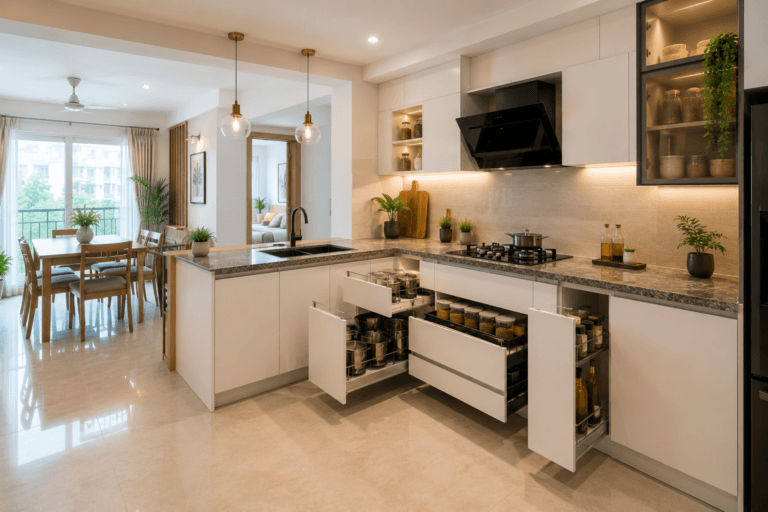
Modular Kitchen Design
Modular Kitchen in India: Complete 2026 Buying Guide
Modular kitchen in India: benefits, cost (₹1.5–8 lakh), modular vs carpenter comparison, material tips & 5 mistakes to avoid. 2026 guide.
April 1, 2026
A modular kitchen buying guide should walk you through five decisions in order: layout, carcass material, hardware quality, manufacturer credibility, and realistic cost factors. Get these five right before you sign anything, and the finish, layout, or brand of hob becomes a much smaller risk than most first-time buyers assume.
A modular kitchen buying guide, in the simplest sense, is a structured way to compare kitchen manufacturers on the things that actually affect how long your kitchen lasts – not just how it photographs in a 3D render. Most buyers only discover the gaps (soft-close hinges that fail in a year, plywood that swells near the sink, a “designer” who was really just a salesperson) after installation, when it’s expensive to fix.
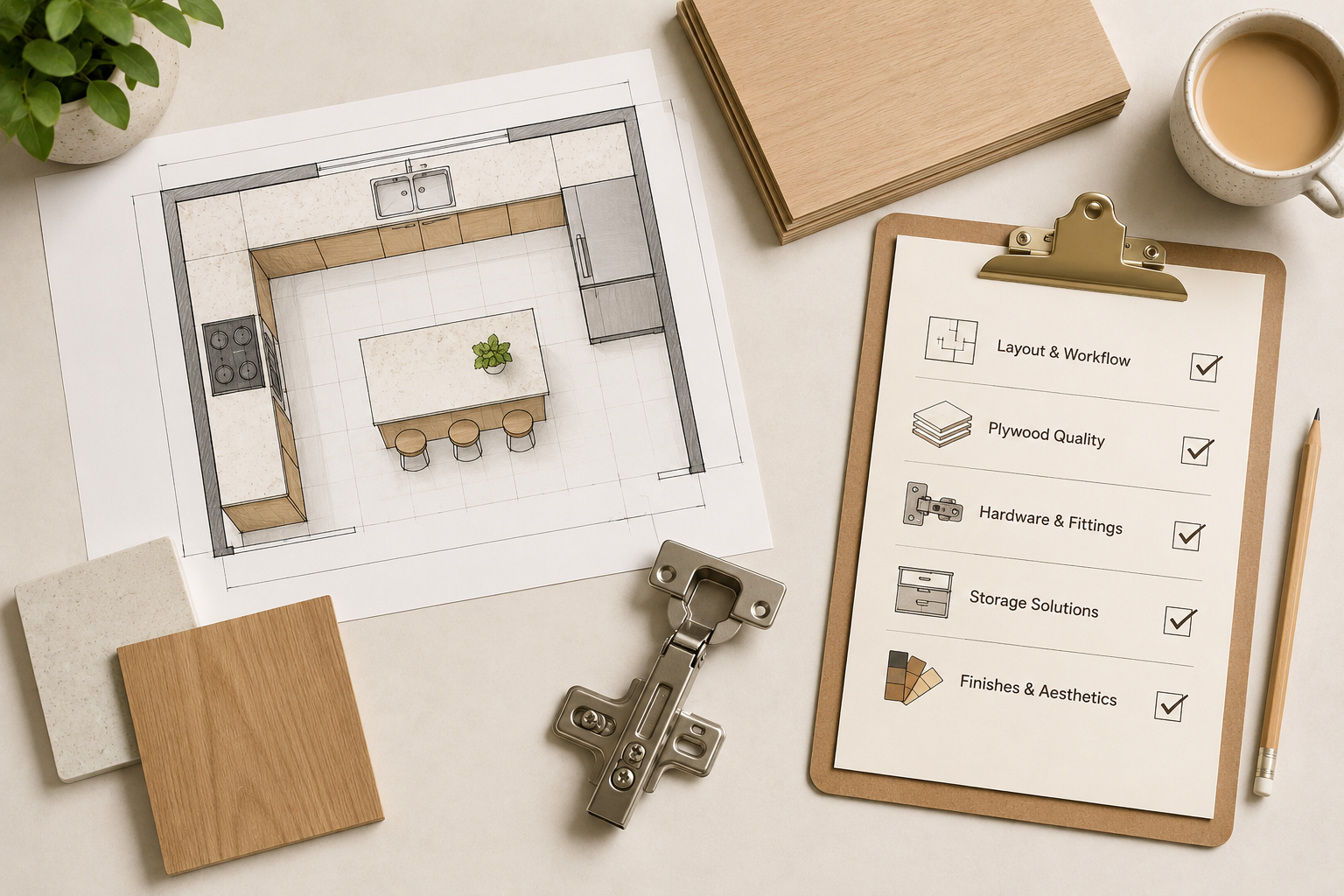
A 3D rendering can make almost any kitchen look identical to the one next to it. What separates a kitchen that holds up for 12 – 15 years from one that starts chipping at year two isn’t the render – it’s the carcass material, the hinge brand, the edge-banding quality, and whether the company installing it also manufactured it. This is exactly why a modular kitchen buying guide has to go deeper than colour swatches and handle styles.
If you’re planning this for a home in Dehradun or nearby hill-station cities, there’s an added layer: monsoon humidity and temperature swings put extra stress on cheap boards and adhesives, so the material checklist below matters even more than it would in a drier climate.
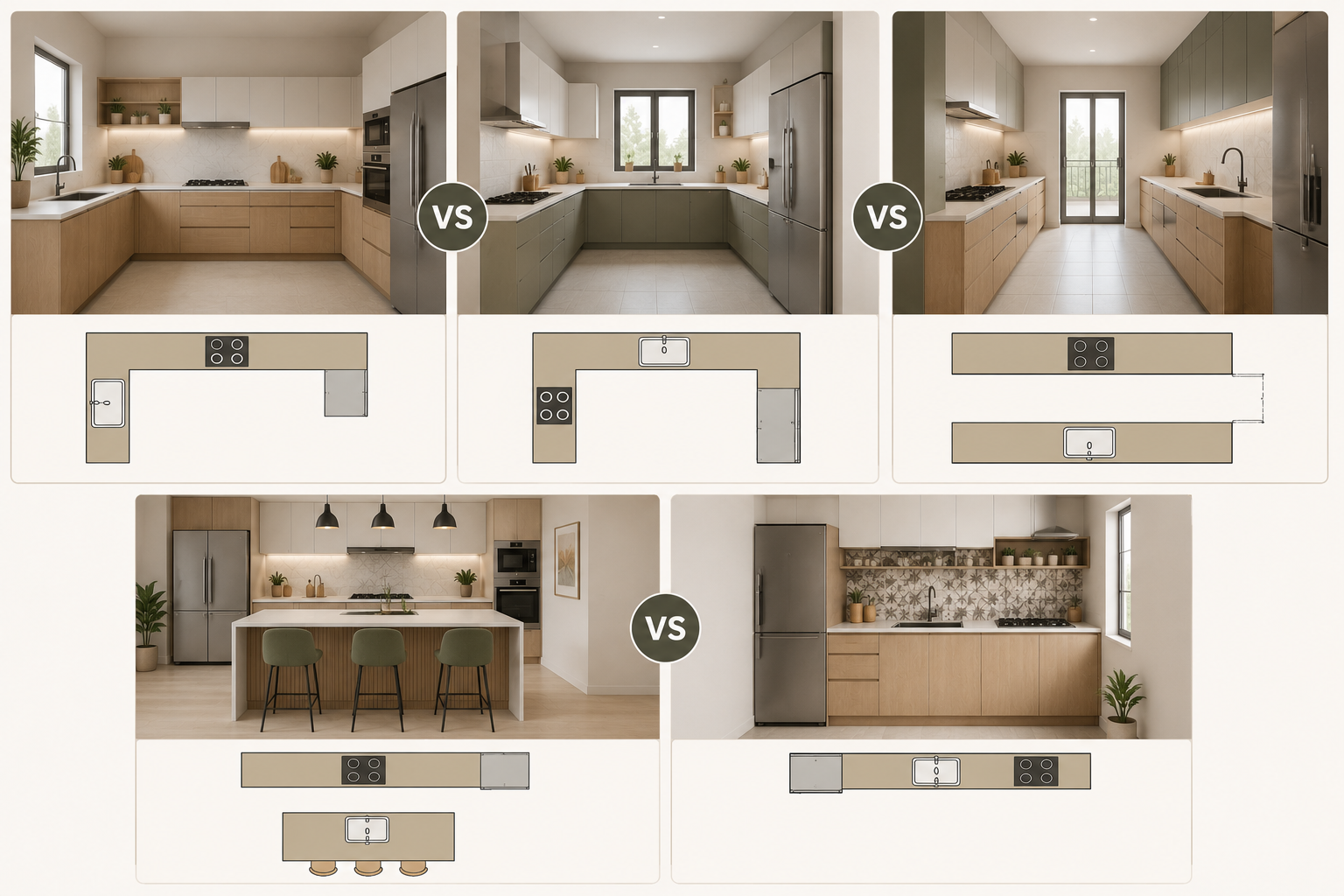
Layout decides your workflow, your storage, and – indirectly – your budget, since every extra corner or island adds carcass and hardware cost. Walk through these before requesting quotes so every manufacturer is pricing the same layout, not five different ones:
Common Mistake: Getting quotes for “a modular kitchen” without a locked layout. Two manufacturers pricing two different layouts can look wildly different in cost, and you’ll be comparing apples to oranges.
This is where a modular kitchen buying guide earns its keep, because material choice is invisible once the shutters are on – until it isn’t.
Carcass (the box behind the shutters):
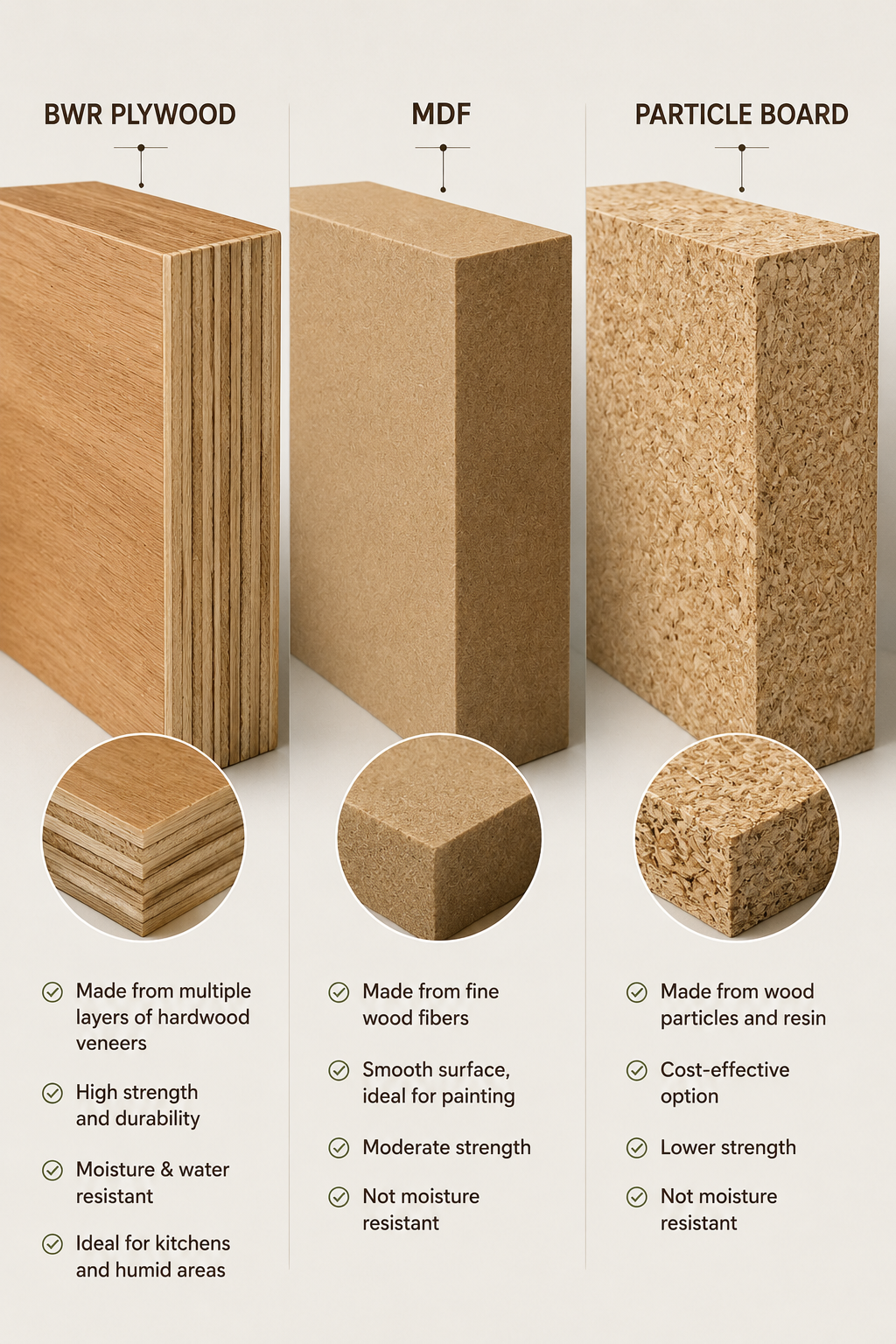
The most common recommendation for Indian kitchens, bonded with phenolic resin and rated to resist several hours of continuous moisture exposure, which matters directly under the sink and near the hob. The Bureau of Indian Standards’ IS 303 specification is the reference point most manufacturers quote when they say “BWR” or “BWP” grade, so it’s worth asking which grade and licence number your manufacturer is actually using rather than accepting “waterproof plywood” as a description.
Smoother finish, cheaper, but weaker against sustained moisture; fine for wall units, riskier for base units under the sink.
Lowest cost, shortest lifespan in humid zones; acceptable only if budget is the primary constraint and the kitchen sees light daily use.
Shutter finishes: laminate (durable, budget-friendly), acrylic (glossy, shows fingerprints, mid-to-high cost), PU/membrane (smooth matte look, moderate cost), and lacquered glass (glossy reflective finish, needs careful handling, highest cost of the four).
Material | Moisture Resistance | Typical Lifespan | Best For |
BWR Plywood (IS 303) | High | 12 – 15+ years | Base units, sink & hob zones |
MDF | Moderate | 7 – 10 years | Wall units, dry zones |
Particle Board | Low | 4 – 6 years | Tight budgets, low-moisture areas |
Marine/IS 710 Grade | Very high | 15+ years | Extreme humidity, rare in home kitchens |
Ask any experienced modular kitchen buyer where their kitchen actually failed first, and the answer is rarely the shutter – it’s the hardware. This deserves its own checklist within the larger buying guide:
Pro Tip: Ask to see the hardware brand names in writing on the quotation itself, not just verbally during the sales meeting. A written quote that says “branded hinges” without naming the brand is a red flag worth pushing back on.
For expert design consultation, send us your details and we’ll schedule a call
Modular kitchen pricing varies significantly by city, board grade, hardware brand, countertop material, and layout size – so treat any number you see online (including in this guide) as a rough range, not a quote. As a rule of thumb, the factors that move the price most are:
Rather than anchoring to a fixed budget figure, ask each manufacturer for a per-running-foot breakdown by material grade – this makes it far easier to compare two quotes that look different on the surface but are actually pricing similar things.
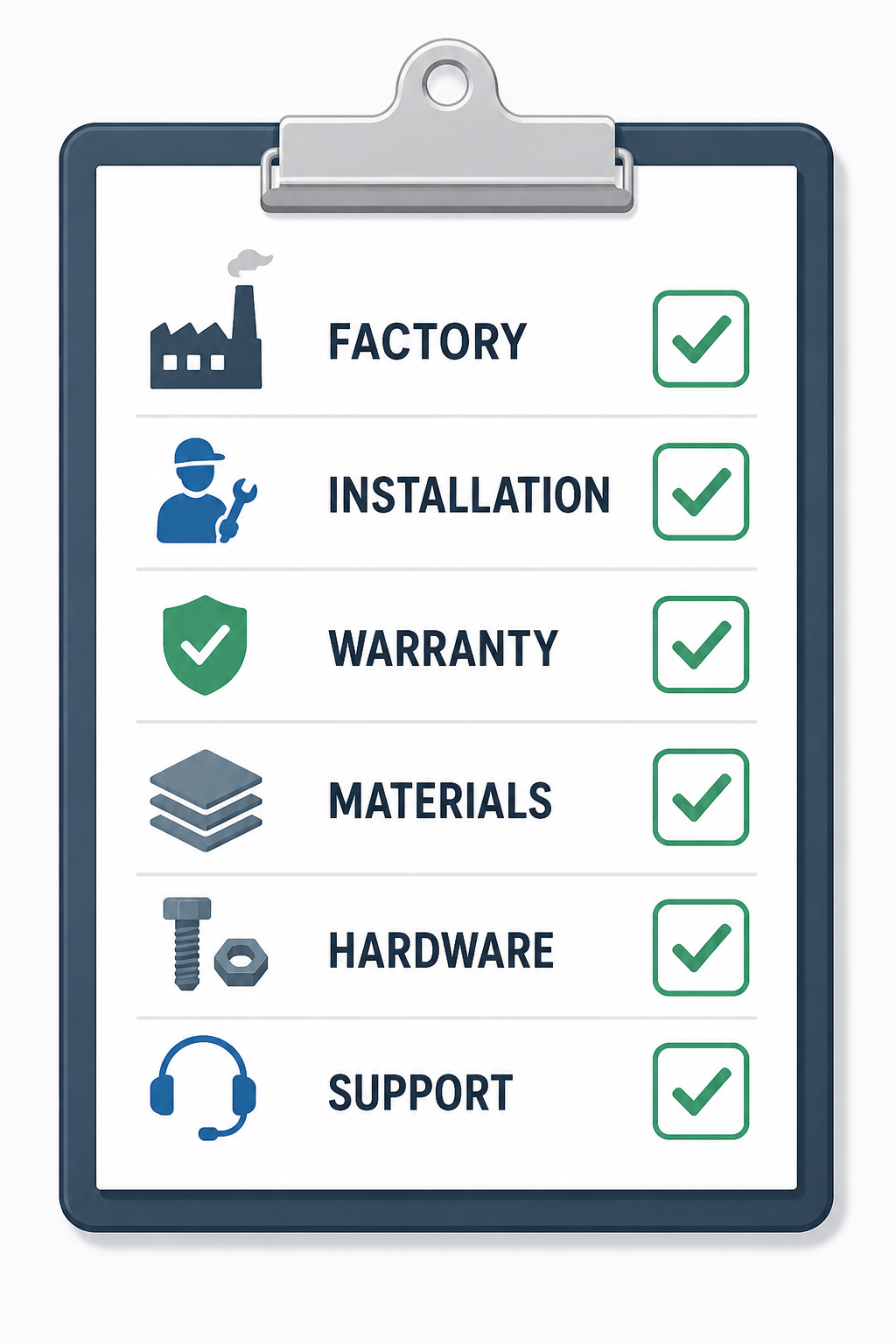
This is arguably the most important section of any modular kitchen buying guide, because the manufacturer matters more than any single material choice. Use this checklist to evaluate any company – Bhumim included:
Bhumim, for context, manufactures its own modular kitchens rather than outsourcing and reselling, and its installation team is in-house – but the point of this checklist is that you should be asking every manufacturer these same six questions, not taking any single company’s word for it.
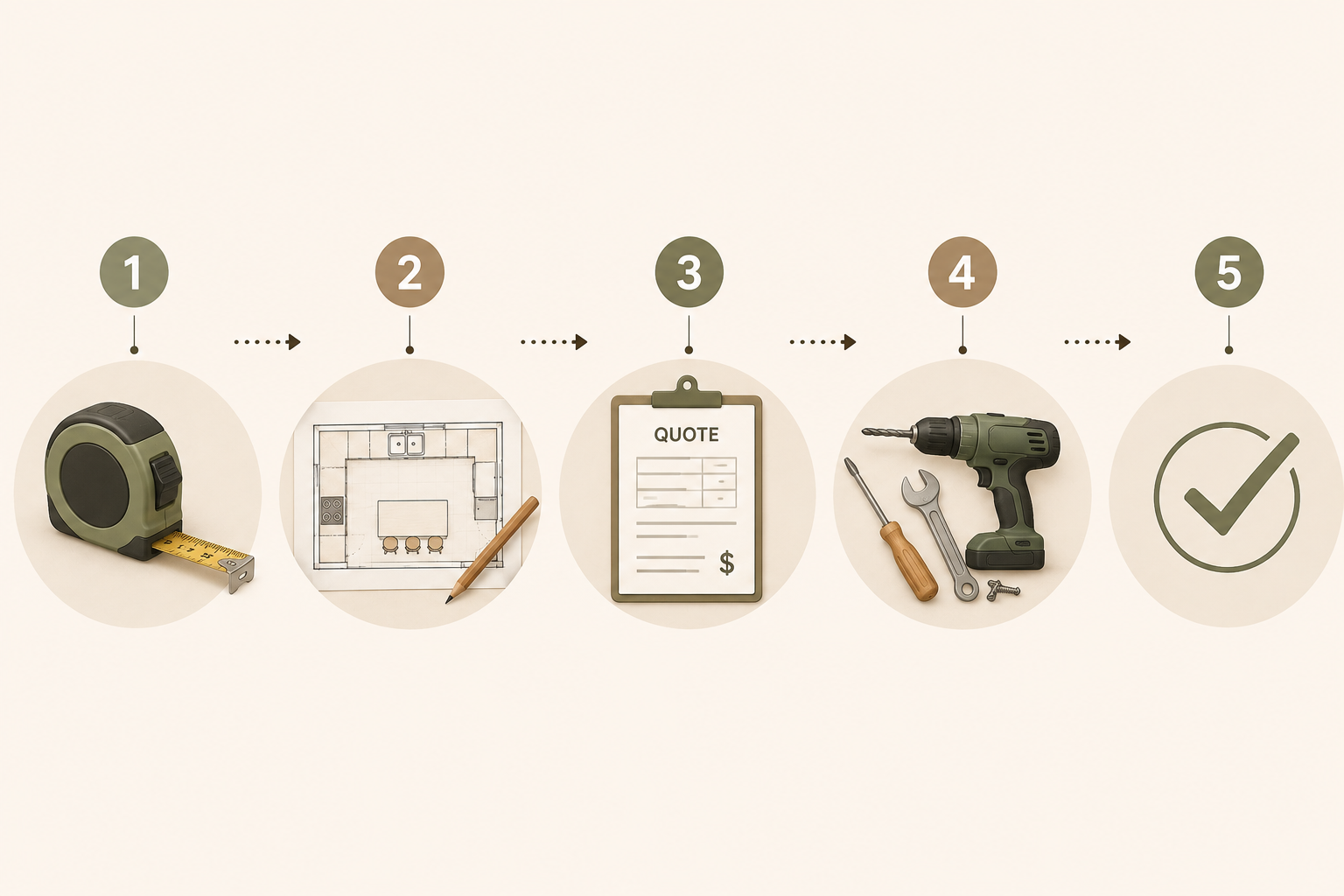
Installation timelines vary by kitchen size and manufacturing backlog, but as a general pattern: measurement and finalising the design typically take 1 – 2 weeks, manufacturing runs 3 – 5 weeks depending on order volume, and on-site installation itself usually takes 3 – 7 days for an average kitchen. Ask your manufacturer for a written timeline rather than an estimate given verbally, since manufacturing delays are one of the more common sources of frustration in this process.
For most Indian homes, BWR-grade plywood under IS 303 is the widely recommended baseline for base units and any cabinet near the sink or hob, given its moisture resistance. MDF is a reasonable, more affordable option for wall units in drier zones of the kitchen. The “best” material genuinely depends on your budget and how much daily moisture exposure that specific cabinet will see – which is why splitting the material choice by cabinet zone (base vs. wall) often makes more financial sense than using one grade throughout.
If you’re buying for a home in Dehradun, Haridwar, Rishikesh, Roorkee, or the surrounding areas, monsoon humidity is the factor most buyers underestimate. Boards with lower moisture resistance swell, warp, or delaminate faster in these climates than they would in a drier city. Apartment kitchens with limited ventilation face this more acutely than independent villas with cross-ventilation, so ask your manufacturer specifically how their board grade performs in humid conditions rather than accepting a generic national answer.
A kitchen bought against a checklist rather than on render appeal tends to deliver on three fronts: it lasts longer (because the carcass and hardware were actually vetted), it costs less to maintain (fewer callback repairs for hinges or swelling boards), and it’s easier to hold the manufacturer accountable (because warranty terms and material grades were documented upfront, not assumed). None of this requires expertise – it just requires asking the six manufacturer-comparison questions and the material questions above before signing anything.
At minimum, layout, carcass material, hardware brands, manufacturer credibility, and cost factors – the five decisions that affect how the kitchen performs after the first year, not just how it looks on day one.
Not exactly. BWR (Boiling Water Resistant) plywood under IS 303 resists sustained moisture well but isn’t fully waterproof; true marine-grade waterproof plywood falls under IS 710 and is rarely needed for home kitchens.
It varies too widely by city, material grade, and layout size to quote a single figure reliably – ask manufacturers for a per-running-foot breakdown by material grade instead of comparing flat totals.
Plywood, particularly BWR grade, generally holds up better in moisture-prone zones like under the sink; MDF is a reasonable, more budget-friendly choice for drier wall units.
Ask directly, and ask to see or visit the factory if possible – companies that outsource manufacturing and resell often can’t answer specifics about board grade or hardware sourcing with confidence.
Warranty terms vary by manufacturer and product category, so there’s no universal number to expect – get the exact coverage period and what it includes (hardware, boards, or both) in writing before signing.
Generally yes – named-brand soft-close hinges tend to outlast unbranded hardware by years and reduce wear on the cabinet frame itself from slamming.
Yes, and it’s a common, sensible approach – using BWR plywood for base units near water/heat sources and a more economical board for drier wall units.
Roughly 5 – 8 weeks total is a common range (design finalisation, manufacturing, and installation combined), though this depends heavily on manufacturing backlog – always get a written timeline.
Comparing price before comparing layout and material specs – two quotes that look far apart in cost are often pricing two different kitchens entirely.
A modular kitchen buying guide is really just a way of slowing down a decision that most people rush because the render looks finished. Layout, material grade, hardware, and manufacturer credibility are the four things worth genuinely comparing before price – everything else is finish and personal taste. If you’re planning a kitchen in Dehradun, Haridwar, Rishikesh, Roorkee, Noida, or Ghaziabad and want to walk through this checklist against your own space, Bhumim’s team can go through the layout and material options with you – no obligation to commit on the first conversation.
Published by: Bhumim India Private Limited-Modular Kitchen Manufacturer & Installer, Dehradun
GST: 05AAOCB1784F1ZM | ISO 9001:2015 Certified
Service Areas: Dehradun · Haridwar · Rishikesh · Roorkee · Noida · Ghaziabad
Contact: 08044630777 | hello@bhumim.com
Note: This article is written from Bhumim’s on-ground manufacturing and installation experience. All material recommendations are based on what we use in real kitchens across our service areas.
Modular kitchen in India: benefits, cost (₹1.5–8 lakh), modular vs carpenter comparison, material tips & 5 mistakes to avoid. 2026 guide.
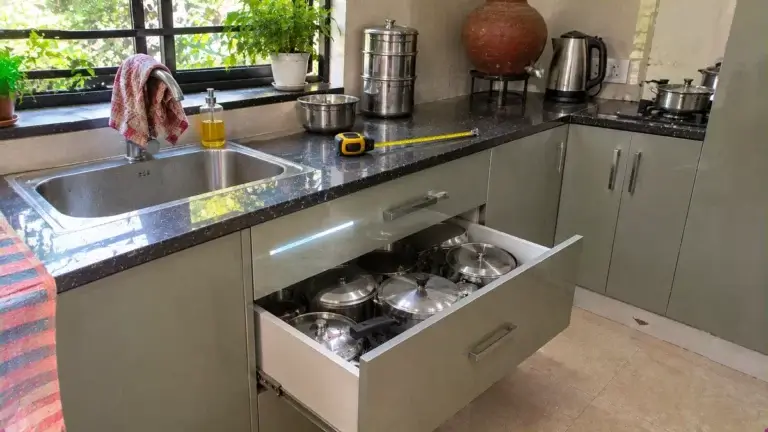
Planning kitchen drawer design? See base-drawer sizes in mm, soft-close runner checks, pots and pans depth and cutlery tray fit.
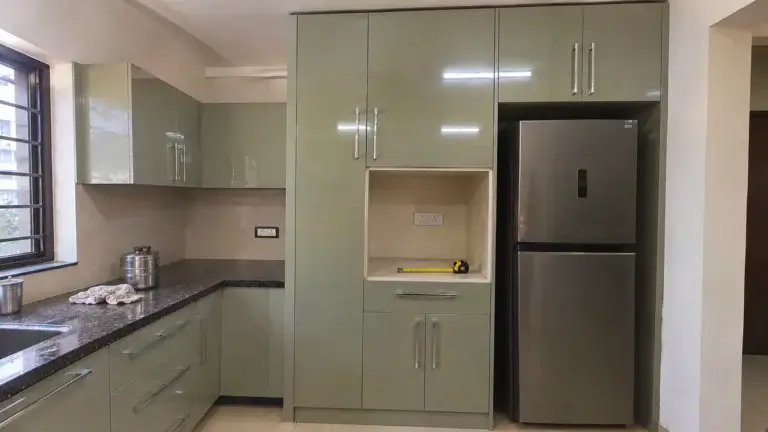
Planning a kitchen tall unit? See sizes in mm, oven and fridge housing rules, a worked cost example and a checklist for 1 to…