

Mirror Wardrobe Designs: Full-Length vs Partial Mirror Doors
Mirror wardrobe design comes down to one choice: full-length mirror doors or a partial mirror on some panels. Full-length mirrors make small, dim rooms feel larger and replace a separate dressing mirror. Partial mirrors suit bright or busy rooms, since they add reflection without turning the wardrobe into a glass wall.
Both work well in the right room. The wrong pick usually comes from choosing in a showroom instead of in your own bedroom.
Why the Mirror Decision Is Bigger Than It Looks
You are standing in a showroom, looking at a sliding wardrobe with a full mirror panel, and it looks fantastic. The room seems to double in size. Then you picture the same panel at night beside your bed, or at noon with the window light bouncing off it. Most mirror wardrobe regrets start right there, because the mirror is chosen in a showroom and lived with in a bedroom.
This guide compares the two real options and shows how to decide for your room. It sits inside our wider guide to sliding wardrobe designs.
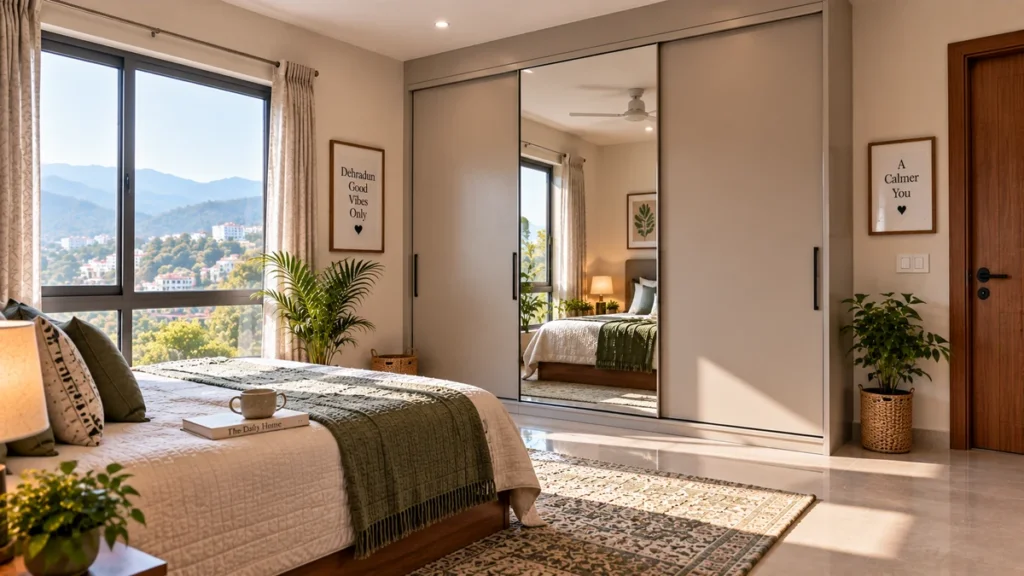
What Counts as a Full-Length and a Partial Mirror Wardrobe?
A full-length mirror wardrobe has mirror across the whole height of one or more doors, usually the sliding panels. You see yourself from head to toe.
A partial mirror wardrobe keeps the mirror to part of the front, such as one door, a vertical strip or the lower panels. Laminate, wood or plain glass fills the rest. Either style can sit on sliding or hinged doors, though they behave very differently in a real room.
Get started with Beautiful Homes
For expert design consultation, send us your details and we’ll schedule a call
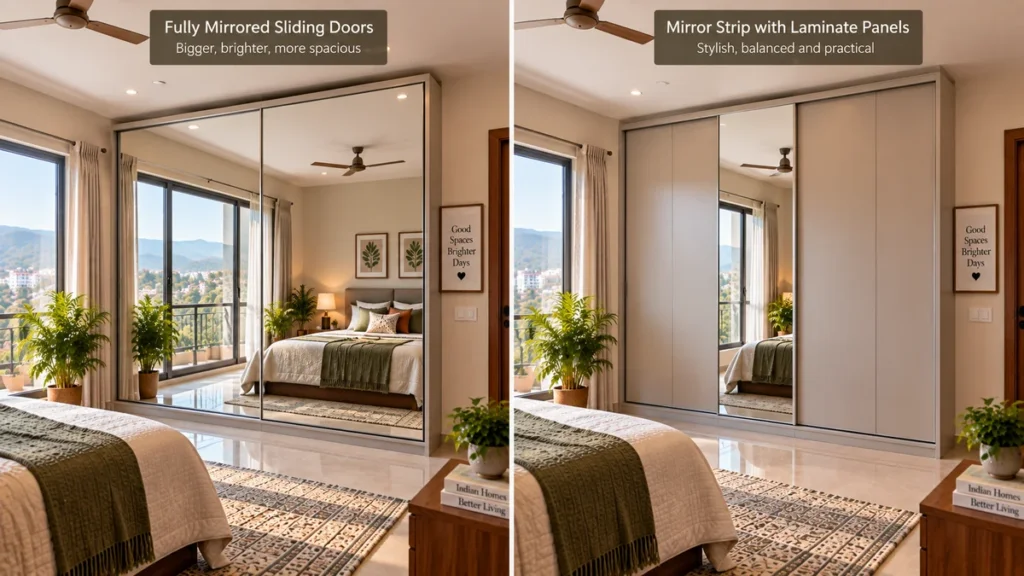
Full-Length vs Partial Mirror Doors: The Side-by-Side
Factor | Full-length mirror | Partial mirror |
Room feel | Biggest sense of space | Balanced, warmer, more structured |
Light | Reflects the most | Reflects some, keeps the surface calmer |
Dressing use | Head-to-toe view built in | Works if the mirror sits at eye height |
Upkeep | More surface to clean and smudge | Less mirror, less wiping |
Cost | More mirror area, so a higher quote | Lower, since laminate covers the rest |
Suits | Small or dim bedrooms | Bright, spacious or already busy rooms |
The table is a starting point, not a verdict. Your room, your window and your habits change the answer, which the next sections cover.
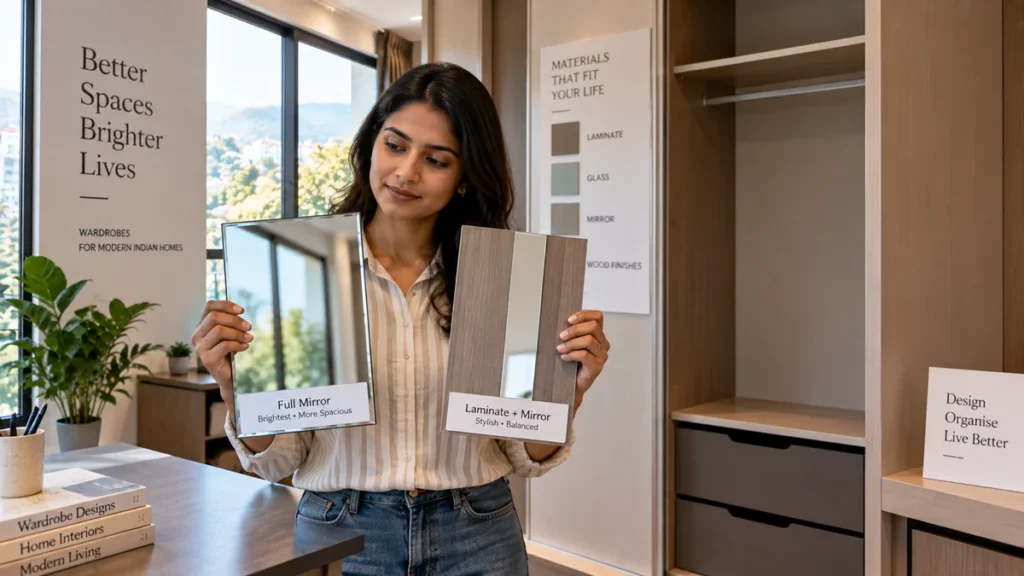
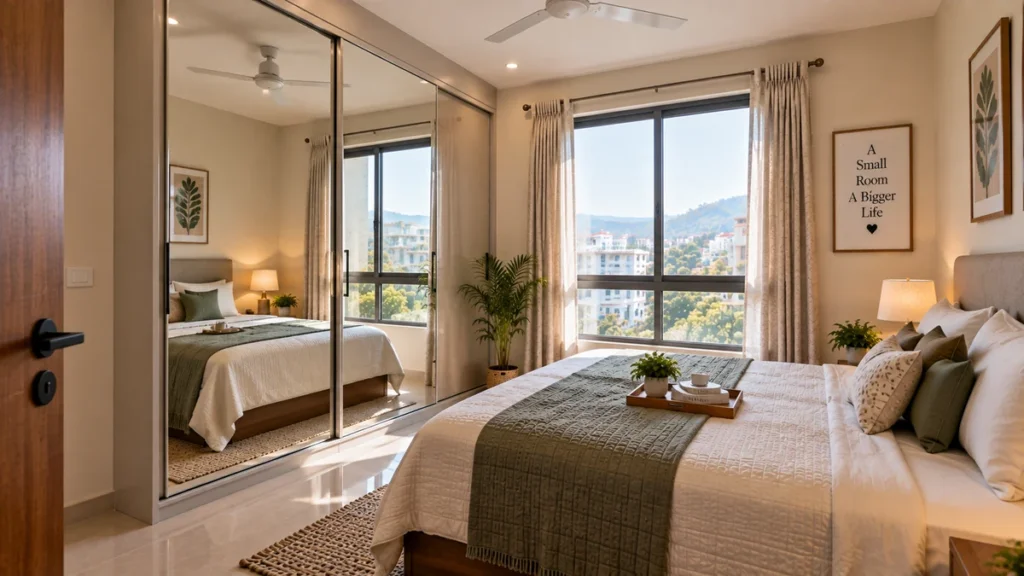
Mirror Wardrobe for a Small Room: Full or Partial?
For a small bedroom, full-length mirror on sliding doors usually works better. Sliding doors need no swing space, and Bhumim’s hinged vs sliding wardrobe guide recommends them for bedrooms under about 120 sq ft. A mirrored panel there also does two jobs, so it can replace a separate dressing mirror.
Our bedroom wardrobe storage guide points the same way for bedrooms up to roughly 12 by 14 feet. That said, size is only half the answer.
Check one more thing first: what will the mirror reflect? Stand where the wardrobe will be and look at what the panel would show. If it catches a cluttered corner or the bed, a partial mirror is the calmer choice.
Where Should the Mirror Go on the Wardrobe?
Position matters as much as size. Put the mirror on the door you stand in front of while dressing. That is often the one nearest the room entrance.
A mirror facing the window bounces daylight into the room. One facing the bed shows you the bed every morning and night. On a partial design, set the mirror at eye height. That way it works as a real dressing mirror, not just a decoration.
Sliding or Hinged: Which Door Suits a Mirror?
Sliding doors suit mirrors better. The larger, uninterrupted panels make a full-length mirror look seamless, and there is no door swinging into the room.
Hinged mirror doors work in larger rooms, at least 10 to 12 feet wide with about 3 feet of clear space in front. A mirror is heavier than a laminate shutter, so ask which hinges or track hardware carry the load.
On pricing, Bhumim’s 2026 Dehradun ranges run roughly ₹1,100–₹1,500 per sq ft for a basic sliding wardrobe and ₹1,500–₹2,200 mid-range. Hinged runs ₹900–₹1,200 basic and ₹1,200–₹1,800 mid-range. A good mirror panel adds cost on top, so ask for it priced as its own line.
Not sure whether your bedroom needs a full or partial mirror? Send us a photo of the wall and the room size and we will show both options in a free 3D design before you decide. Call or WhatsApp 08044630777 or fill in your details at bhumim.com.
What to Ask Before You Order a Mirror Wardrobe
Most guides show mirror wardrobes as photos and skip the questions that decide how they age. These five are worth asking before you sign.
- How is the mirror backed? Ask whether a safety backing or film is used, so a crack does not turn into loose glass.
- How are the edges finished? Bare edges chip easily, so ask what protects them.
- Which hardware carries the panel weight? Bhumim works with Blum, Grass, Hafele and Raumplus for this.
- What will it reflect? Check the view from the bed and from the door before fixing the position.
- How do you clean it? Spray glass cleaner on a microfibre cloth, not straight onto the door, so liquid stays out of the edges.
We have not quoted a mirror thickness here, because it depends on the panel size and the manufacturer’s specification. Ask for it in writing.
When a Mirror Wardrobe Is Not the Right Choice
We would hold back in three cases.
- The room is already bright, spacious and busy. Too much mirror can feel cold or overpowering there.
- The mirror would face your bed and that bothers you. If Vastu matters in your family, keep the mirror out of the bed’s line of sight or use a partial panel. Vastu sources commonly advise against mirrors facing the bed.
- You rarely use a wardrobe mirror, or you already have one. Laminate doors cost less and need less cleaning.
A useful middle path is mirror on the reachable lower doors and solid shutters above. If you are considering the space overhead too, our wardrobe loft guide covers the height numbers.
Frequently Asked Questions
A full-length mirror wardrobe has mirror across the whole height of one or more doors. A partial mirror wardrobe keeps mirror to part of the front, such as one door, a strip or the lower panels, with laminate or wood elsewhere. Full-length reflects more, while partial looks calmer.
Yes, usually. A mirrored sliding panel reflects light and the room, so a small bedroom appears wider. It works best on sliding doors in rooms under about 120 sq ft. Check what the mirror will reflect first, because a cluttered view is doubled too.
Sliding is usually better. The larger, uninterrupted panels look seamless and need no swing space. Hinged mirror doors suit larger rooms, at least 10 to 12 feet wide with about 3 feet of clear space, and need hinges that carry the extra weight of glass.
They can. In a bright, spacious or already busy room, a full mirror wall may feel cold or dominant. A partial mirror, or mirror on only some panels, keeps the reflection while letting laminate or wood soften the look and tie the wardrobe to other furniture.
That depends on your preference. Vastu sources commonly advise against mirrors facing the bed, or suggest keeping them inside a wardrobe. If it matters to your family, place the mirror away from the bed’s line of sight or choose a partial mirror on the side doors.
Spray glass cleaner onto a microfibre cloth and wipe, rather than spraying the door directly, so liquid does not seep into the edges. Wipe fingerprints as they appear, and check the edges and track now and then. Full-length mirrors show smudges more than partial ones.
Ask how the mirror is backed, whether a safety film is used, how the edges are finished and which hardware carries the panel. Also ask for the mirror thickness in writing. These details decide how the door ages, and they are worth confirming before you approve the design.
Skip it when your room is already bright and busy, when a mirror would face your bed and bother you, or when you rarely use a wardrobe mirror. In those cases laminate doors cost less, need less cleaning and look calmer, and a separate wall mirror does the job.
Call or WhatsApp Bhumim at 08044630777, or fill in your details at bhumim.com/contact. Share your room size and a photo of the wall. A team member shows full and partial mirror options in a free 3D design, typically within 3 to 5 working days.
Key Takeaways
- Full-length mirrors suit small or dim rooms, and partial mirrors suit bright or busy ones.
- Sliding doors carry mirrors better than hinged ones and need no swing space.
- Bhumim recommends sliding wardrobes for bedrooms under about 120 sq ft.
- Check what the mirror will reflect before you fix its position.
- Ask about backing, edge finish, hardware and thickness in writing before ordering.
Conclusion
That showroom question, mirror or no mirror, gets simple with three checks. What will it reflect, how small is the room, and will you really use it every day. Three yes answers point to full-length. Anything less points to a partial mirror or none.
If you are planning a wardrobe in Dehradun, Rishikesh or Haridwar, call or WhatsApp Bhumim at 08044630777 or reach out through bhumim.com/contact and we will show both mirror options in your room before you decide.
About This Article
Published by: Bhumim India Private Limited-Modular Kitchen Manufacturer & Installer, Dehradun
GST: 05AAOCB1784F1ZM | ISO 9001:2015 Certified
Service Areas: Dehradun · Haridwar · Rishikesh · Roorkee · Noida · Ghaziabad
Contact: 08044630777 | hello@bhumim.com
Note: This article is written from Bhumim’s on-ground manufacturing and installation experience. All material recommendations are based on what we use in real kitchens across our service areas.