

Cold-Weather Modular Kitchen: Why Dehradun/Rishikesh Winters Affect Hardware Differently Than Delhi
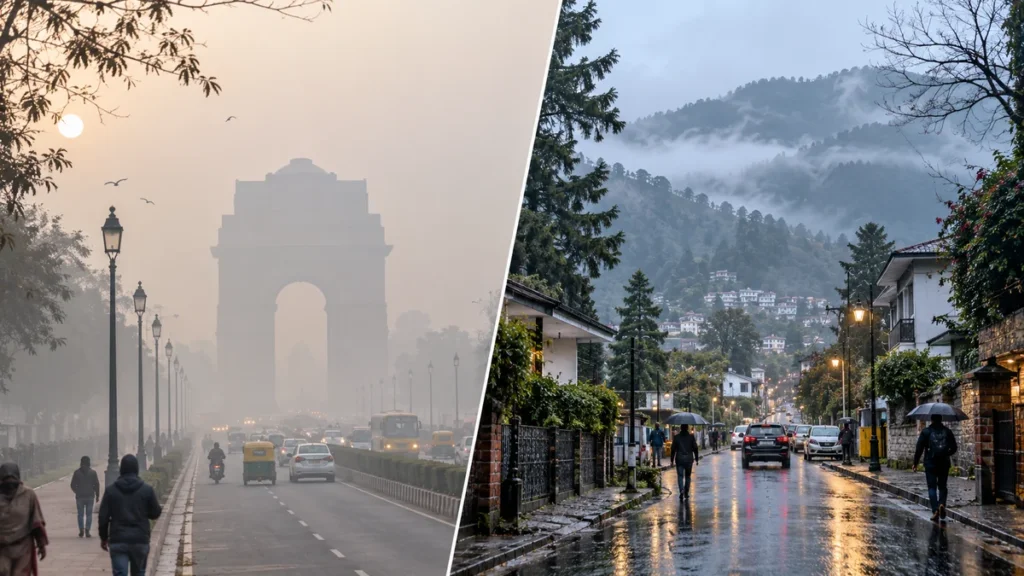
A modular kitchen for cold climate India needs hardware and materials chosen for the specific kind of cold it will face. Dehradun and Rishikesh face a genuinely different kind than Delhi does. Delhi’s winter is a dry cold, low humidity with fog sitting near the ground. Dehradun and Rishikesh get a damp cold instead, with winter showers running through the season. That single difference changes how hardware and boards actually age.
Most cold-weather kitchen advice online is written for dry, indoor-heated climates: American or European winters where the real enemy is dry air shrinking wood. That advice only partly applies here. A hill-town winter adds moisture stress on top of the cold, a combination dry-cold Delhi simply doesn’t deal with.

Why "Cold Climate" Means Something Different in Dehradun Than in Delhi
After servicing kitchens through several winters across Dehradun and Rishikesh, the hardware complaint that spikes every January is not about breakage. It’s a soft-close drawer suddenly closing slower than it used to, or a door that used to align perfectly now sitting slightly off. Neither is a defect. Both are cold weather doing exactly what cold weather does to hydraulic hardware and wood.
What Cold Weather Actually Does to Kitchen Hardware
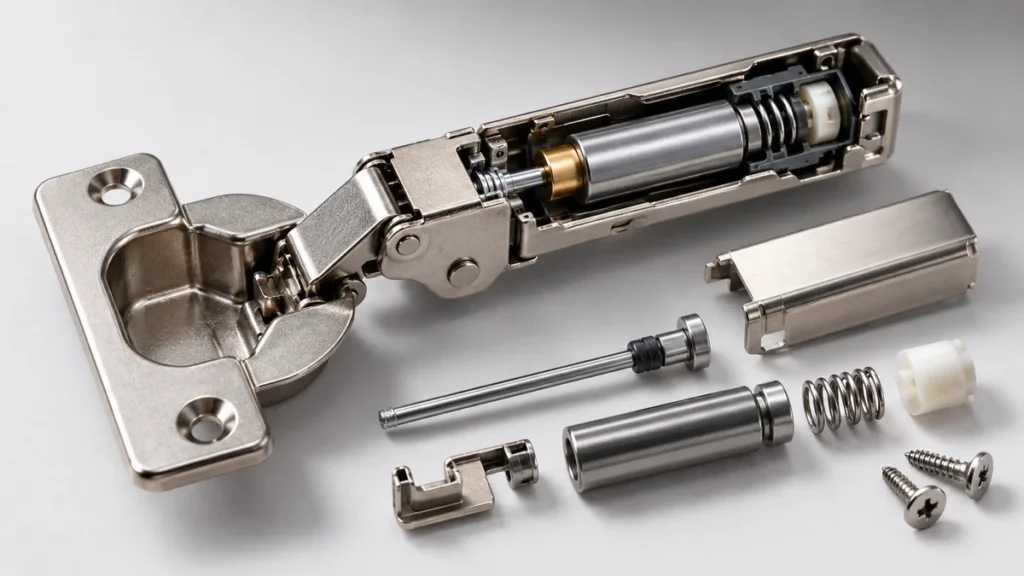
Soft-close hinges and drawer channels rely on a hydraulic damper, a small piston filled with fluid. It controls how slowly the door or drawer settles shut. Cold temperatures thicken that fluid slightly, the same reason a car’s hydraulics feel stiffer on a cold morning. The result: a soft-close mechanism that closes noticeably slower, or occasionally doesn’t fully latch, once temperatures drop into single digits overnight.
Metal hardware itself contracts slightly in the cold. On a cheaply made hinge, this can be enough to throw off door alignment by a millimeter or two. That’s just enough to notice a gap that wasn’t there in October. Better-engineered hardware accounts for this tolerance; hardware built to a tighter budget often doesn’t.
None of this is damage in the way a crack or a break is damage. It’s a temporary, temperature-driven behavior change that mostly self-corrects once temperatures rise.
Get started with Beautiful Homes
For expert design consultation, send us your details and we’ll schedule a call
Why Dry Cold and Damp Cold Are Different Problems
Delhi’s winter drops to single digits with genuinely dry air and morning fog that burns off by midday. Dehradun averages around 9 to 12°C through winter, colder still at night, but with periodic winter rain running through the season. Rishikesh sees a similar pattern, cold and notably damp rather than cold and dry.
This difference matters more than the temperature number alone. Dry cold pulls moisture out of wood and board material, the classic winter cracking and shrinkage problem most cold-climate furniture advice describes. Damp cold does something closer to the opposite at the material level, keeping ambient moisture elevated even as temperatures drop. A hill-town kitchen can face cold-driven hardware stiffening and moisture-driven board stress in the same season, not one or the other.
A kitchen specified purely for “cold weather” using generic advice, without accounting for which kind of cold, ends up under-prepared. Whichever half of the problem that advice skipped shows up eventually.
Not sure which cold-weather risks actually apply to your home? Bhumim specifies hardware and board grades based on your specific location’s winter pattern, not a generic cold-weather checklist. Call or WhatsApp 08044630777 or fill in your details at bhumim.com.
What Happens to Wood and Board Material in Winter
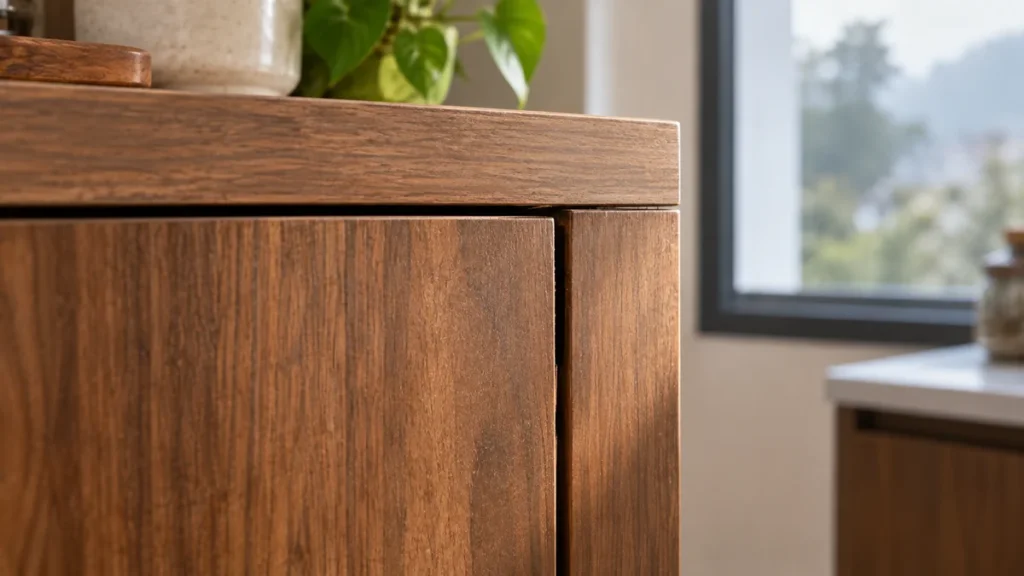
Indian winter research on wood furniture agrees on one point. Once indoor relative humidity drops below roughly 35 to 40 percent, wood dries out, shrinks, and can crack or loosen at joints. This is the dry-cold mechanism. It applies wherever indoor air genuinely dries out, including clear, dry Dehradun winter days between rain spells.
The damp-cold spells common to Dehradun and Rishikesh work differently. Ambient moisture stays present even as temperatures fall, which doesn’t cause the same shrinkage risk. It does mean board material near the sink or an exterior wall keeps facing moisture exposure. Purely dry cold would have given it a seasonal break instead.
BWP-grade IS:710 plywood and properly sealed HDHMR handle this mixed exposure better than a lower-grade board. Both are built to tolerate moisture variation rather than one fixed condition.

Choosing Hardware That Handles Both Cold and Damp
Not all hardware is engineered the same way for temperature and humidity swings, and the difference shows up specifically in winters like Dehradun’s.
Approved brands like Hafele, Blum, and Grass use hydraulic fluid and plating formulated for a wider temperature and humidity range than unbranded alternatives. This is a genuine, practical reason brand matters more here than in a climate with less seasonal swing.
A soft-close mechanism built for a narrow operating range will show the cold-slowdown effect more noticeably. It also recovers less predictably than one engineered for real seasonal variation.
Simple Winter Care That Prevents Most Issues
Most winter hardware behavior in a Dehradun or Rishikesh kitchen needs no intervention beyond a little patience and one or two small habits.
A soft-close mechanism that’s closing slowly in January will typically return to normal speed on its own once temperatures rise, no adjustment needed. If a hinge genuinely needs realignment rather than just behaving slower, most hinges include a small adjustment screw for exactly this. Ask your installer to show you rather than forcing a misaligned door.
During damp-cold spells specifically, wipe down any board surface exposed to condensation, particularly near a cold exterior wall. This prevents the same slow moisture stress a monsoon would cause, just spread across a longer, colder season.
When to Actually Worry vs When It's Normal
Most cold-weather hardware behavior is completely normal and temporary. A specific pattern is worth an actual call to your manufacturer.
Slower soft-close action, a slightly off-alignment door, or a drawer needing a firmer push are all normal seasonal behavior. They self-correct on their own.
A hinge that won’t close at all, visible cracking near a joint, or hardware misaligned well into warmer months are not normal. These are worth a genuine service call, not an assumption it’ll resolve itself.
For material choices across every season, not just winter, see Bhumim’s HDHMR vs BWP plywood comparison, and for the monsoon half of North India’s seasonal cycle, see the waterproof modular kitchen guide for Dehradun. Winter and monsoon are two ends of the same seasonal-durability question.
Frequently Asked Questions
The hydraulic fluid inside soft-close hinges and drawer channels thickens slightly in cold temperatures, the same reason vehicle hydraulics feel stiffer on a cold morning. This is temporary and typically returns to normal once temperatures rise.
Not in the way dry, heated-indoor climates cause cracking, but Dehradun’s winter combines cold with periodic dampness, so board material near a sink or exterior wall can face moisture stress through winter rather than getting a seasonal break from it.
Not necessarily different materials, but the reasoning changes. Both climates benefit from BWP-grade or HDHMR boards, but a hill-town kitchen should prioritize moisture tolerance through winter, while a Delhi kitchen prioritizes handling dry-air shrinkage.
A gap of a millimeter or two that appeared with cold weather is usually temperature-driven metal contraction, not damage, and often self-corrects. If it doesn’t improve once temperatures rise, or the gap is more significant, ask your installer to check the hinge adjustment.
Call or WhatsApp Bhumim at 08044630777, or fill in your details at bhumim.com/contact. A team member can assess your current hardware and recommend fittings suited to your specific location’s winter pattern.
Key Takeaways
- Delhi’s winter is dry cold; Dehradun and Rishikesh get a damp cold, and the two stress hardware and boards differently
- Soft-close hinges slow down in cold weather because hydraulic fluid thickens, a temporary and normal behavior
- Metal hardware contracts slightly in cold, which can cause minor, self-correcting door misalignment
- Hill-town kitchens face combined cold-plus-moisture stress through winter, not just one or the other
- Branded hardware (Hafele, Blum, Grass) handles temperature and humidity swings more consistently than unbranded alternatives
Conclusion
The client whose soft-close drawer “broke” every January for three years never had a broken drawer. She had a hydraulic mechanism doing exactly what cold hydraulic fluid does, in a climate generic cold-weather advice was never written for. Knowing the difference between dry-cold advice and what Dehradun’s damp-cold winter actually does is most of the battle.
If you want your kitchen’s hardware and materials genuinely specified for your location’s winter, not a generic cold-weather checklist, call or WhatsApp Bhumim at 08044630777 or reach out through bhumim.com/contact, serving Dehradun, Haridwar, Rishikesh, Roorkee, Noida, and Ghaziabad. You can also see the hardware in person at the Dehradun showroom on Google Maps before deciding what your kitchen actually needs.
About This Article
Published by: Bhumim India Private Limited-Modular Kitchen Manufacturer & Installer, Dehradun
GST: 05AAOCB1784F1ZM | ISO 9001:2015 Certified
Service Areas: Dehradun · Haridwar · Rishikesh · Roorkee · Noida · Ghaziabad
Contact: 08044630777 | hello@bhumim.com
Note: This article is written from Bhumim’s on-ground manufacturing and installation experience. All material recommendations are based on what we use in real kitchens across our service areas.