

Hard Water & Borewell Damage to Modular Kitchen Fittings: A Dehradun Homeowner's Guide
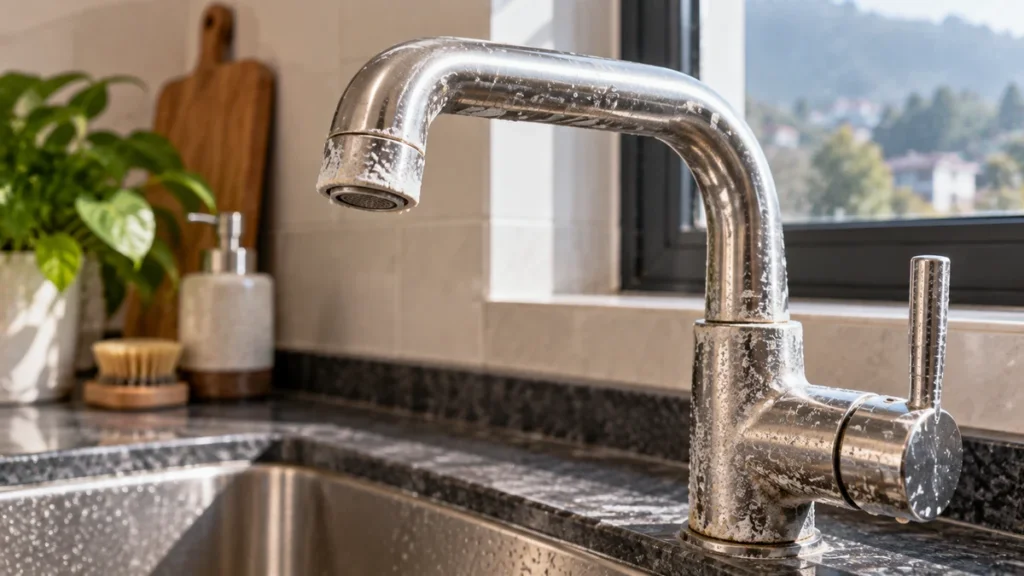
Modular kitchen hard water damage in Dehradun shows up as limescale on taps, a weakening spray from clogged aerators, and staining on steel sinks that scrubbing won’t remove. Over years, it also causes swelling at the sink cabinet base from mineral-laden water sitting where it shouldn’t. Dehradun’s groundwater runs harder than most homeowners realize, and borewell-sourced water tends to run harder still.
This is not the same problem as monsoon dampness. A kitchen can be genuinely waterproofed against humidity and still lose its hardware to hard water within a few years. The two problems attack different parts of the kitchen in different ways.
Why Your Dehradun Kitchen Fittings Wear Out Faster Than the Warranty Suggests
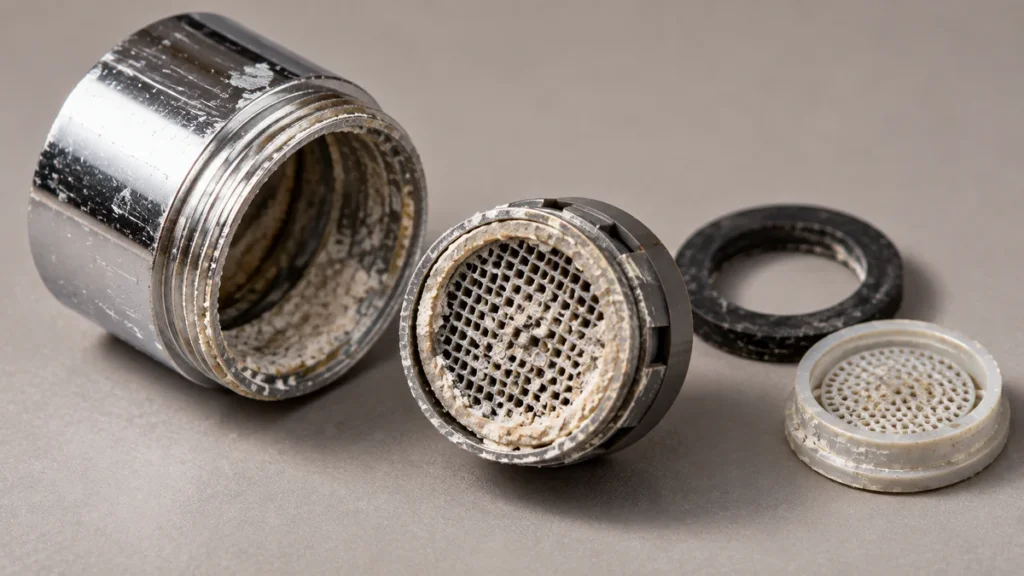
After fitting out kitchens across Dehradun for years, the tap complaint our service team hears most is not about leaks. It is a client noticing the spray has gone weak and uneven, assuming the tap is failing. The actual cause is usually a chalky buildup inside the aerator that a five-minute clean would fix.
Get started with Beautiful Homes
For expert design consultation, send us your details and we’ll schedule a call
Why Dehradun's Groundwater Runs Hard
Hardness in water comes down to dissolved calcium and magnesium, and Dehradun’s local geology hands both in generous supply.
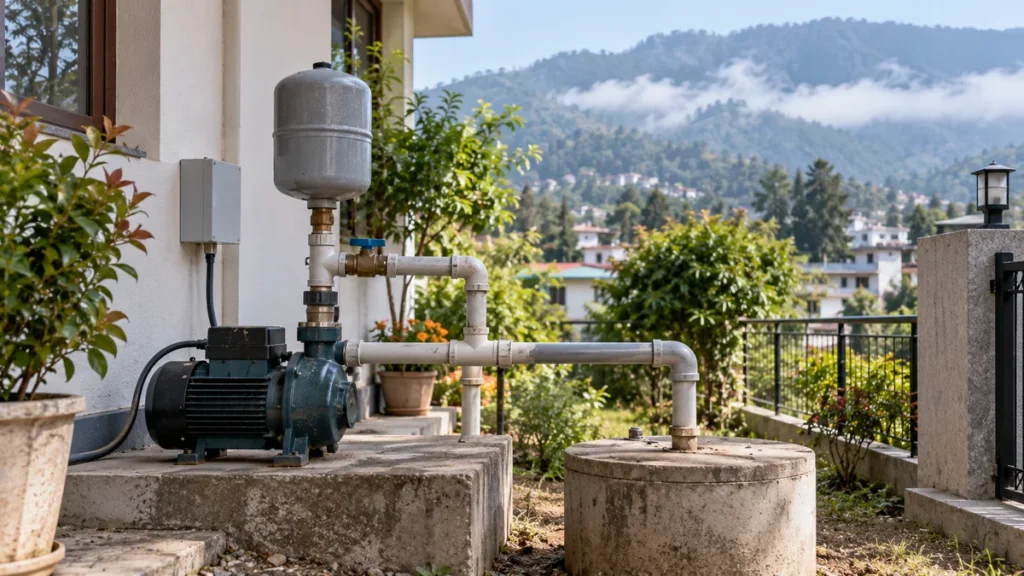
Groundwater studies of the Dehradun valley consistently report elevated calcium dissolution and total dissolved solids in several zones. This is a direct result of the region’s limestone-rich strata. Water drawn from a borewell typically runs harder than municipal supply. Deeper groundwater has more contact time with mineral-bearing rock before it reaches your tap.
A home relying entirely on borewell water, common across many Dehradun colonies without full municipal coverage, usually deals with more scale buildup. A home on piped supply alone tends to see less.
None of this means the water is unsafe to use. Water within BIS IS 10500 drinking water hardness limits can still be very noticeably hard on fittings. It means the minerals in it will, over time, leave a visible and structural mark on anything they touch repeatedly.
Where Hard Water Damage Shows Up First in a Modular Kitchen
Hard water doesn’t damage a kitchen all at once. It shows up first in the smallest, easiest-to-ignore places.
The tap aerator, the small mesh screen at the tip of the faucet, is usually first. Mineral crystals build up inside it every time water sits and evaporates on the metal, narrowing the flow until the spray turns weak and uneven. This is often mistaken for a plumbing fault rather than a five-minute cleaning fix.
Faucet finish comes next. Chrome and steel finishes develop a dull, etched look that polishing struggles to fully reverse. Darker or matte-black finishes show white mineral spotting more visibly than a lighter finish does.
Underneath the sink, the drain and P-trap slowly narrow as mineral deposits build along the pipe walls. This both slows drainage and gives grease and food particles a rougher surface to stick to.
What Hard Water Does to Cabinet Material Over Time
Hardware wears the most visibly, but the cabinet itself carries a slower, quieter risk.
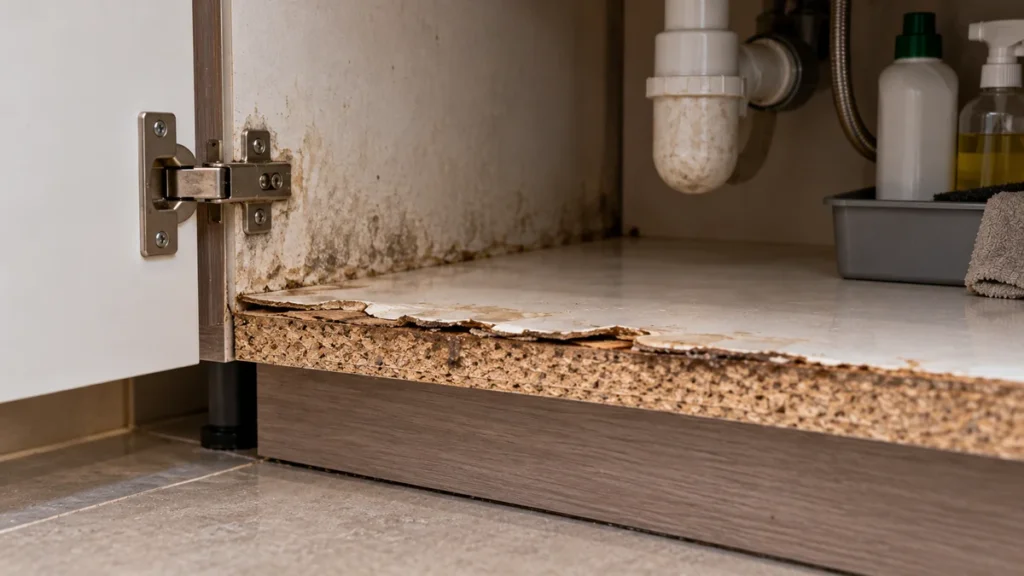
A slow, unnoticed drip from a hard-water tap or connection stresses the sink-base cabinet the same way any standing moisture does. Swelling, delamination, or screw loosening shows up in lower-grade boards over a few years. This is a moisture problem more than a strictly mineral one. It’s the same underlying risk Bhumim’s HDHMR vs BWP plywood comparison covers in more depth for other regions.
BWP-grade IS:710 plywood and properly sealed HDHMR both resist this kind of slow water exposure far better than untreated particle board. That’s exactly why the sink cabinet is worth never compromising on carcass grade.
Not sure if your current fittings are already showing hard-water wear? Bhumim can assess your existing kitchen’s hardware and cabinet condition during a free consultation, and recommend fittings genuinely suited to Dehradun’s water. Call or WhatsApp 08044630777 or fill in your details at bhumim.com.
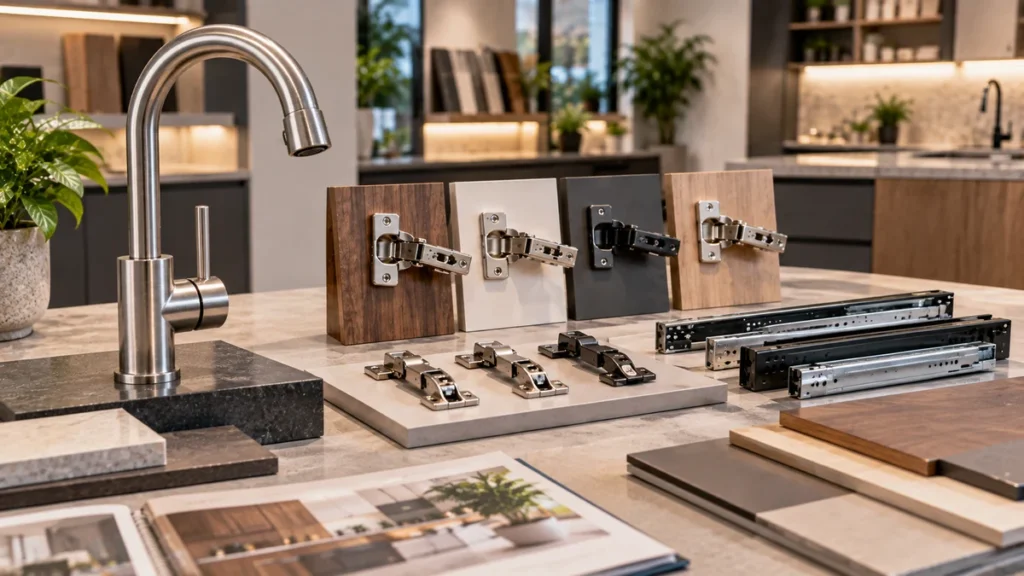
Choosing Hardware and Finishes That Actually Hold Up
Not every finish or hardware choice handles hard water equally, and the difference is worth knowing before you pick one purely on looks.
Highly polished or dark, matte-black finishes show mineral spotting the fastest and need the most frequent wiping to stay presentable in a hard-water home. A brushed or lightly textured steel finish hides the same spotting far better. The texture simply breaks up how visibly a water spot sits on the surface.
For hinges, drawer runners, and sliding mechanisms, approved brands like Hafele, Blum, and Grass use plating and sealing. This resists mineral corrosion meaningfully longer than unbranded hardware, one honest, practical reason brand matters more here than elsewhere.
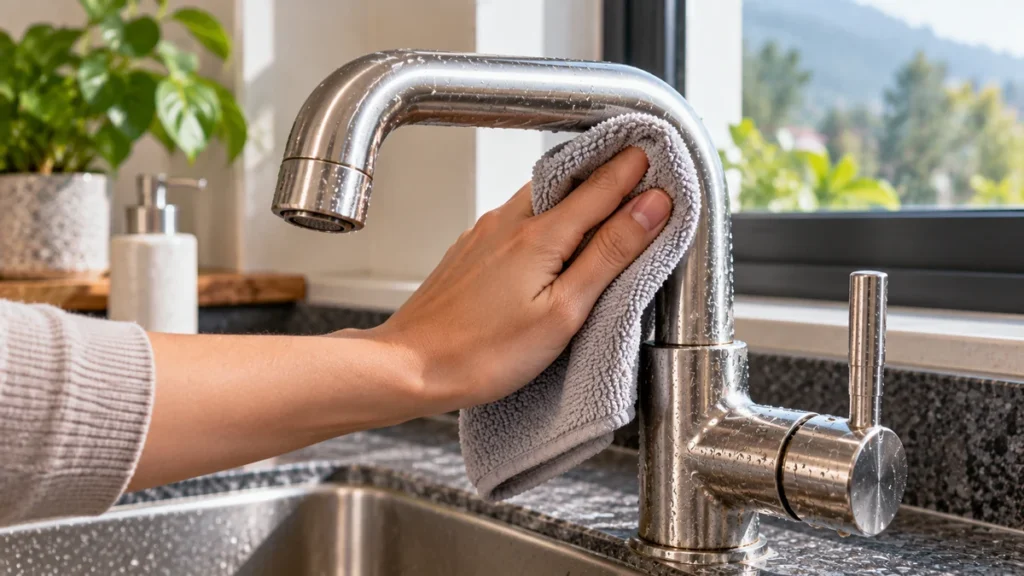
Simple Maintenance That Prevents Most of the Damage
Most hard-water damage in a kitchen is preventable with genuinely small habits, not expensive intervention.
Wiping the faucet and sink dry after use, rather than letting water sit and evaporate, is the single most effective habit. It’s the evaporation that leaves minerals behind, not the water contact itself. A monthly aerator soak in a mild vinegar solution clears mineral buildup before it narrows flow noticeably.
For visible limescale on steel or chrome, a diluted vinegar or baking-soda paste handles most residue. It avoids the abrasive scrub that can dull the finish.
When It's Worth Installing a Water Softener or RO Pre-Treatment
A whole-kitchen water softener is a genuine solution, not a mandatory one, and it’s worth being honest about when it earns its cost.
For a household already noticing frequent aerator clogging, visible cabinet swelling, or hardware failing well before its expected lifespan, a point-of-use softener or a pre-treatment stage ahead of the kitchen line pays for itself in avoided replacement. For moderate hardness with consistent wipe-down habits, the maintenance routine above is often enough on its own.
Neither choice is wrong. The honest answer depends on how hard your specific water actually runs and how much upkeep you’re realistically willing to do.
Borewell vs Municipal Supply: Does the Source Change the Risk?
Water source genuinely changes how much hardness a Dehradun kitchen has to deal with, more than most homeowners expect going in.
A borewell-fed home typically sees faster, more visible scale buildup than one on municipal supply. Deeper groundwater spends more time in contact with the region’s limestone-rich strata before reaching the tap. This doesn’t mean municipal water is soft, only that it’s usually a step less hard than an unfiltered borewell connection.
If your home runs on a mix of both, as many Dehradun properties do, test the line that feeds the kitchen directly first. That’s the water your fittings actually deal with every day.
Hard water is a separate problem from monsoon humidity, covered in more depth in Bhumim’s waterproof modular kitchen guide for Dehradun. Between the two, most Dehradun kitchens genuinely need to plan for both risks, not just one.
Frequently Asked Questions
This is almost always a clogged aerator, the small mesh screen at the tip of the faucet, filled with mineral deposits from hard water. A soak in mild vinegar or a straightforward cleaning usually restores full flow.
Visible signs include white or chalky spots on steel or chrome fixtures after they dry, a stiff or squeaky feel to skin after washing hands, and soap that lathers less than expected. Dehradun’s groundwater, particularly from borewells, commonly runs hard due to the region’s limestone-rich geology.
Both, though differently. Hardware shows visible mineral buildup and finish wear. Cabinets are affected more indirectly, through slow moisture exposure from drips or condensation, which stresses lower-grade board material over years.
Not necessarily. It’s most worth it for a household already seeing frequent aerator clogging or early hardware failure. Many homes manage well with consistent wipe-down habits and periodic descaling alone.
Brushed or lightly textured steel finishes hide mineral spotting better than high-polish or dark matte-black finishes, which show water spots more visibly and need more frequent wiping.
Call or WhatsApp Bhumim at 08044630777, or fill in your details at bhumim.com/contact. A team member will assess your current fittings and recommend hardware and finishes suited to your water.
Key Takeaways
- Hard water and monsoon humidity are different problems that attack different parts of a kitchen
- Dehradun’s groundwater, especially from borewells, runs harder than municipal supply due to limestone-rich geology
- Tap aerators, faucet finish, and the sink P-trap show damage first; cabinet swelling follows more slowly
- Brushed steel finishes and branded hardware (Hafele, Blum, Grass) hold up better than dark, high-polish finishes and unbranded fittings
- Wiping fixtures dry and a monthly vinegar soak prevent most hard-water damage without any major investment
Conclusion
The client whose tap “suddenly” lost pressure hadn’t actually had anything break. Months of mineral buildup inside the aerator had simply reached the point where it was impossible to ignore. That’s the real pattern with hard water damage in a Dehradun kitchen: it rarely arrives suddenly, it accumulates quietly until it’s obvious, and by then the fix usually costs more than the maintenance would have.
If you’d like your kitchen’s current hardware and cabinet condition genuinely assessed, call or WhatsApp Bhumim at 08044630777 or reach out through bhumim.com/contact, serving Dehradun, Haridwar, Rishikesh, Roorkee, Noida, and Ghaziabad with fittings and finishes chosen for what your water actually does over time.
About This Article
Published by: Bhumim India Private Limited-Modular Kitchen Manufacturer & Installer, Dehradun
GST: 05AAOCB1784F1ZM | ISO 9001:2015 Certified
Service Areas: Dehradun · Haridwar · Rishikesh · Roorkee · Noida · Ghaziabad
Contact: 08044630777 | hello@bhumim.com
Note: This article is written from Bhumim’s on-ground manufacturing and installation experience. All material recommendations are based on what we use in real kitchens across our service areas.