

Wardrobe Door Types Explained: Louvered, Glass, Laminate & Mirror
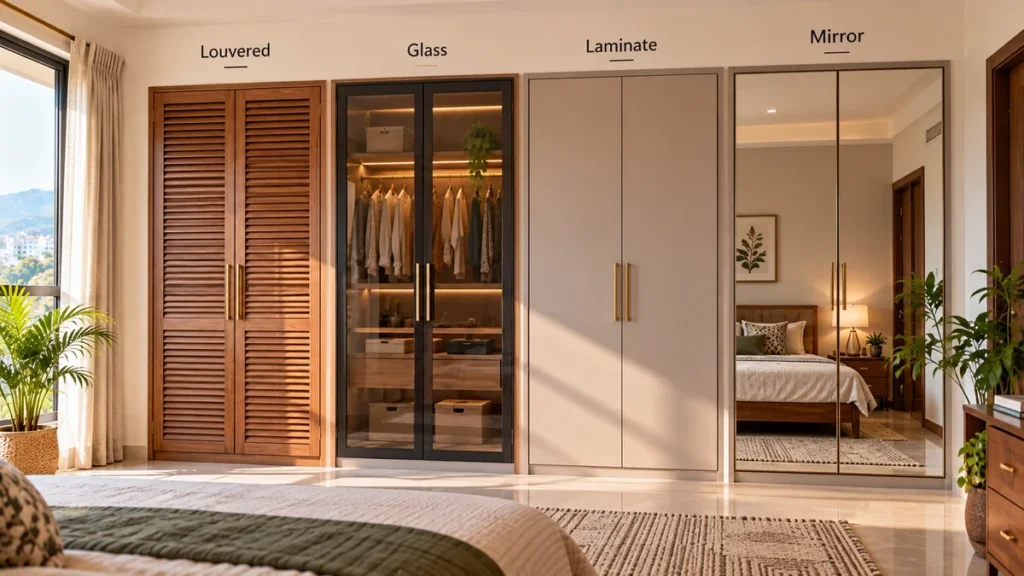
Wardrobe door types fall into four common categories: louvered for ventilation, glass for a light look, laminate for durability. Mirror suits small rooms needing a dressing surface. Each suits a different priority, and most households choose based on which trade-off they mind least.
The door surface gets chosen for how it looks in a showroom far more often than for how it holds up in daily use. The two do not always point to the same choice.
Why Door Type Matters as Much as the Wardrobe Itself
After fitting all four door types across real homes, the pattern we see most is buyers picking on looks and discovering the trade-off later. Dust inside a louvered door. Fingerprints on gloss laminate. A mirror that catches the wrong light.
This guide walks through what each type actually does in daily use, and it connects into our wider wardrobe design guide.
What Makes a Good Wardrobe Door Choice?
A good door choice matches three things. How much daily wear the surface will take. Whether ventilation or dust protection matters more for that room. And how much upkeep the household is actually willing to do.
No single door type wins on every measure. On the other hand, a door chosen purely for looks is the most common source of regret a year or two after installation.
Get started with Beautiful Homes
For expert design consultation, send us your details and we’ll schedule a call
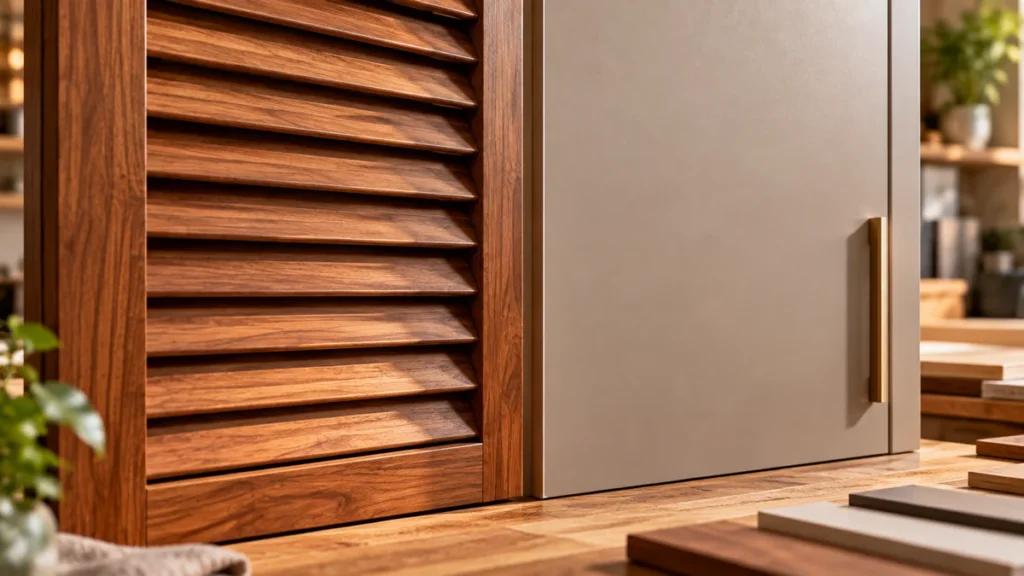
Louvered Wardrobe Doors: Ventilation vs Dust
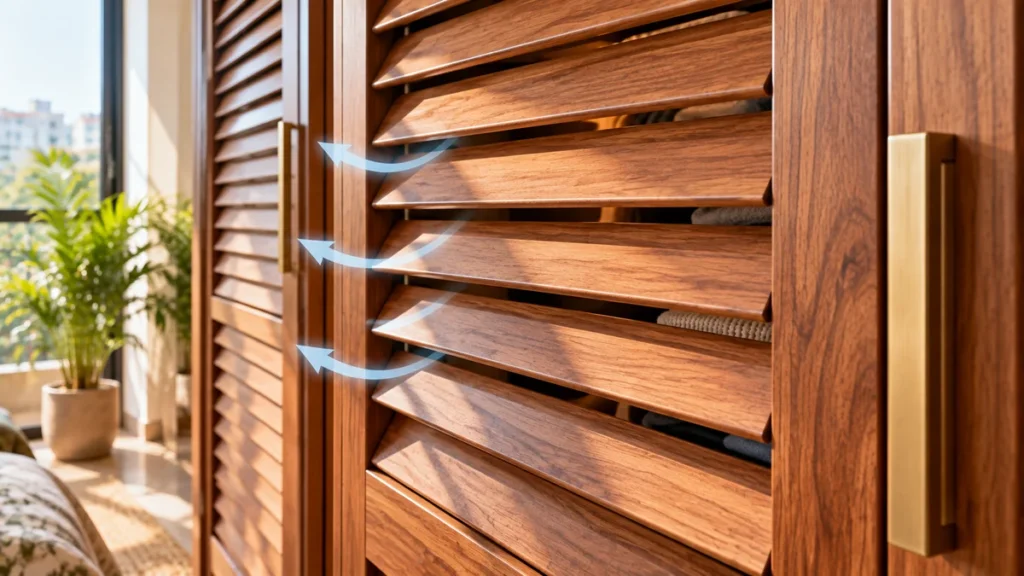
Louvered doors use slatted slats to let air circulate, reducing the musty smell and mould risk of a fully sealed wardrobe in humid climates.
This makes it a genuine functional choice, not just a style one, especially for a household in a consistently humid region of India.
The trade-off is dust. The same gaps that let air through also let dust settle on clothes over time, more than a sealed laminate or glass door would. Louvered doors suit a wardrobe holding everyday, frequently-worn clothes more than one storing seasonal or special-occasion pieces long-term.
Glass Wardrobe Doors: Safety and Thickness
Toughened, or tempered, glass is the safer choice for a wardrobe door over ordinary annealed glass. It breaks into small, blunt-edged pieces, not sharp shards, if it ever cracks.
Laminated glass, with a plastic interlayer bonding two glass sheets, is safer still. Broken shards stay stuck to the film rather than falling.
For a wardrobe door specifically, glass thickness in the 4 to 10 millimetre range is typical, with thicker glass suiting larger panels and higher-traffic rooms. Always confirm tempered or laminated glass specifically, not ordinary glass, especially for a wardrobe in a child’s room.
Not sure which door type suits your room and household? See our wardrobe design guide. Call or WhatsApp 08044630777 or fill in your details at bhumim.com.
Laminate Wardrobe Doors: Matte vs High-Gloss
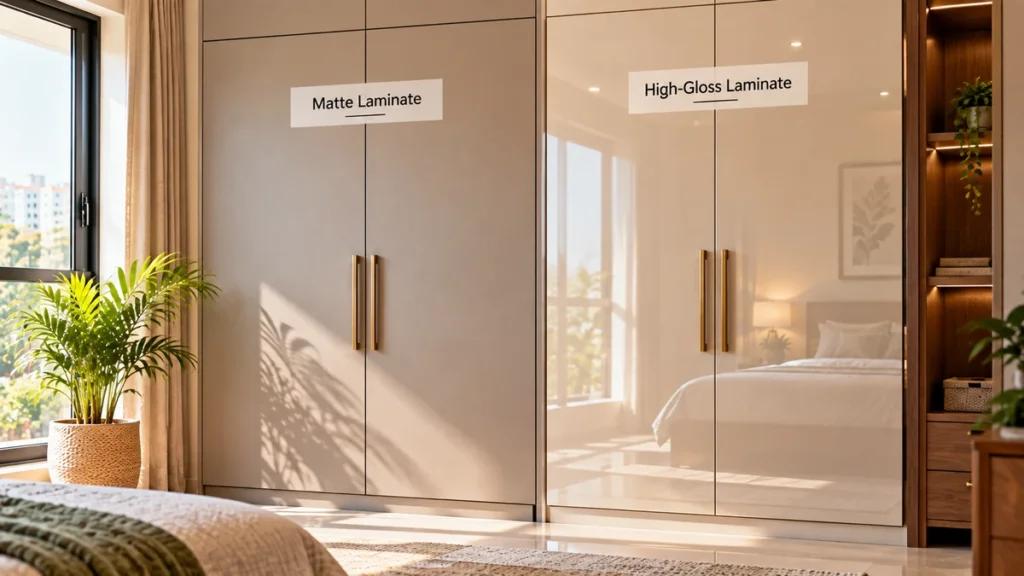
Matte laminate hides daily fingerprints and minor scratches better than high-gloss. It suits a wardrobe touched every single day more than gloss does.
High-gloss laminate looks striking on day one but shows fingerprints at handle height, and needs more regular wiping to stay looking clean.
In Bhumim’s project experience, both finishes are structurally equally durable on the same underlying board grade. The difference is entirely in how visible daily wear looks, not how long the door itself lasts.
We think most buyers overrate the visual gap between matte and gloss and underrate how much daily wiping a gloss surface actually needs.
Mirror Wardrobe Doors: When They Make Sense
A mirror door helps a compact room feel larger and doubles as a dressing mirror, saving a separate piece of furniture. It suits sliding doors better than hinged ones, since a sliding panel gives a larger, uninterrupted reflective surface without swing clearance.
Our mirror wardrobe design guide covers the full-length versus partial decision, placement and safety questions in depth.
Which Door Type Suits Which Room?
| Door type | Best fit | Trade-off |
| Louvered | Humid regions, everyday-wear storage | Lets dust in along with airflow |
| Glass (tempered/laminated) | Modern bedrooms, light-starved rooms | Needs regular cleaning, costs more |
| Laminate (matte) | Daily-use wardrobes, low-maintenance households | Less striking than gloss or glass |
| Mirror | Compact rooms needing a dressing surface | Not ideal for humid, high-glare, or Vastu-sensitive rooms |
Many households mix door types across one wardrobe. Matte laminate on most panels, with one mirror or glass panel, rather than committing to a single type across the whole width.
Common Wardrobe Door Mistakes to Avoid
- Choosing louvered doors for a wardrobe storing delicate or seasonal fabrics that need dust protection.
- Using ordinary glass instead of tempered or laminated glass, especially in a child’s room.
- Picking high-gloss laminate for a wardrobe used daily without accounting for the extra wiping it needs.
- Fitting a hinged mirror door instead of sliding, losing reflection area to the frame and swing clearance.
- Committing to one door type across an entire wide wardrobe instead of mixing types by panel.
Frequently Asked Questions
The four common wardrobe door types in Indian homes are louvered (slatted, for ventilation), glass (tempered or laminated, for a modern look), laminate (matte or high-gloss, for durability), and mirror (for compact rooms needing a dressing surface). Most households pick based on which trade-off matters least to them.
Based on general ventilation discussions, the same gaps that let air circulate through louvered doors also let dust settle on clothes over time, more than a sealed door would. They suit everyday-wear storage better than long-term seasonal storage for this reason.
Yes, tempered (toughened) glass is the safer choice over ordinary annealed glass, since it breaks into small, blunt-edged pieces instead of sharp shards if it cracks. Laminated glass, with a plastic interlayer, is safer still, since shards stay stuck to the film rather than falling.
Glass thickness in the 4 to 10 millimetre range is typical for a wardrobe door, with thicker glass suiting larger panels and higher-traffic rooms. Always confirm tempered or laminated glass specifically, not ordinary glass, for any wardrobe door.
Matte laminate suits a wardrobe touched every day, since it hides fingerprints and minor scratches better than high-gloss. High-gloss looks striking on day one but shows fingerprints at handle height and needs more regular wiping. Both are equally durable structurally on the same board grade.
Sliding suits a mirror door better than hinged, since a sliding panel gives a larger, uninterrupted reflective surface without needing swing clearance. A hinged mirror door loses some reflection area to the frame and needs clear floor space to open fully.
Yes, and many households do. A common approach is matte laminate on most panels with one mirror or glass panel, rather than committing to a single door type across the entire width. This balances daily-use durability with a design or functional accent where it matters most.
Call or WhatsApp Bhumim at 08044630777, or fill in your details at bhumim.com/contact. Share your room’s humidity, how the wardrobe gets used daily, and your style preference, and a team member will recommend a door type or combination that fits.
Key Takeaways
- Louvered doors trade dust protection for real ventilation, and suit humid regions and everyday-wear storage.
- Tempered or laminated glass is the safe choice for a wardrobe door; ordinary glass is not.
- Matte laminate suits daily-touch wardrobes better than gloss, which shows fingerprints faster.
- Mirror doors work best on sliding wardrobes and suit compact rooms; see the dedicated guide for the full-length-vs-partial decision.
- Mixing door types by panel often beats committing one type to an entire wide wardrobe.
Conclusion
No wardrobe door type wins on every measure, and the right choice comes down to which trade-off a household minds least: dust, cleaning effort, cost, or room size. Match the door to how the wardrobe actually gets used, and the style choice becomes the easy part.
If you are choosing wardrobe door types for your bedroom, call or WhatsApp Bhumim at 08044630777 or reach out through bhumim.com/contact and we will recommend the right type for your room and routine.
About This Article
Published by: Bhumim India Private Limited-Modular Kitchen Manufacturer & Installer, Dehradun
GST: 05AAOCB1784F1ZM | ISO 9001:2015 Certified
Service Areas: Dehradun · Haridwar · Rishikesh · Roorkee · Noida · Ghaziabad
Contact: 08044630777 | hello@bhumim.com
Note: This article is written from Bhumim’s on-ground manufacturing and installation experience. All material recommendations are based on what we use in real kitchens across our service areas.