

Wardrobe Lighting Ideas: LED Strips, Sensor Lights & Interior Lighting
Wardrobe lighting design usually comes down to two choices working together: LED strips and a motion sensor. Strips fixed along shelf edges and hanging rods give even everyday light. A sensor switches the whole thing on the moment the door opens. Most wardrobes use both, not one or the other.
A dark wardrobe corner is a small daily annoyance until you actually fix it, and then it is hard to imagine going back.
Why a Dark Wardrobe Corner Is a Bigger Problem Than It Looks
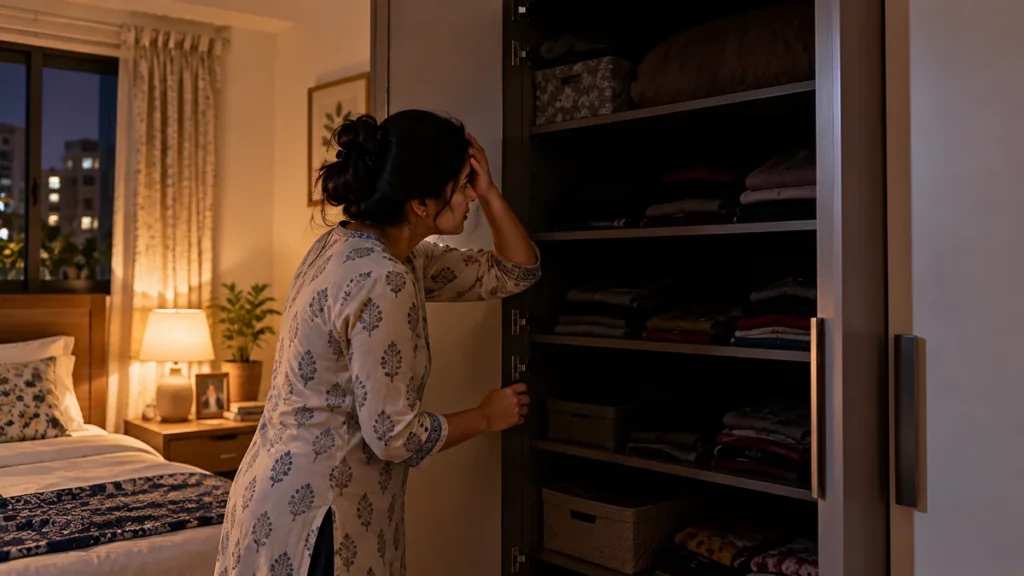
Most Indian bedroom wardrobes sit against a wall with no direct light source of their own. The inside depends entirely on the room light reaching in through the door gap. Anyone who has picked a navy shirt off a dark shelf and realised outdoors that it was actually black knows the problem. It is not a design flaw exactly, it is just what happens when a tall, deep cabinet blocks its own light.
Lighting inside the wardrobe fixes this directly instead of asking the room light to do a job it was never placed to do. A simple fix, with a real everyday difference.
LED Strips, Puck Lights or Sensor Lights: Which Type Fits Your Wardrobe?
| Type | Best for | Trade-off |
| LED strip lights | Shelf edges, hanging rods, continuous even light | Needs a clean channel or edge to sit in; visible if fixed carelessly |
| Puck lights | Shoe racks, jewellery trays, one highlighted spot | Lights a small area only, not the whole wardrobe |
| Motion sensor lights | Turning any of the above on and off automatically | Adds a small extra cost and a battery or wiring point to plan for |
| Backlit mirror panel | Dressing and outfit-checking inside a walk-in unit | Only useful where a mirror panel is already planned |
Get started with Beautiful Homes
For expert design consultation, send us your details and we’ll schedule a call
LED Strip Lighting for Wardrobes: Where It Actually Goes
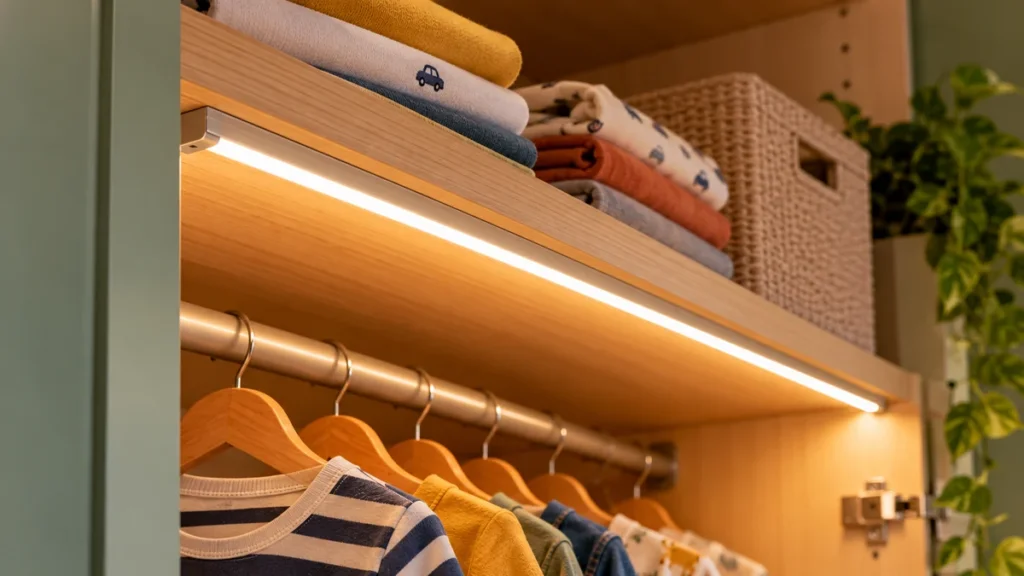
LED strips work well fixed along three places. Try the underside of each shelf edge and the inner top rail above the hanging rod. The vertical inner frame is worth adding too, if the wardrobe is deep enough to shadow itself. Neutral white light in the 3000K to 4000K range is the common recommendation, staying close to natural light without turning harsh or too warm.
On the other hand, a strip fixed loosely without a channel tends to peel or sag within a year in a humid climate. Ask for it set into a groove or aluminium channel, not just stuck on with adhesive backing. Worth the extra ask at order time.
Sensor Lighting: How It Works and When It Is Worth Adding
A motion sensor light switches on when the wardrobe door opens and off a short while after it closes. It uses either a small door-contact switch or a passive infrared sensor mounted inside the unit. Worth adding? Most homeowners think so. It removes the step of reaching for a switch with your hands full of clothes, and it is the single upgrade they notice daily.
We think sensor lighting is worth the small extra cost in almost every case. The one exception is a wardrobe used only occasionally, such as a guest-room unit. There, a simple always-on strip on a manual switch does the same job for less.
Lighting Ideas for a Walk-In Wardrobe
A walk-in wardrobe needs more planning than a single hanging-rod unit, since there is floor space to light as well as shelves. Our walk-in wardrobe guide notes that the lighting gets used every single day, which is why it is worth prioritising over door aesthetics.
- Ceiling-level ambient light for the whole room, not just the storage units.
- LED strips along every shelf edge and hanging rod, the same as a standard wardrobe.
- A backlit or side-lit mirror panel if the walk-in also serves as a dressing area.
- A sensor at the entrance, so the ambient light comes on before you even reach a shelf.
Common Wardrobe Lighting Mistakes to Avoid
Seen these before? Most lighting regrets trace back to one of five avoidable mistakes.
- Fixing the strip without a channel, so it peels off or yellows early in a humid month.
- Choosing a cool bluish light (6000K+) that makes fabric colours look flat and clinical instead of true to daylight.
- Placing the only light source at the top, leaving the bottom shelves and shoe rack area dark.
- Skipping the sensor to save a small amount, then leaving a switch unreached behind a stack of folded clothes.
- Using a bare, uncovered bulb inside a closed wardrobe, which several building-safety discussions flag as a fire-risk practice to avoid
Cost and Electrical Safety Basics for Wardrobe Lighting
How much does it cost? Wardrobe lighting in India commonly starts at a few hundred rupees for a basic plug-in LED strip. It can run to a few thousand for a sensor-controlled, professionally wired setup. The exact figure depends on strip length, sensor type, and whether it runs on batteries or is wired to the mains.
If the lighting is wired to the mains rather than battery-powered, it needs a proper concealed cable run and a qualified electrician. A surface-taped wire behind the shelves is not the right approach. Confirm current wiring and safety practices directly with Bhumim or your electrician before installation. Code requirements vary by building and local authority.
Frequently Asked Questions
A combination works well: LED strips along shelf edges and the hanging rod for even everyday light, plus a motion sensor so the light switches on automatically when the door opens. Puck lights can highlight a shoe rack or jewellery tray, but strips cover the whole wardrobe more evenly on their own.
Neutral white in the 3000K to 4000K range is the common recommendation. It stays close to natural daylight, so clothing colours look true, without the harshness of a cooler bluish light above 6000K.
Lighting removes the daily guesswork of picking clothes in a shadowed corner, makes shelves and hanging sections properly usable, and turns a functional storage unit into one that is pleasant to use every morning. It is a small addition with a genuinely daily payoff.
A motion sensor is worth it for any wardrobe used daily, since it removes the step of reaching for a switch. A wardrobe used occasionally, such as in a guest room, can manage fine with a simple always-on strip on a manual switch.
A battery-powered, plug-in LED strip is a simple DIY addition. Lighting wired to the mains needs a qualified electrician and a proper concealed cable run, not a surface-taped wire behind the shelves, so plan that as part of the wardrobe installation rather than an afterthought.
A sealed LED strip or puck light with low heat emission is considered safe for this use. What several building-safety discussions flag as a genuine risk is a bare, uncovered bulb inside a closed space, which is worth avoiding regardless of wardrobe type.
It commonly ranges from a few hundred rupees for a basic plug-in LED strip to a few thousand for a sensor-controlled, professionally wired setup across a full wardrobe. The exact figure depends on strip length, sensor type, and whether it is battery-powered or wired in. Confirm current pricing directly with Bhumim for your specific wardrobe size.
Yes, a walk-in wardrobe needs ceiling-level ambient light for the room itself, in addition to the shelf-edge and hanging-rod strips a regular wardrobe uses. If it doubles as a dressing area, a backlit mirror panel is worth adding too.
Call or WhatsApp Bhumim at 08044630777, or fill in your details at bhumim.com/contact. Share your wardrobe size and layout, and the team shows LED strip and sensor options in a free 3D design, typically within 3 to 5 working days.
Key Takeaways
- LED strips along shelf edges and hanging rods, paired with a motion sensor, cover most wardrobes.
- Neutral white light (3000K–4000K) keeps clothing colours looking true.
- Fix strips into a channel or groove, not just stuck-on adhesive, especially in a humid climate.
- A walk-in wardrobe needs ceiling ambient light in addition to shelf and rod strips.
- Avoid a bare, uncovered bulb inside any closed wardrobe.
Conclusion
Wardrobe lighting is a small line item next to the rest of a wardrobe order, and it is one of the few upgrades you genuinely notice every single day rather than just when guests visit. Start with an LED strip along the main shelf and rod, add a sensor if the wardrobe sees daily use, and treat the rest as optional depending on your layout and budget.
If you are planning a new wardrobe in Dehradun, Rishikesh or Haridwar, call or WhatsApp Bhumim at 08044630777, reach out through bhumim.com/contact, or find us on Google Maps to visit the Dehradun showroom and see lighting options fitted in a real wardrobe.
About This Article
Published by: Bhumim India Private Limited-Modular Kitchen Manufacturer & Installer, Dehradun
GST: 05AAOCB1784F1ZM | ISO 9001:2015 Certified
Service Areas: Dehradun · Haridwar · Rishikesh · Roorkee · Noida · Ghaziabad
Contact: 08044630777 | hello@bhumim.com
Note: This article is written from Bhumim’s on-ground manufacturing and installation experience. All material recommendations are based on what we use in real kitchens across our service areas.