

Modular Kitchen Warranty Explained: What's Actually Covered
Modular kitchen warranty coverage depends entirely on which component and material grade it applies to, not on the headline number a brand advertises. A “10-year warranty” claim usually covers only the cabinet carcass in a specific material grade, while shutters, hardware, and countertops often carry separate, shorter terms. Almost every manufacturer excludes water damage, normal wear, and misuse.
A modular kitchen warranty is a written commitment from the manufacturer to repair or replace specific parts if they fail under normal use. It applies within a stated period, not indefinitely. It is not one blanket number covering the whole kitchen. Reading the actual coverage document, not the marketing headline, is what separates a useful warranty from a number printed on a brochure.

Why Warranty Claims Confuse Most Homeowners
After walking Dehradun and Noida homeowners through warranty documents for years, the same moment repeats itself almost every time. Someone points at a competing quote that says “10-year warranty” and asks why Bhumim’s written terms look more specific and, on paper, more modest. The honest answer is that the bigger number usually covers less than it sounds like it does.
A “10-year warranty” on a brochure and a 10-year warranty on the cabinet carcass alone are two different promises. They read the same on a sales page, but they are not the same commitment.
As of 2026, this gap between headline and fine print has only grown. Warranty length has become a competitive marketing number in its own right. This guide breaks down what warranty terms typically cover, what almost every manufacturer excludes, and the exact questions worth asking before you sign anything.
If you are still comparing manufacturers on more than warranty alone, our modular kitchen buying guide checklist is worth reading too. It covers the full evaluation process, hardware brands, response-time commitments, and getting promises in writing.
Get started with Beautiful Homes
For expert design consultation, send us your details and we’ll schedule a call
What Does a Modular Kitchen Warranty Actually Cover?
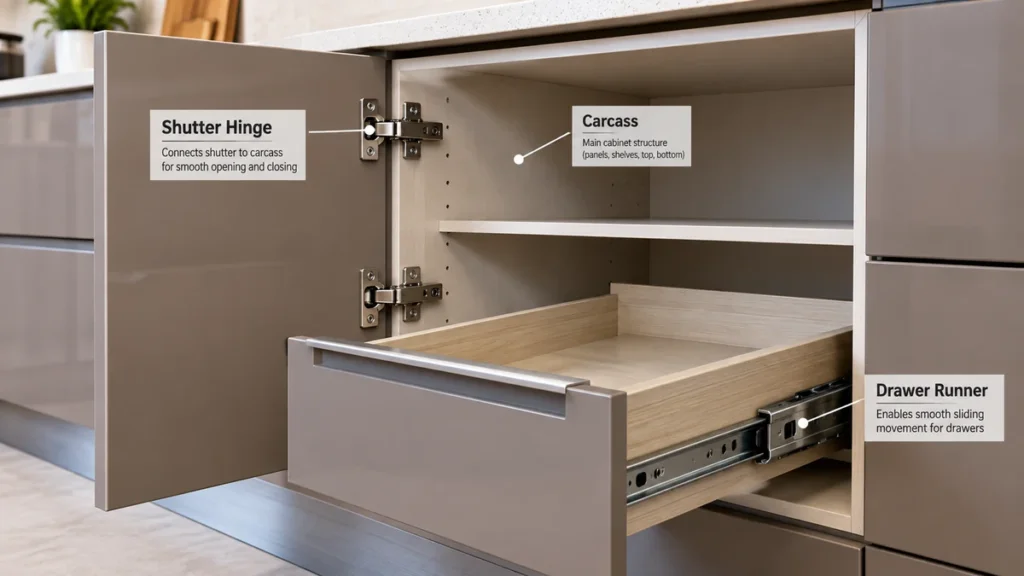
A modular kitchen warranty typically covers manufacturing defects in the cabinet carcass, shutters, and hardware mechanisms, not damage from use, water, or accidents. Manufacturers scope coverage to specific components, and each component often carries its own separate duration.
The cabinet carcass, the structural box behind the doors, usually gets the longest coverage. It is the least likely part to fail under normal use. Shutters and finishes typically get a shorter term, because they take more daily wear from opening, closing, and cleaning. Manufacturers frequently cover hardware like hinges and drawer runners separately again, sometimes for a different number of years than the carcass itself.
Component | Typical Coverage Pattern Across Manufacturers |
Cabinet carcass (BWP-grade or HDHMR material) | 10 years is common for these higher moisture-resistant grades |
Cabinet carcass (commercial material grade) | 2 years is common for MDF or particle board |
Shutters and finishes | Often 5 years, separate from the carcass term |
Hardware (hinges, drawer runners) | Sometimes a lifetime functional warranty, sometimes just 1 year |
Countertop | Terms vary widely, ask specifically since it is not always bundled with the carcass warranty |
Appliances (chimney, hob, oven) | Covered by the appliance brand’s own warranty, not the kitchen manufacturer’s |
This pattern holds across most manufacturers we have reviewed. The material grade behind the carcass, not the brand name, is usually what determines whether that 10-year figure is realistic or optimistic. Two kitchens can advertise the identical headline number. Once you factor in the material grade behind each one, their real-world coverage can look meaningfully different.
Does Material Grade Change How Much Warranty Actually Means?
Yes, material grade is the single biggest factor behind whether a warranty number is meaningful. BWP-grade plywood and HDHMR carcass materials commonly carry around a 10-year manufacturing warranty across several manufacturers we reviewed. Manufacturers frequently limit commercial-grade materials like MDF or particle board to around 2 years, even on their own price list.
This is not a coincidence. BWP-grade plywood, built to the IS:710 boiling-waterproof standard, genuinely resists moisture and delamination far longer than particle board does. A manufacturer offering a long warranty on a low-grade material is doing one of two things. They are either absorbing real financial risk, or writing exclusions broad enough that the number rarely gets tested. Neither is something a headline figure alone tells you.
Honest limitation: A long warranty on a cheap material is not automatically a red flag. A shorter warranty on a good material is not automatically a downgrade either. What matters is whether the stated duration matches the material grade behind it. Ask for both numbers together, material grade and warranty length, on the same line of your quotation, not as two separate conversations.
Is a "Lifetime Warranty" Claim Worth Trusting?
Not automatically, and this is worth naming directly rather than glossing over. There is no single legal or industry definition of “lifetime” for a modular kitchen in India. It can mean the expected lifespan of the product as the brand defines it. Or it can apply to just one hardware component rather than the whole kitchen.
Some brands do back a genuine lifetime promise with a documented replacement process. Others use the word as a marketing headline attached to a narrow scope, like hinges only. The carcass and shutters then carry ordinary fixed terms underneath. The word alone tells you nothing until you see it attached to a specific, written scope.
Before treating a “lifetime warranty” claim as a deciding factor, ask three direct questions. What exactly does lifetime apply to, the whole kitchen or one component? Is there a written document defining it, or only a verbal promise? What happens to that promise if the company changes hands or closes a branch?
What Do Most Modular Kitchen Warranties Exclude?
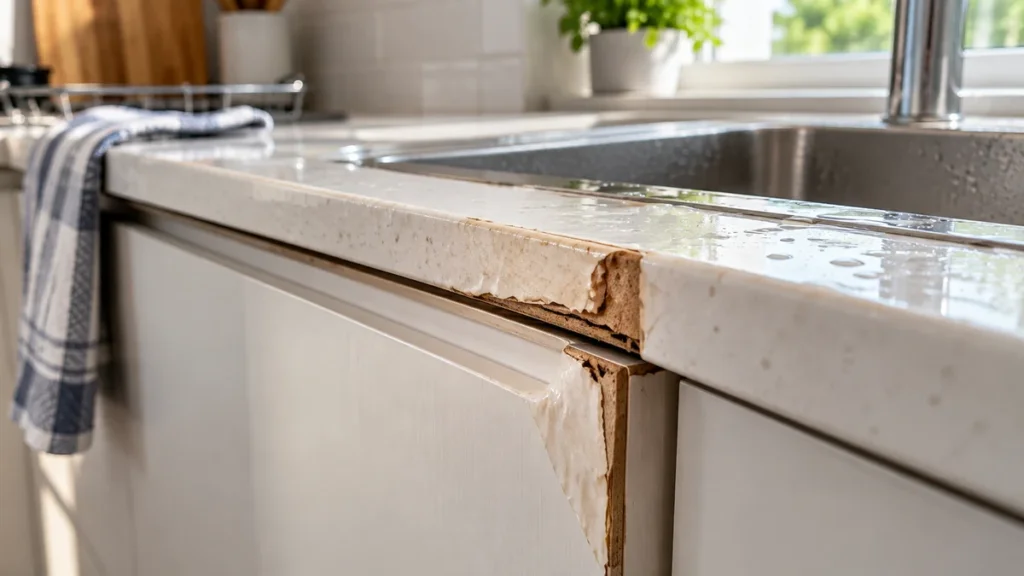
Most modular kitchen warranties exclude water damage, normal wear and tear, misuse, and unauthorised repairs, regardless of the brand or the headline duration. These exclusions show up in nearly every warranty document reviewed for this guide, almost word for word.
- Water damage and swelling from leaks, spills, or high humidity, the most disputed exclusion
- Normal wear and tear on finishes, hinges, and drawer channels from years of ordinary daily use
- Misuse, accidents, cuts, scratches, or impact damage not caused by a manufacturing defect
- Repairs or modifications carried out by anyone other than the manufacturer’s own technicians
- Damage from termites, pests, or structural building movement, treated as outside the manufacturer’s control
- Appliances, since chimney, hob, and oven coverage comes from the appliance brand, not the kitchen manufacturer
Water damage deserves special attention, since it is also the single biggest cause of modular kitchen failure in humid regions like Dehradun and Rishikesh. A warranty that excludes water damage entirely still leaves a real gap. This is exactly why material grade, the earlier BWP-versus-particle-board comparison, matters more than the warranty document alone.
What Happens Once the Warranty Period Ends?
Once the warranty period ends, repairs typically shift to a paid basis. The manufacturer’s willingness to still stock matching parts becomes the real deciding factor at that point. This is one of the most commonly overlooked questions in the whole warranty conversation, since most buyers stop thinking about warranty the moment they sign.
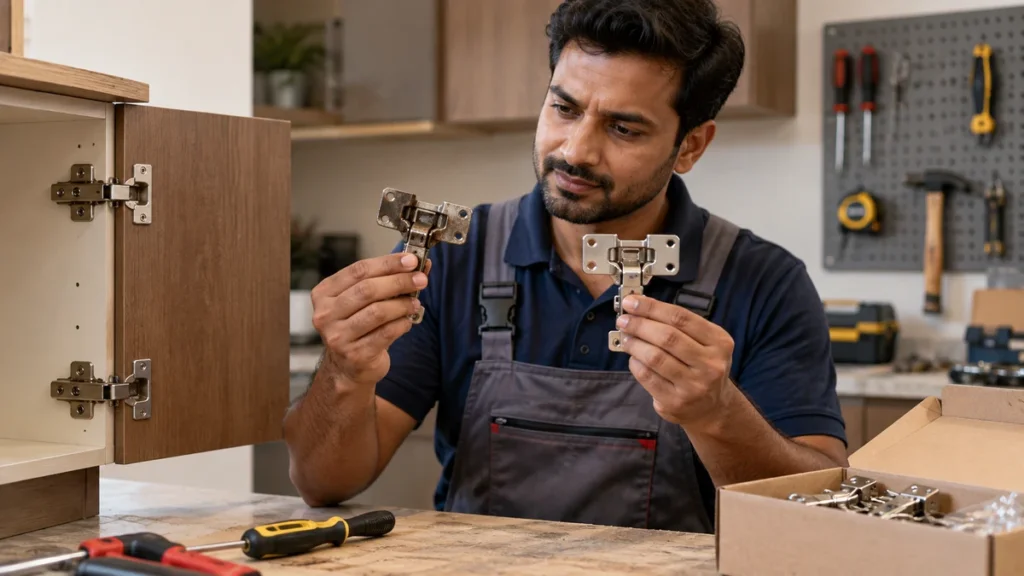
A cabinet hinge or drawer runner that fails in year twelve, well past a 10-year term, is a normal, expected event, not a defect. What varies enormously between manufacturers is whether a matching replacement part is still available at all. A manufacturer who has changed hardware suppliers multiple times may simply not stock a compatible part anymore, turning a small fix into a larger rebuild.
Ask this question before ordering, not after something breaks. Does the manufacturer offer paid post-warranty repair, and do they commit to stocking compatible parts for a defined number of years beyond the warranty itself? A clear answer here says more about long-term reliability than the warranty length ever will.
This overlaps with a question worth raising during installation itself, not just years later. Our modular kitchen installation timeline guide covers the full process from measurement to handover. It gives useful context for what a manufacturer’s post-installation support should actually look like.
Does Modular Kitchen Warranty Transfer If You Sell Your Home?
Rarely, and this is worth confirming before it becomes relevant. Most manufacturers we reviewed write their modular kitchen warranty for the original purchaser only. Coverage does not automatically pass to whoever buys the home next, even if years remain on the stated term.
This matters more than it first appears for resale value. A kitchen with three years of warranty remaining sounds like a selling point during a home sale. If that warranty is non-transferable, though, the new owner gets none of it. Some manufacturers do offer a transfer process, often for a small administrative fee and a re-registration step. Others simply void coverage the moment ownership changes.
If resale value factors into your decision at all, ask specifically whether the warranty transfers. Get the transfer process in writing rather than a verbal “yes, it should be fine.”
How Does Modular Kitchen Warranty Compare to a Carpenter-Built Kitchen?
A modular kitchen almost always comes with a documented, written warranty, while a carpenter-built kitchen typically does not, beyond an informal verbal promise. This is one of the clearest practical differences between the two options, separate from cost or finish quality.
A carpenter can be skilled and reliable, and many are. The honest limitation is that there is usually no written document defining what happens if a drawer fails two years later. There is also no company structure behind the promise if that individual carpenter becomes unavailable. A modular manufacturer’s warranty is enforceable against a registered business, not a verbal understanding with one person.
This does not make modular automatically the better choice for every budget. For a rental property or a short-term-use kitchen, the warranty gap may matter less than the upfront cost difference. For a primary kitchen used daily for a decade, though, a documented warranty is a real, measurable advantage. Most homeowners only notice it the first time something actually breaks.
How Do You Verify a Warranty Claim Before Signing?
Verify a warranty claim before signing by asking for the coverage in writing, component by component, rather than accepting a single headline number. Five questions catch nearly every warranty gap before it becomes a problem after installation.
- Ask which components the stated duration actually covers, carcass, shutters, hardware, and countertop each separately, not as one bundled number.
- Ask whether water damage is covered or explicitly excluded, and get that answer in writing, not verbally.
- Ask whether the warranty is the manufacturer’s own, or a pass-through of a third-party board or hardware maker’s warranty with different terms.
- Ask for the claim process and a typical response-time commitment for a hinge or drawer issue after installation, not just “we’re always available.”
- Ask whether the warranty transfers if you sell the home, and whether it survives if the company changes ownership or branches.
A manufacturer confident in their own terms will answer all five without hesitation, usually pointing to the exact clause in a written document. A vague answer to any one of these is worth treating as a real signal, not a minor gap to overlook.
Bring a printed copy of these five questions to your first meeting rather than trying to remember them mid-conversation. Vendors tend to give sharper, more specific answers when they can see the question written down in front of them.
Want your warranty terms explained clearly before you commit? Bhumim offers a free 3D design consultation, we will walk you through material grade, hardware, and coverage terms for your specific kitchen, with no obligation. Call or WhatsApp 08044630777 or fill in your details at bhumim.com.
What Happens When You Actually File a Warranty Claim?
Filing a warranty claim typically means reporting the defect in writing with photo evidence. You then wait for the manufacturer to inspect and confirm it falls within the covered scope before repair or replacement begins. The exact process varies by manufacturer, but this basic sequence holds fairly consistently across the industry.
Some manufacturers set specific reporting windows for certain defect types. Visible hardware corrosion, for instance, may need flagging within a few days of noticing it, rather than months later. Missing a stated reporting window can weaken or void an otherwise valid claim, even when the underlying defect is genuine. This is exactly why asking about the claim process up front, not after something breaks, is one of the five verification questions above.
Keep your original invoice, the written warranty document, and photos from installation day. These three items turn a claim conversation into a quick resolution rather than a dispute over what was originally promised. Store digital copies alongside the physical ones. A house move can lose the paperwork just as easily as it can lose the receipt.

How Do You Evaluate a Manufacturer’s Warranty Beyond the Headline Number?
Evaluate a manufacturer’s warranty with three checks. Do they manufacture in-house? Is the warranty theirs or a pass-through? Is their after-sales response process documented rather than promised verbally? These three checks predict your actual experience far better than the advertised duration alone.
A manufacturer who builds in-house can usually explain exactly which material and hardware grade backs each warranty tier, since they control the whole process. Bhumim, for example, can point to the specific carcass material and hardware brand behind a given quote rather than a generic “long warranty” claim. A vague answer about “quality materials” without naming the grade is worth a second look. The same applies to a hardware brand a manufacturer won’t name specifically.
Also ask what happens after the warranty period ends. A manufacturer who still stocks matching parts and offers paid repair after the warranty expires is a genuinely different proposition. The alternative is one who effectively disappears once the coverage window closes.
A manufacturer serving the same region for years, rather than moving between short-lived showroom leases, is generally a safer bet on this question. Parts availability tends to track directly with how long a business has actually been operating in that specific city.
These same three checks are worth bringing to your actual showroom visit, not just this article. Our modular kitchen showroom checklist covers ten specific questions to ask in person, including several that overlap directly with warranty scope.
Frequently Asked Questions
A modular kitchen warranty typically covers manufacturing defects in the cabinet carcass, shutters, and hardware, with each component often carrying its own separate duration. It does not cover water damage, wear and tear, or misuse. Always confirm the exact scope in writing before signing.
A 10-year warranty is realistic when tied to a higher moisture-resistant carcass material like BWP-grade plywood or HDHMR, a pattern seen across several manufacturers we reviewed. The same 10-year number on a commercial-grade material like particle board is far less common and worth questioning directly.
Usually not. Water damage and swelling from leaks or high humidity is one of the most commonly excluded items across modular kitchen warranty documents. This makes material grade, not warranty length, the more important factor for kitchens in humid regions.
Not without checking the written scope first. There is no universal definition of lifetime for modular kitchens in India, it can mean the whole kitchen or just one hardware component. Ask exactly what lifetime applies to and whether it is documented, not just advertised.
Most warranties exclude water damage, normal wear and tear, misuse or accidents, unauthorised repairs, and pest or structural damage. Appliances like the chimney and hob are covered separately by the appliance brand, not the kitchen manufacturer.
Yes, a modular kitchen warranty is a written, enforceable document against a registered business, while a carpenter’s promise is usually verbal and tied to one individual. For a primary kitchen used daily for years, that written enforceability is a real, measurable advantage.
Timelines vary by manufacturer and defect type, so ask for a specific response-time commitment before signing rather than accepting “we’re always available.” Reporting the issue quickly with photo evidence and your original invoice generally leads to faster resolution.
Yes, and you should insist on it. A verbal “long warranty” claim is not enforceable the way a written document naming each component and its duration is. Any manufacturer confident in their terms will provide this without hesitation before you place an order.
This depends entirely on the manufacturer’s written terms, many modular kitchen warranties are non-transferable to a new owner. Confirm this specifically if resale value is a factor in your decision, since it is rarely mentioned unless you ask directly.
Call or WhatsApp Bhumim at 08044630777, or fill in your details at bhumim.com/contact. A team member will confirm your city, walk through material grade and hardware coverage for your specific kitchen, and typically schedule a free 3D design consultation within 3 to 5 working days. There is no fee and no obligation at the consultation stage.
Key Takeaways
- A modular kitchen warranty is scoped by component, not one blanket number, carcass, shutters, hardware, and countertop often carry separate durations.
- BWP-grade plywood or HDHMR carcass materials commonly carry around a 10-year term, while commercial-grade materials like particle board are often limited to around 2 years.
- Water damage, wear and tear, and misuse are excluded almost everywhere, making material grade a more reliable safeguard than warranty length alone.
- A “lifetime warranty” claim has no universal definition in India, always ask exactly what it applies to and whether it is documented in writing.
- Verify coverage in writing before signing, and confirm the claim process and response-time commitment, not just the headline duration.
Conclusion
Coming back to that bigger-number-on-a-competing-quote question from the start: it almost never comes down to which manufacturer is more generous. It comes down to which one wrote their terms down clearly enough to survive a real claim conversation two years later, three things worth checking before you sign anything.
If you would like your warranty terms explained clearly, component by component, before you commit to anything, Bhumim’s team can walk you through material grade, hardware, and coverage in a free 3D design consultation, serving Dehradun, Haridwar, Rishikesh, Roorkee, Noida, and Ghaziabad. Call or WhatsApp 08044630777, fill in your details at bhumim.com/contact, or find our Dehradun showroom on Google Maps. Warranty terms and coverage vary by product category and material grade, confirm current terms directly with Bhumim before ordering.
About This Article
Published by: Bhumim India Private Limited-Modular Kitchen Manufacturer & Installer, Dehradun
GST: 05AAOCB1784F1ZM | ISO 9001:2015 Certified
Service Areas: Dehradun · Haridwar · Rishikesh · Roorkee · Noida · Ghaziabad
Contact: 08044630777 | hello@bhumim.com
Note: This article is written from Bhumim’s on-ground manufacturing and installation experience. All material recommendations are based on what we use in real kitchens across our service areas.