

Modular Kitchen Maintenance: Complete Cleaning Guide
Modular kitchen maintenance means wiping down surfaces daily, deep-cleaning cabinets and channels every month, checking hinges and drawer runners every few months, and protecting boards and laminates from standing water and monsoon humidity. Done consistently, it keeps a modular kitchen looking and working the way it did on installation day for well over a decade.
What is modular kitchen maintenance?
It’s the routine of cleaning, inspecting, and lightly servicing a modular kitchen’s cabinets, hardware, and surfaces so that moisture, grease, and daily wear don’t shorten its life. It covers everything from a quick wipe-down after cooking to an annual hinge and channel check.
Why Modular Kitchen Maintenance Deserves More Than a Quick Wipe
Most people clean a kitchen when it looks dirty. Modular kitchen maintenance is a bit different – it’s about catching problems before they’re visible. A hinge that’s slightly loose, a laminate edge with a hairline gap, or a shelf that stays damp after washing utensils won’t look wrong today. Give it a few humid months and it will.
That gap between “looks fine” and “is fine” is exactly where most kitchen damage starts. This guide walks through what to clean and when, how to look after hardware, and how to handle the specific humidity challenges that come with living in Dehradun, Haridwar, Rishikesh, Roorkee, Noida, or Ghaziabad.
What Modular Kitchen Maintenance Actually Covers
A modular kitchen isn’t one material – it’s several working together: shutters, carcasses, countertops, hinges, channels, and accessories like baskets or bottle pull-outs. Each one wears differently, so “maintenance” really means a few separate habits stacked together:
- Surface cleaning – laminate, acrylic, or veneer shutters and the countertop
- Cabinet interior care – shelves, corners, and the space under the sink
- Hardware upkeep – hinges, channels, handles, and soft-close mechanisms
- Moisture control – especially around the sink, hob, and during monsoon
- Periodic inspection – catching loose screws or sagging shelves early
Skipping any one of these doesn’t ruin a kitchen overnight, but over two or three years the gaps add up – usually as swelling near the sink or hinges that no longer close quietly.
Building a Daily and Weekly Cleaning Routine
You don’t need an elaborate system. A short routine, done consistently, does more for a kitchen’s lifespan than an occasional deep clean.
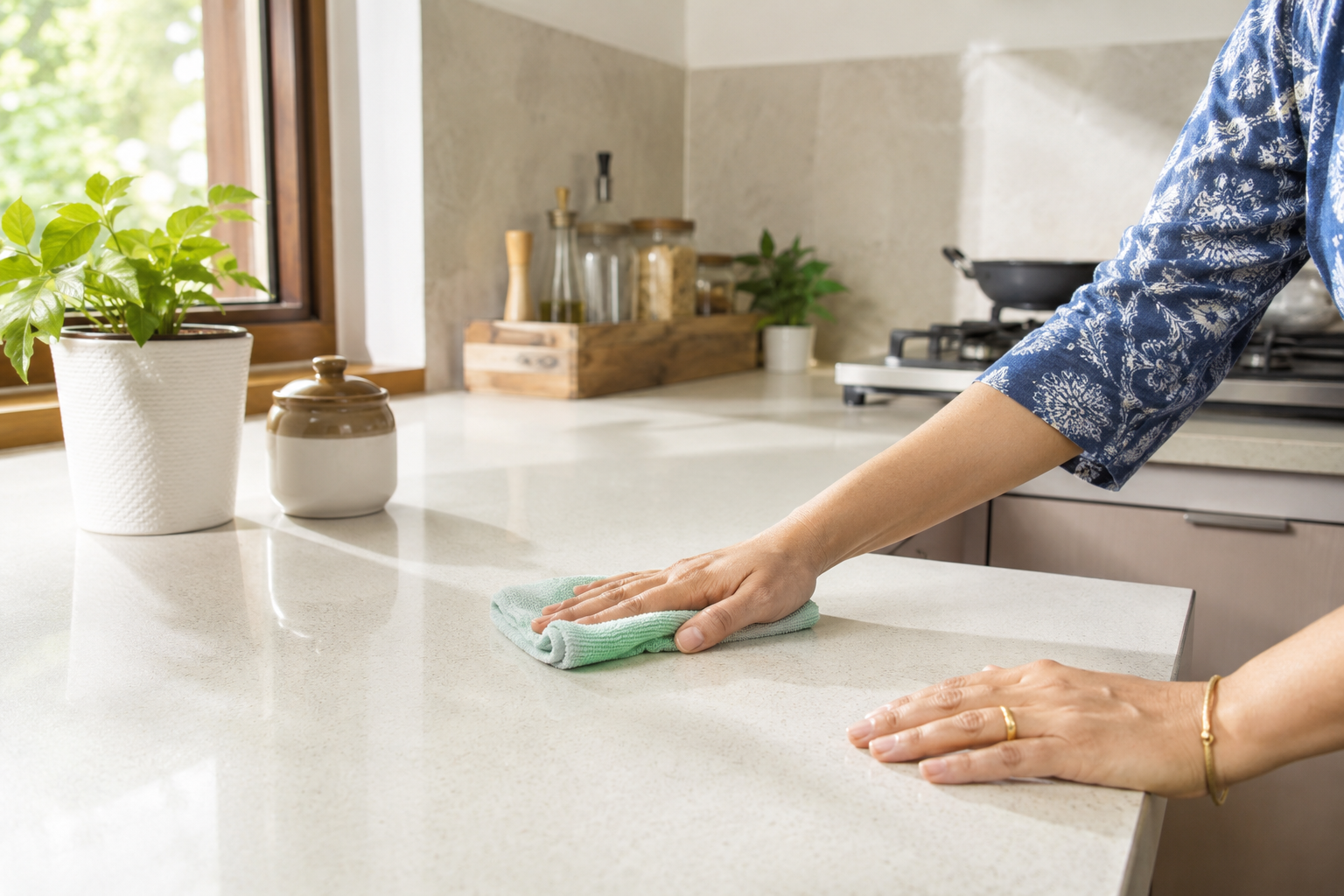
- Wipe counters and hob after every cooking session – a damp microfiber cloth followed by a dry one removes oil and moisture before it settles into edges or joints.
- Dry the sink area at night – standing water near the sink is the single biggest cause of swelling in cabinets below it.
- Sweep or vacuum the kitchen floor daily – crumbs and spilled dal or rice near the base of cabinets attract pests if left overnight.
- Wipe shutter handles and hobs weekly with a mild, non-abrasive cleaner – this prevents grease buildup that’s harder to remove later.
- Air out cabinets once a week – open doors for a few minutes, especially in ground-floor or north-facing kitchens where air doesn’t circulate as easily.
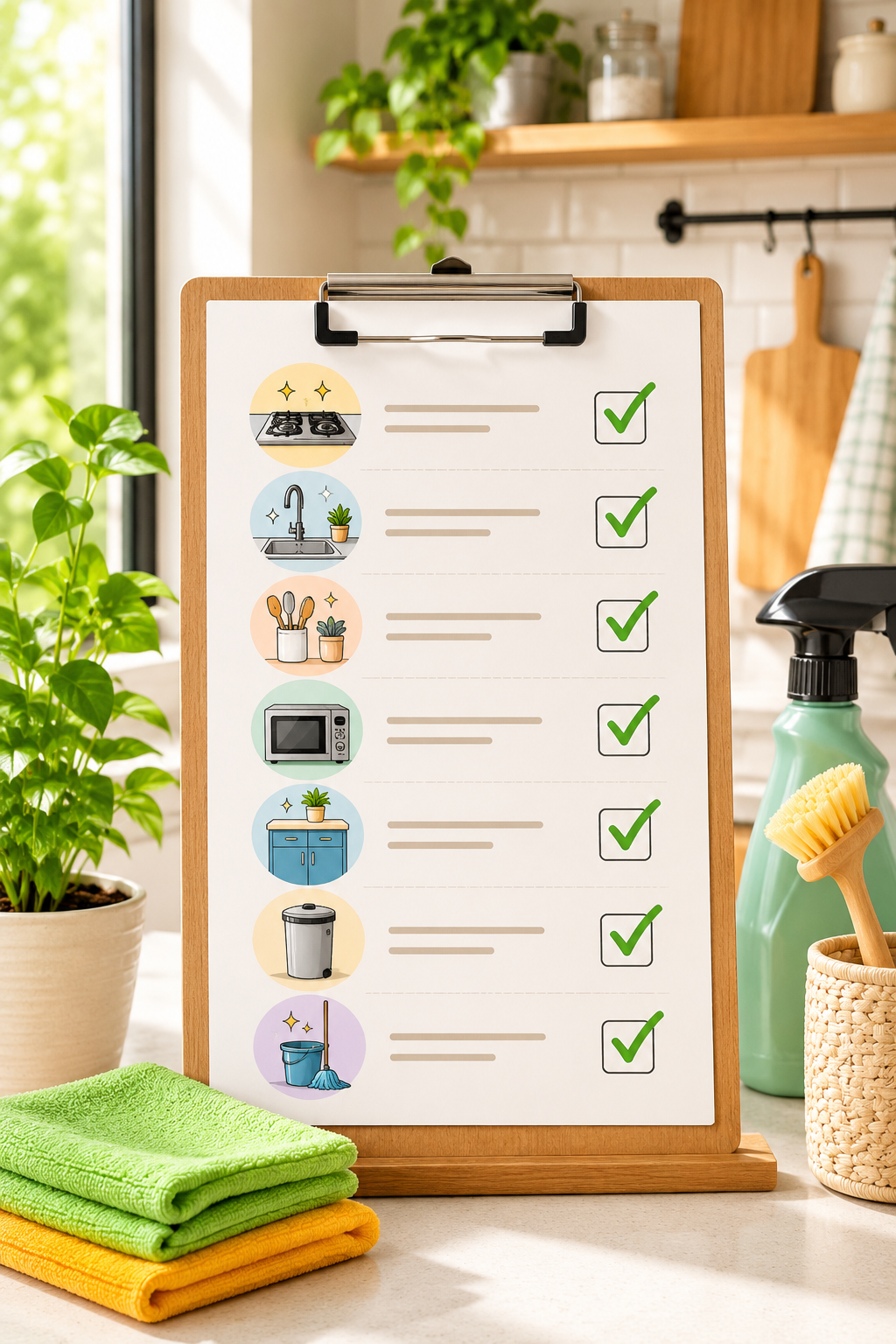
A quick checklist near the sink – even a sticky note – helps this become a habit rather than a chore that gets skipped.
How to Clean Different Kitchen Surfaces
Not every shutter or countertop material responds to the same cleaning method. Using the wrong one is a common way people damage a kitchen while trying to keep it clean.
Laminate Shutters and Countertops
Laminate handles daily wear well but is sensitive at the edges, where moisture can seep in over time. Use a soft cloth with warm water and mild soap; avoid soaking the surface or scrubbing edges with anything abrasive.
Acrylic and High-Gloss Shutters
Acrylic shows fingerprints and water spots more easily than matte laminate, but it’s simple to maintain – a microfiber cloth and a glass-cleaner-style spray keep the gloss intact. Skip powder-based cleaners, which can dull the finish over time.
Veneer Shutters
Veneer is a thin layer of real wood, so it needs a dry or barely-damp cloth only. Standing water on veneer causes visible watermarks that are difficult to reverse.
Stainless Steel Countertops and Sinks
Wipe daily with a soft cloth and mild soap, always in the direction of the grain. Steel wool or scouring pads scratch the surface and make future stains stick more easily.
Quick Checklist - Cleaning Do's and Don'ts
- Do use microfiber cloths over cotton rags for less lint and better moisture pickup
- Do dry surfaces immediately after wiping, don’t let them air-dry
- Don’t use bleach-based cleaners on laminate or acrylic shutters
- Don’t use metal scrubbers on any painted or laminated surface
If you’re still finalising your kitchen and want shutters that are easier to maintain from day one, it helps to compare finishes early – Bhumim’s modular kitchen design options include layout and material choices suited to different upkeep preferences.
Hardware Care: Hinges, Channels, and Handles
How often should kitchen hinges be checked?
Roughly every three to four months for households that cook daily, and every six months for lighter use. Hinges and channels are precision parts – a slightly loose screw or a dry runner is what makes doors sag or drawers stick, long before anything looks visibly worn.
A few habits protect hardware without needing a technician’s visit each time:
- Close doors and drawers gently – don’t let soft-close mechanisms take repeated hard slams
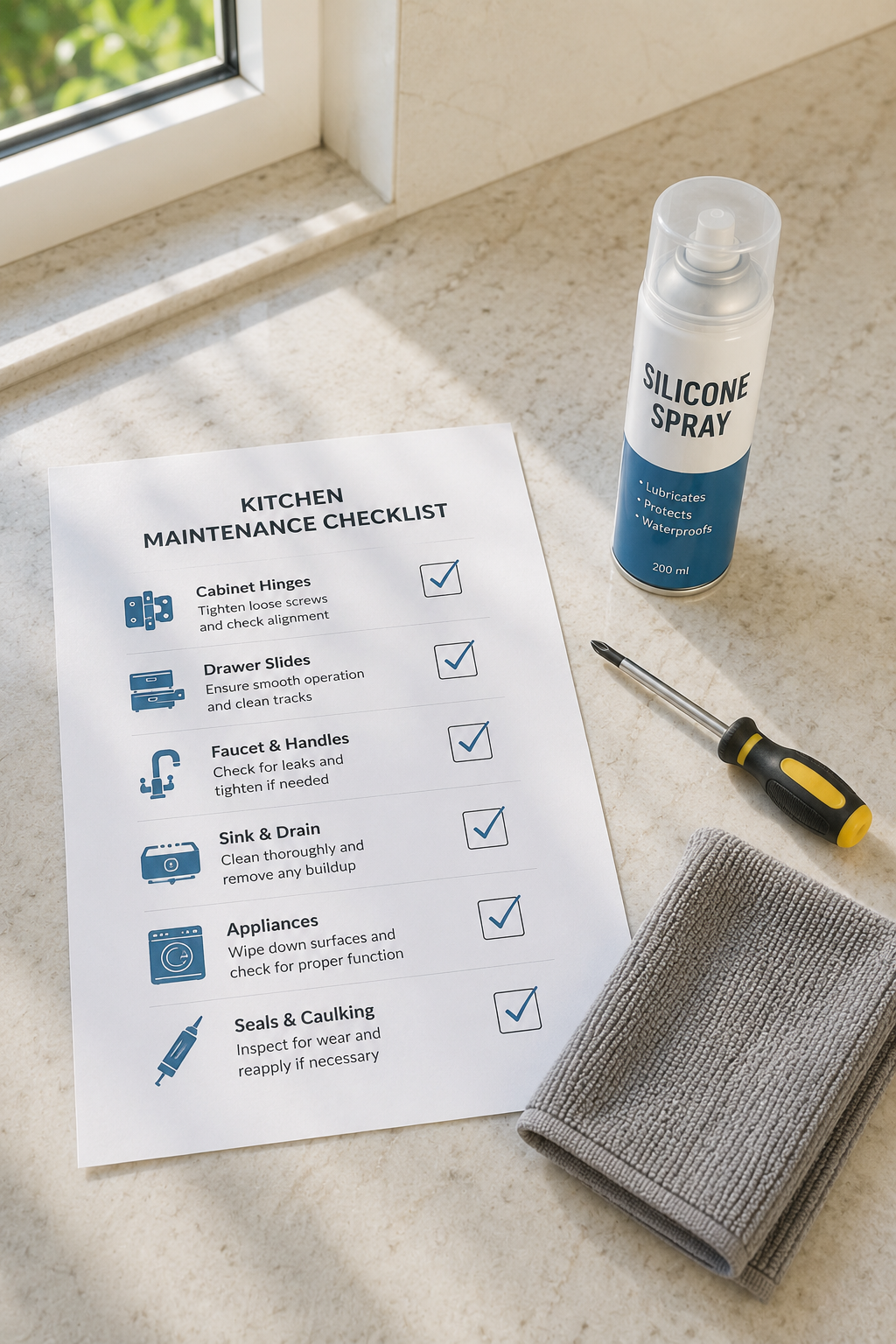
- Check for loose screws on hinges every few months and tighten by hand
- Apply a small amount of silicone spray (not oil-based lubricant, which attracts dust) to channels once or twice a year
- Keep drawer weight within the manufacturer’s recommended limit to avoid strain on the runners
Expert Tip: If a drawer starts feeling stiff, don’t force it. A stiff channel usually means dust buildup or a slightly misaligned rail – both are quick fixes if caught early, and both get worse the longer they’re ignored.

Monsoon and Humidity Protection
Humidity is where modular kitchen maintenance matters most, and it’s a real factor for kitchens across Dehradun, Haridwar, Rishikesh, Roorkee, and the Delhi–NCR belt, where monsoon months bring sustained moisture in the air, not just occasional rain.
Common Mistake
Assuming a kitchen is “monsoon-proof” just because it uses moisture-resistant boards. Even BWP-grade plywood or HDHMR boards need dry surfaces and good airflow – the material resists moisture, it doesn’t eliminate the need for basic care.
A few adjustments during the humid months make a real difference:
- Keep an exhaust fan or chimney running while cooking to reduce steam settling on shutters
- Place silica gel sachets in corner cabinets and under-sink units to absorb trapped moisture
- Check window and door seals near the kitchen for gaps that let in damp air
- Avoid storing grains or pulses directly on cabinet shelves during peak monsoon – use sealed containers so moisture doesn’t transfer to the wood
Did You Know? In apartments and villas alike, ground-floor and north-facing kitchens tend to trap more humidity than upper floors with cross-ventilation – worth keeping in mind when deciding where silica sachets or a small dehumidifier will help most.
Common Modular Kitchen Maintenance Mistakes
Even careful homeowners fall into a few avoidable habits:
- Wiping wet surfaces instead of drying them immediately afterward
- Using harsh, ammonia-based cleaners on acrylic or high-gloss finishes
- Ignoring a slightly loose hinge until the door actually sags
- Overloading pull-out baskets or tall units beyond their weight limit
- Skipping ventilation while cooking, especially during monsoon
- Storing wet vessels directly on wooden shelves instead of a drying rack first
None of these cause damage in a single instance – the risk is in how quickly they become routine.
Material Maintenance Comparison
Material | Cleaning Method | Moisture Sensitivity | Typical Upkeep Frequency |
Laminate | Damp cloth, mild soap | Moderate (edges vulnerable) | Weekly wipe, edge check every few months |
Acrylic / High-gloss | Microfiber cloth, glass-cleaner spray | Low to moderate | Weekly wipe, avoid powder cleaners |
Veneer | Dry or barely-damp cloth only | High | Weekly dusting, no standing water ever |
Stainless Steel | Soft cloth, mild soap, wipe with grain | Low | Daily wipe near sink and hob |
Costs for repairs or replacement of any of these materials vary by city, current market rates, and finish – it’s worth checking current pricing with a manufacturer directly rather than relying on older estimates.
What to Compare Before Choosing Someone for Kitchen Repairs or an AMC
At some point, most modular kitchens need more than home maintenance – a hinge replacement, a realigned shutter, or an annual maintenance contract (AMC). Whether or not you go with Bhumim, these are the questions worth asking any company you’re considering:
Do they manufacture in-house, or outsource the work?
A company that owns its manufacturing can usually match materials and finishes more accurately during repairs.
Is the installation and repair team in-house or third-party?
In-house teams tend to be more accountable for the quality of a repair job.
What does the warranty actually cover?
Ask specifically about hardware, hinges, and boards – warranty scope varies a lot between companies, so get it in writing.
Where do they source boards, laminates, and hardware from?
Named hardware brands (hinges, channels) matter because generic hardware wears out faster under daily use.
What's their after-sales response time?
A same-week response for a stuck drawer is very different from a multi-week wait.
Bhumim manufactures and installs modular kitchens directly rather than outsourcing or reselling, with an in-house team handling installation through to after-sales support – but whichever company you choose, these five questions will tell you more than a glossy brochure will.
How Much Does Modular Kitchen Maintenance Cost?
Routine maintenance – cleaning supplies, silicone spray, silica sachets – costs very little and is mostly a matter of consistency rather than money. Professional servicing (hinge replacement, channel repair, or an AMC) varies by city, the extent of the work, and the materials involved, so it’s best to get a current quote rather than relying on a fixed number, since hardware and material prices shift over time.
How Long Does a Well-Maintained Modular Kitchen Last?
With consistent care, a modular kitchen’s cabinets and shutters commonly last well over a decade, though this depends heavily on material choice, usage intensity, and how quickly moisture-related issues are addressed. Hardware like hinges and channels usually needs replacement sooner than the cabinets themselves, simply because they’re moving parts.
Building an Annual Maintenance Checklist
A short yearly review, on top of the weekly routine, catches most issues before monsoon or heavy festive-season cooking puts extra strain on the kitchen:
- Inspect every hinge and drawer channel for looseness or stiffness
- Check countertop edges and sink surrounds for early signs of swelling
- Deep-clean the inside of tall units and corner cabinets
- Test soft-close mechanisms on all doors and drawers
- Replace silica sachets and check ventilation before the monsoon starts
- Note down any repairs needed and address them before they worsen
Many households in Dehradun and nearby areas find it easier to schedule this check right before or right after monsoon, when humidity swings are highest. If you’d like a professional to walk through this with you, Bhumim’s team serving homes across Dehradun can carry out this kind of inspection alongside regular installation work.
For a sense of how these materials and hardware choices hold up in practice, this modular kitchen installed in Rishikesh is a useful example of the layout and finish decisions that make ongoing maintenance simpler from the start.
Frequently Asked Questions
Q1: How often should I deep-clean my modular kitchen?
A full deep clean – cabinet interiors, corners, and hardware inspection – once a month is enough for most households, on top of daily wiping.
Q2: Can I use vinegar to clean modular kitchen shutters?
Diluted vinegar works fine on laminate but can dull acrylic or high-gloss finishes over time, so it’s better to stick with a mild soap solution for those surfaces.
Q3: Why do my kitchen cabinets smell musty during monsoon?
Trapped moisture combined with poor airflow is usually the cause. Airing out cabinets weekly and using silica sachets helps reduce this.
Q4: Is it normal for hinges to loosen over a few years?
Yes, some loosening is normal with daily use. Tightening screws every few months prevents it from becoming a bigger issue like a sagging door.
Q5: What's the best way to clean grease off shutters near the hob?
A warm water and mild dish soap solution, applied with a soft cloth, removes most grease without damaging the finish. Avoid strong degreasers on acrylic.
Q6: Should I get an AMC for my modular kitchen?
It depends on usage – households that cook heavily every day or live in high-humidity areas often find an AMC worthwhile for hinge and channel servicing, while lighter-use kitchens may only need occasional professional check-ins.
Q7: How do I stop my kitchen drawers from sticking?
Clean the channels of dust and apply a small amount of silicone spray. If sticking continues, the rail may need realignment by a technician.
Q8: Are stainless steel kitchens easier to maintain than wood-based ones?
Generally yes for moisture resistance, though stainless steel shows fingerprints and water spots more visibly, so it needs more frequent wiping for appearance.
Q9: What should I avoid storing directly on wooden kitchen shelves?
Wet vessels, open grain sacks, and anything with condensation – these transfer moisture directly to the shelf surface over time.
Q10: Does modular kitchen maintenance differ between apartments and independent houses?
The core routine is the same, but ground-floor or less-ventilated apartment kitchens often need extra attention to airflow and humidity compared to houses with more natural cross-ventilation.
Key Takeaways
- Modular kitchen maintenance is mostly about consistency – a short daily and weekly routine prevents most long-term damage
- Different shutter materials (laminate, acrylic, veneer, stainless steel) need different cleaning methods
- Hinges and channels are precision hardware and benefit from a check every few months
- Monsoon humidity is a real factor for kitchens in Dehradun, Haridwar, Rishikesh, Roorkee, and the NCR belt, and needs specific attention beyond regular cleaning
- Before choosing anyone for repairs or an AMC, compare manufacturing ownership, warranty terms, hardware brands, and after-sales response time
Conclusion
Modular kitchen maintenance isn’t complicated – it’s a handful of small habits, repeated consistently, that keep a kitchen looking and functioning the way it did on day one. Wipe surfaces, dry the sink area, check hardware every few months, and pay extra attention during monsoon, and most kitchens will comfortably outlast their expected lifespan.
If you’d like a professional opinion on your kitchen’s current condition, or you’re planning a new one built with easier upkeep in mind, Bhumim’s team is easy to reach for a conversation – no pressure, just a straightforward look at what your kitchen needs.