

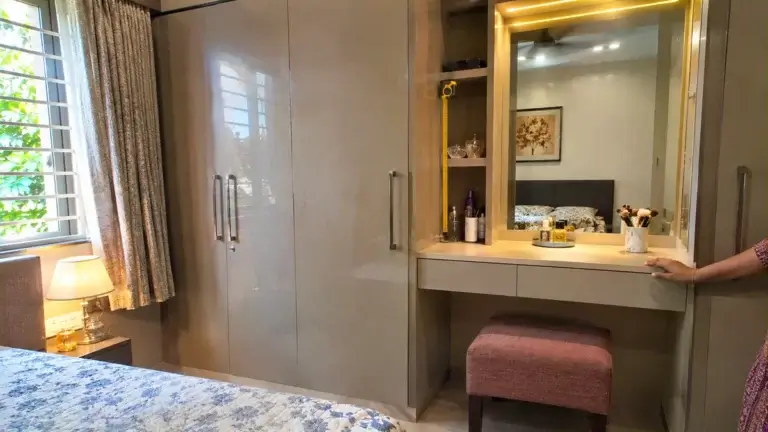
Wardrobe Design
Wardrobe with Dressing Table Design: Layouts, Size, Cost
Wardrobe with dressing table design for Indian bedrooms: five layouts, bay size, mirror and light tips, and cost ranges for each option.
November 9, 2026
Wardrobe warranty explained in one line: it is a written promise to repair or replace specific parts for a stated period. It is not one number for the whole wardrobe. The carcass, doors, hardware and lights usually carry separate terms, and water damage, misuse and wear are usually excluded.
Below, a part-by-part table, a list of common exclusions and seven questions to ask lead into a simple claim sequence.
A warranty is a written statement from the maker that a product will work as described. If it fails within the stated period because of a defect, the maker repairs or replaces it, and the document should say exactly how.
That sounds simple, yet most disputes start with one number on a brochure. A long figure sounds like protection for the whole wardrobe, but it may cover only the carcass and nothing else. The doors, the hardware and the lights may carry much shorter terms, or none at all.
This guide explains how to read any wardrobe warranty. It does not state Bhumim’s own terms, so confirm the current written terms with the team before you order.
The same logic applies to kitchens, and our modular kitchen warranty guide explains how part-by-part cover works there.

A wardrobe is several products in one, and each part can have its own terms. Ask for them part by part, and ask for the period and the board grade or maker for each line.
Part | What to ask | Common limit |
Carcass (the frame) | Which board grade, and for how long? | Water damage and swelling |
Doors and finish | Does cover include peeling, chipping and fading? | Scratches and normal wear |
Hinges and drawer runners | Which maker, and whose warranty applies? | Overloading and wrong installation |
Sliding tracks and rollers | Is door weight rated and covered? | Dust, grit and heavy doors |
Mirrors and glass | Is breakage covered after handover? | Impact and accidental breakage |
Lights and drivers | Who repairs a failed LED or driver? | Power surges and misuse |
Think about how your own wardrobe will age. A sliding mirror door puts steady load on its rollers every day. A hinged door in a dry room hardly strains its hinges. Match the questions you ask to the parts that will work hardest in your home.
We think the table gives you a better view of cover than any headline number. If a quote shows a single figure, ask which parts it applies to.

For expert design consultation, send us your details and we’ll schedule a call
Most written warranties exclude the same few things, and you should expect to see them in the document. A good document lists them clearly, so you know where the cover ends before you pay.
According to India Meteorological Department normals for Dehra Dun (1971 to 2010), daily maximum humidity reaches about 90 percent by late July. That is why the carcass material matters in Dehradun.
According to Bhumim’s bedroom wardrobe guide, BWP grade plywood is the recommended carcass material for Indian bedrooms because it resists humidity and holds screws firmly. Ask which grade sits behind any warranty number.
For finishes and door types, see our wardrobe door types guide.
Hinges, runners and tracks often come from a hardware maker, and that maker has its own warranty. The installer may pass it on, or may add terms of their own.
As an example of the wording, Blum Canada’s published warranty document says the warranty is a warranty of replacement only. It does not cover removal of the defective hardware or installation of the new part. It also excludes hardware that was installed incorrectly or exposed to excessive loads.
Blum’s document applies to Canada, so it is not an Indian warranty card. It does show why you should ask who pays for the labour when a hinge fails.
Hardware also ages with use. Soft-close dampers, rollers and hinges are moving parts, and they wear even when nothing is wrong with them. A fair warranty separates a defect from the slow wear that every moving part shows after years of daily use.
Sliding systems depend on door weight, as our hinged vs sliding wardrobe guide explains.
Both are written promises about parts, but the risks that each product faces differ, and so do the exclusions that follow from those risks.
Keep this in mind when you compare two quotes. A shorter warranty written part by part, with the exclusions named, can be worth more than a long headline number that hides its limits. Judge the document, not the figure.
On the other hand, both depend on the board grade behind the number, and both need the terms in writing.

A written warranty is more than a courtesy. In India, the Consumer Protection Act, 2019 defines an express warranty as a material statement, promise or description that a product conforms to it.
Under Section 84 of the Act, a manufacturer is liable in a product liability action when a product has a manufacturing defect. The same applies when it does not conform to the express warranty, even if the maker proves it was not negligent.
This is general information, not legal advice. It does mean that what a maker promises in writing matters, so keep the quote, the warranty card and the invoice.
Which of these will you ask first? Ask them early, since answers given after you pay are much harder to get, and a verbal promise is hard to prove later.
Claim steps differ between makers, so ask for the exact process before you order. The sequence below is a typical one, and it shows why records matter.
Report small problems early, because a loose hinge left for months can turn into an excluded misuse case. Written reports with photos also protect you if a later dispute arises about when the problem began.
Want to see the warranty terms before you decide? Ask the team for the current written terms for your wardrobe, along with a free 3D design. Call or WhatsApp 08044630777 or fill in your details at bhumim.com.
You can also find Bhumim on Google Maps and visit the Dehradun showroom to read the terms in person.
Usually manufacturing defects in specific parts, such as the carcass, doors, hinges, runners and lights, each for its own period. It does not usually cover water damage, normal wear, misuse or repairs by others. Ask for the cover in writing, part by part, and for the board grade behind each term.
There is no single standard. Terms vary by maker, material and part, and a long number often applies to one part only. Ask for the period for the carcass, the doors and the hardware separately, together with the exclusions. Compare quotes on those details, not on the headline figure.
It depends on what it adds. Check whether it covers parts and labour, whether it covers the exclusions you worry about, and who honours it. For a wardrobe, a clear standard warranty on a good board grade usually matters more than an add-on, so ask what the extra cover actually includes.
Most written warranties exclude it, because it is the most disputed cause of failure in humid towns. Ask the maker to state in writing whether water damage and swelling are covered. In Dehradun, humidity reaches about 90 percent by late July, so the carcass material matters as much as the warranty wording.
It depends on the contract. The installer may handle the claim and pass the part to the hardware maker, or the maker may deal with you directly. Ask whose warranty applies, who pays for labour, and how long a replacement usually takes. Keep the invoice, because hardware makers usually ask for it.
Both cover parts for set periods, but the risks differ. Kitchens face steam, heat and plumbing leaks, while wardrobes face door weight, sliding tracks, mirrors, lights and humid closed air. Both depend on the board grade behind the number, and both need the terms in writing before you pay.
Under Section 84 of the Consumer Protection Act, 2019, a manufacturer can be liable if a product has a manufacturing defect or does not conform to its express warranty. This is general information, not legal advice. Keep the quote, invoice and warranty card, and report problems in writing.
Take clear photos, note the date, and report the problem in writing with your invoice number. Early reports help the maker decide whether it is a defect or an excluded cause. Do not let anyone else repair the part before the maker inspects it, because that can void the cover.
Call or WhatsApp Bhumim at 08044630777, or fill in your details at bhumim.com/contact. Ask for the current written terms for your wardrobe, along with a free 3D design, typically within 3 to 7 days, in line with the design stage described in our bedroom wardrobe guide. You can then compare the terms before anything is made.
A warranty is only as useful as its details. Read it part by part, ask who covers the hardware, and get every promise in writing.
If you are planning a wardrobe in Dehradun, Rishikesh or Haridwar, call or WhatsApp Bhumim at 08044630777 or reach out through bhumim.com/contact to ask for the current written terms and a free 3D design.
Published by: Bhumim India Private Limited-Modular Kitchen Manufacturer & Installer, Dehradun
GST: 05AAOCB1784F1ZM | ISO 9001:2015 Certified
Service Areas: Dehradun · Haridwar · Rishikesh · Roorkee · Noida · Ghaziabad
Contact: 08044630777 | hello@bhumim.com
Note: This article is written from Bhumim’s on-ground manufacturing and installation experience. All material recommendations are based on what we use in real kitchens across our service areas.
Wardrobe with dressing table design for Indian bedrooms: five layouts, bay size, mirror and light tips, and cost ranges for each option.

Sliding wardrobe laminate design guide: pattern types, two-colour panel splits, laminate grade and a catalogue checklist for Indian homes.

Luxury wardrobe design ideas for master bedrooms: lighting specs, finishes compared, detail upgrades, and where to spend or save.