

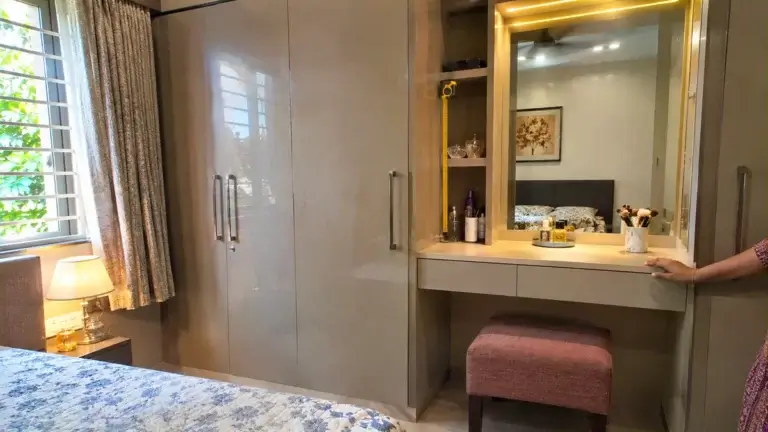
Wardrobe Design
Wardrobe with Dressing Table Design: Layouts, Size, Cost
Wardrobe with dressing table design for Indian bedrooms: five layouts, bay size, mirror and light tips, and cost ranges for each option.
November 9, 2026
Wardrobe organisation ideas work well when you store by reach and by how often you wear things. Keep daily clothes between shoulder and knee height, stack folded items on shelves roughly 12 inches apart, and send rarely used items to the top. Then add two or three measured organisers, not a dozen.
Below, a reach-zone table, measured hacks and an organiser cost table lead into a 30-minute reset plan.
Open your wardrobe and the problem looks like too many clothes. Is that really the problem? Often it is where things sit.
Daily clothes end up behind or beneath things you rarely touch. You then pull out three items to find one, and the whole stack slumps back into a loose pile.
Planning matters more than size.
A few measured changes often recover more room than buying a bigger wardrobe would, and they cost far less.
This guide covers everyday organising. For the keep, store or let-go sort, ethnic wear and seasonal rotation, see our festive wardrobe organization guide.

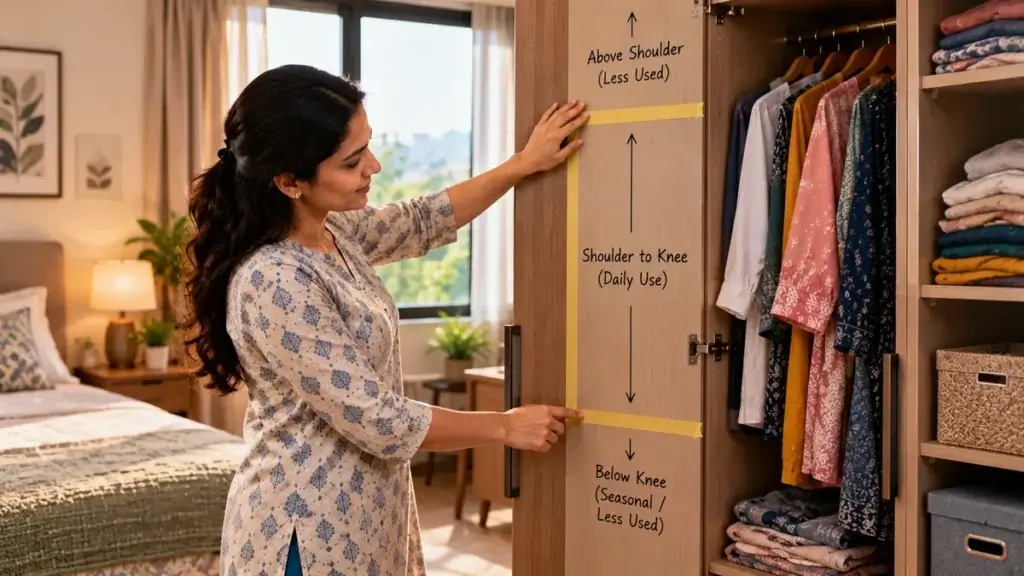
We suggest treating the easiest zone as the band from about 30 to 60 inches above the floor.
Reach zone | Height from the floor (approx.) | What belongs there |
Easy reach | 30 to 60 inches | Daily clothes, work wear and your most-used folded stacks |
Stretch below | 12 to 30 inches | Shoes, baskets and heavier items you lift rarely |
Stretch above | 66 to 84 inches | Off-season clothes, spare bedding and bags |
These figures are a planning starting point, so adjust them to your own height and reach. Stand at the wardrobe, note where your shoulder and knee fall, and mark that band with tape before moving anything.
Bhumim’s wardrobe interior design guide places a single-hang rod roughly 66 to 72 inches from the floor. A double-hang top rod sits at 80 to 84 inches. We think that top rod suits off-season clothes, since it sits above the easy zone.
A Houzz guide to small closets advises keeping a step stool handy to reach an extra-high upper rod.
For items kept overhead, our wardrobe loft guide explains how much ceiling height a loft needs.
For expert design consultation, send us your details and we’ll schedule a call
Most guides sort by type: shirts here, trousers there. Sorting by how often you wear something works better in a small wardrobe, because it decides where each item lives.
Which five items do you reach for most?
Which clothes deserve a hanger?
Hang what creases or loses its shape, such as shirts, dresses and jackets. Fold knitwear and T-shirts, which can stretch on a hanger and also take up hanging space that you may need for other clothes.
A Houzz guide to an organised closet advises that soft T-shirts, casual tops and most knitwear can be folded and placed on shelves. That frees hanging space for clothes that need it.
Stand folded clothes on their edge, like files in a rack, so you can see every piece. We suggest shelf gaps of about 12 to 14 inches for sweater stacks, and about 10 inches for lighter stacks that might topple.
Slim matching hangers save width along the rod. A gap of about 3 inches between the rod and the shelf above lets hangers swing out freely when you pull one.
If you are planning a new wardrobe, our wardrobe accessories guide ranks the pull-out fittings worth paying for.
Many guides recommend vacuum bags to compress winter wear. They do save space, yet they need care in humid weather.
That matters in Dehradun. The India Meteorological Department’s Climate of Dehra Dun report puts daily maximum humidity near 90 percent by late July (1971 to 2010 normals).
Sealed plastic can trap damp air inside the bag, and anything that went in even slightly damp can turn musty over a few weeks. Bhumim’s festive guide advises breathable muslin or cotton bags instead of plastic, with cedar or neem against moths.
So, are vacuum bags worth it?
On the other hand, vacuum bags work well for fully dry woollens in a dry month. Seal them only after the clothes have aired in the sun.
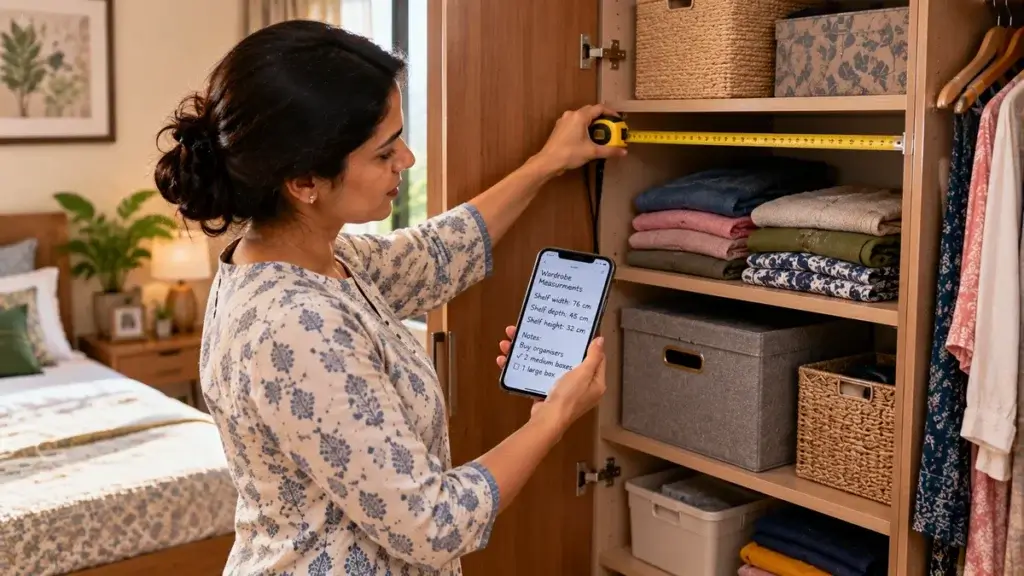
Measure first.
Buy only for a gap you have actually measured. The table shows indicative online price ranges seen in October 2026, and they are not Bhumim quotes.
Organiser | Indicative price | Where it helps |
Drawer organiser set (4 pieces) | ₹200 to ₹500 | Socks, innerwear and ties |
Adjustable drawer divider | From about ₹250 | T-shirts standing on edge and small items |
Hanging organiser with compartments | From about ₹600 | Sweaters, bags and accessories |
Saree or clothes cover set | ₹230 to ₹900 | Dust protection for stored clothes |
We think two or three organisers that fit your measured gaps beat a full set. A wrong size wastes the space it was meant to save.
If the wardrobe still falls short after this, our bedroom wardrobe storage ideas guide compares layouts that give small bedrooms more room.
Want more storage from the wardrobe itself? Send us your wardrobe wall size and the clothes you store, and we will show a layout in a free 3D design. Call or WhatsApp 08044630777 or fill in your details at bhumim.com.
Which of these have you done?
Sort your clothes by how often you wear them, then place daily items between shoulder and knee height, where they are easiest to reach. Fold knitwear on shelves, hang clothes that crease, and send rarely used items to the top and bottom. Add only the organisers that fit gaps you have measured.
Add a second rod for short clothes if the wardrobe is tall enough, use the back of the door for slim organisers, and stand folded clothes on their edge so more fit on each shelf. Drawer dividers and floor baskets help too. Measure first, so each addition actually fits.
Your daily clothes and most-used folded stacks. We suggest this zone at roughly 30 to 60 inches above the floor, between shoulder and knee height. Heights vary with your own build, so stand at the wardrobe and mark the band with tape before you rearrange anything.
Use every level: the upper shelf for off-season items, a second rod for short clothes, door-back organisers and floor baskets. Fold knitwear and stand it on its edge. Remove clothes you never wear first, because organisers cannot create room. Corners and the space above the rod are often wasted.
They can be, but only for fully dry clothes sealed in a dry month. Sealed plastic traps damp air, and slightly damp clothes can turn musty. In a humid town like Dehradun, breathable muslin or cotton covers are a safer default, with vacuum bags kept for dry woollens.
We suggest about 10 inches between shelves for lighter stacks, and about 12 to 14 inches for bulky sweaters. Wider gaps invite tall stacks that topple, while narrower ones make folded clothes hard to pull out. Choose by what you store.
Indicative online prices seen in October 2026 were roughly ₹200 to ₹500 for a four-piece drawer organiser set, from about ₹250 for an adjustable divider, and from about ₹600 for a hanging organiser. These are not Bhumim quotes, so check current prices before you buy.
Re-check a new setup after a week and again after a month, because real wearing habits differ from what you expect. After that, a seasonal switch twice a year is enough for most homes. Bhumim’s festive guide suggests a twice-yearly rotation before and after Diwali.
Call or WhatsApp Bhumim at 08044630777, or fill in your details at bhumim.com/contact. Share your wardrobe wall size and what you store, and the team shows a layout in a free 3D design, typically within 3 to 7 days, in line with the design stage described in our bedroom wardrobe guide. You can then compare options before anything is made.
A small wardrobe rarely needs more room as much as it needs a better plan. Map your reach zones, sort by how often you wear things, and add only the organisers that fit your measured gaps.
If you are planning a wardrobe in Dehradun, Rishikesh or Haridwar, call or WhatsApp Bhumim at 08044630777 or reach out through bhumim.com/contact for a free 3D design, or visit the Dehradun showroom to see storage layouts in person.
Published by: Bhumim India Private Limited-Modular Kitchen Manufacturer & Installer, Dehradun
GST: 05AAOCB1784F1ZM | ISO 9001:2015 Certified
Service Areas: Dehradun · Haridwar · Rishikesh · Roorkee · Noida · Ghaziabad
Contact: 08044630777 | hello@bhumim.com
Note: This article is written from Bhumim’s on-ground manufacturing and installation experience. All material recommendations are based on what we use in real kitchens across our service areas.
Wardrobe with dressing table design for Indian bedrooms: five layouts, bay size, mirror and light tips, and cost ranges for each option.

Sliding wardrobe laminate design guide: pattern types, two-colour panel splits, laminate grade and a catalogue checklist for Indian homes.
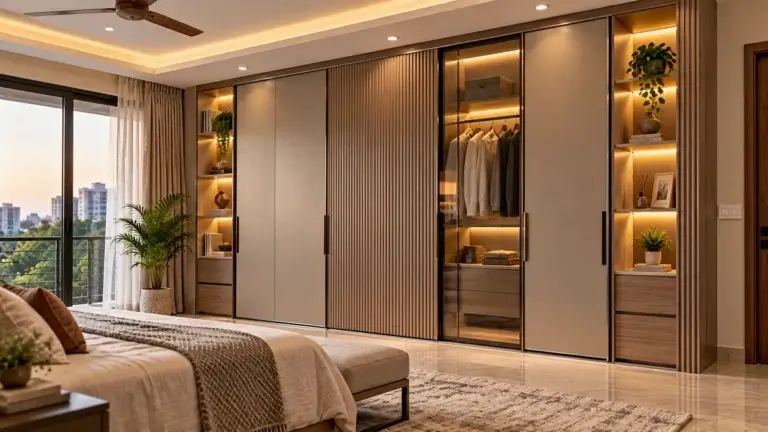
Luxury wardrobe design ideas for master bedrooms: lighting specs, finishes compared, detail upgrades, and where to spend or save.